
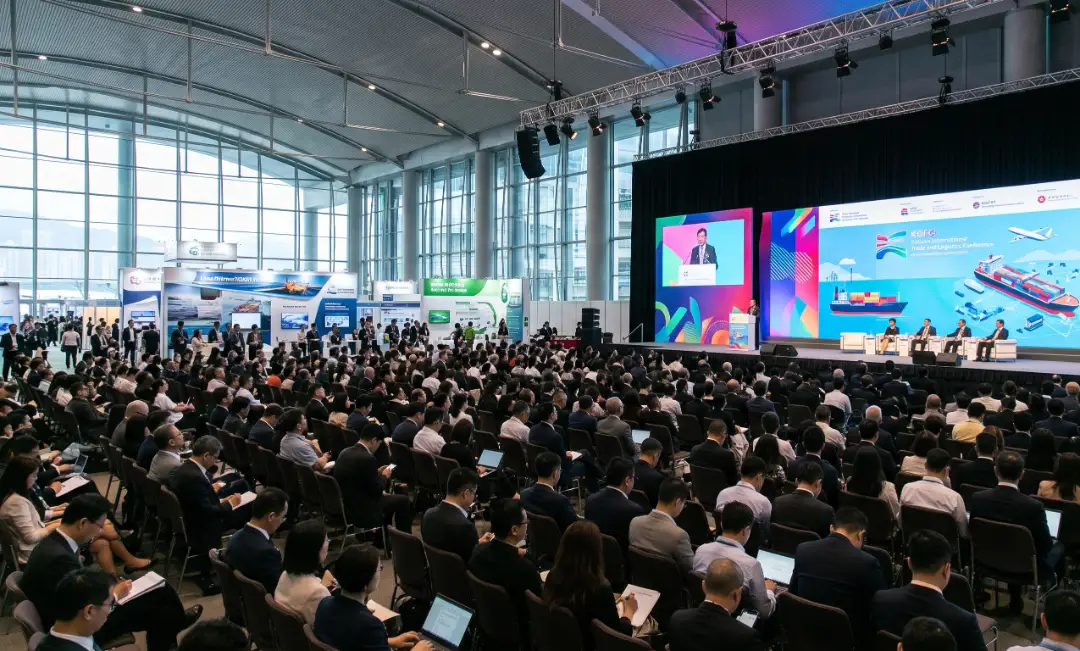
The conference opened with remarks from Frederick Ma, Chairman of the Hong Kong Trade Development Council, who highlighted the structural shifts reshaping global trade. Ma noted that artificial intelligence and electronic products have become important drivers of export growth, and the rising share of air freight by value reflects a shift toward high-value, technology-intensive trade, generating greater demand for sophisticated supply chain management services. He positioned Hong Kong's role as a "superconnector" not merely as bringing markets together, but as adding value by linking the Chinese mainland's innovation and manufacturing capabilities with global markets.
WTO Deputy Director-General Jennifer Nordquist delivered the keynote address titled "Global Spectrum: Transforming Supply Chains for Inclusive Prosperity." She framed the current trade environment as one of remarkable resilience despite significant pressures. Nordquist cited WTO projections that world merchandise trade volumes would grow 3.9 percent in 2026—double an earlier forecast—and expand a further 4.1 percent in 2027, while commercial services trade was projected to grow 3.3 percent this year and 6.4 percent next year. She attributed part of this resilience to WTO members introducing 466 trade-facilitating measures in the first half of 2026 alone, more than all of 2025, with much of that work focused on responding to disruptions from the Strait of Hormuz situation.
For policymakers, Nordquist outlined four priorities: maintaining fair trade policies, investing in infrastructure, simplifying border procedures, and strengthening international cooperation. For businesses, she recommended diversifying suppliers to reduce over-dependence on a few markets, embracing digital technologies, and building partnerships across networks in new markets. She noted that 72 percent of global goods trade now takes place under the WTO's most-favoured-nation framework, and that governments were increasingly concerned about economic and national security risks and over-dependencies.
The conference programme was structured around three key themes: resilience, green transition, and connectivity. The first day featured sessions including "Driving the Growth Engine: Collaboration, Innovation and Sustainability" and a Global Value Chain Forum, examining the cascading effects of trade policy evolution and economic fragmentation. The second day was scheduled to host the first-ever Silk Road Maritime thematic seminar, alongside a Green Energy Forum, the 2026 LSCM Shipping Summit, and AI and green energy workshops.
The Silk Road Maritime session represented a notable addition to the agenda. The Silk Road Maritime Association, established in 2018 as China's first international integrated logistics service brand under the Belt and Road Initiative, has expanded to 160 designated routes connecting 153 ports in 50 countries and regions, with 393 members. The platform has been officially incorporated into China's 15th Five-Year Plan, and the conference session brought together global expertise to highlight its role in enhancing connectivity and supply chain stability.
An exhibition held alongside the conference featured over 100 exhibitors across supply chain management and logistics services, maritime and port services, and logistics technology and digital trade zones. A new Green Energy Zone was added this year, showcasing the latest developments in green energy and carbon reduction technologies. The conference also aligned with Hong Kong's policy framework, including the National 15th Five-Year Plan and the HKSAR Government's first Five-Year Plan for Hong Kong, reinforcing the city's position as an international trade and maritime centre and aviation hub.