
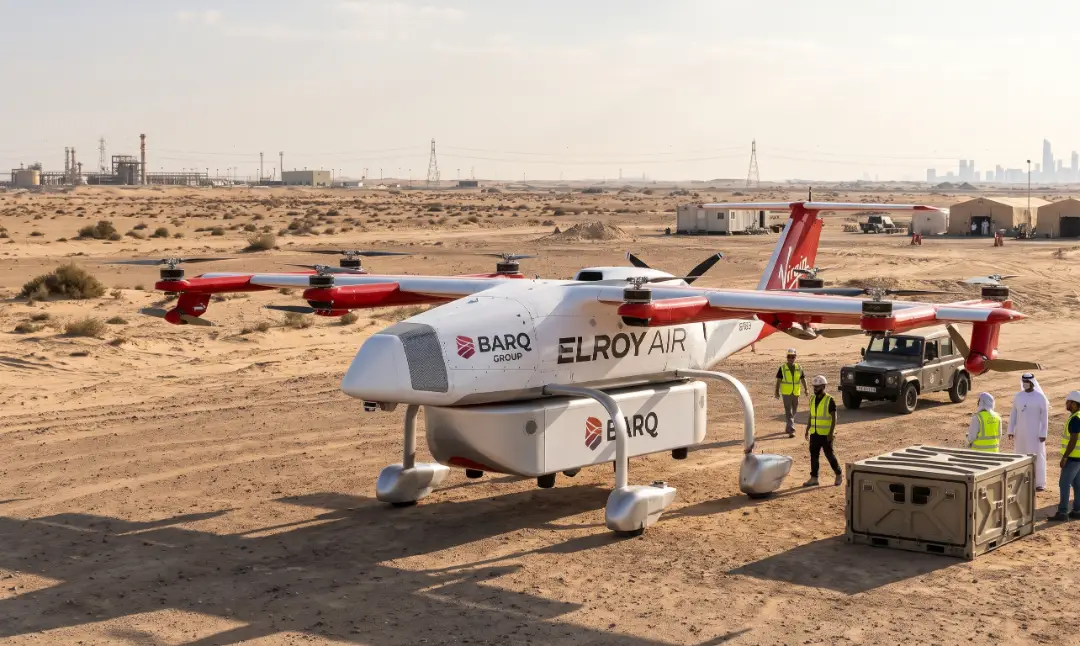
The core logistics value of this procurement lies in the Chaparral aircraft's operational characteristics. The aircraft is designed to carry up to 500 pounds (approximately 227 kilograms) of cargo over a range of up to 450 miles (approximately 724 kilometers), with vertical takeoff and landing eliminating reliance on runways, and a hybrid-electric powertrain avoiding dedicated charging infrastructure. This means the aircraft can operate in the Middle East region's desert hinterlands, offshore oil platforms, and areas with damaged infrastructure—locations where traditional fixed-wing and rotary-wing logistics are either too costly or unavailable.
Kratos Defense & Security Solutions, as Elroy Air's exclusive U.S. manufacturer, will produce these 20 aircraft at its Sacramento facility, with initial production scheduled to begin in late 2026. The first batch of aircraft will be delivered to Barq Group starting in 2027, initially for flight operations in the UAE using U.S.-manufactured aircraft, while local manufacturing in Abu Dhabi is planned to commence in 2028.
Barq Group CEO Ahmed AlMazrui positioned this procurement within the framework of Abu Dhabi's SAVI (Smart and Autonomous Vehicle Industry) cluster and the "Make it in the Emirates" initiative, stating the goal is to "redefine how critical cargo moves across the Middle East and North Africa". The two companies had previously signed a $200 million joint venture framework agreement in January 2026, planning to establish a manufacturing and aftermarket service facility in Abu Dhabi for Chaparral production and maintenance, serving MENA region customers.
From an air cargo market perspective, the significance of this order lies in opening a new tier of "middle-mile autonomous air freight." Traditional air cargo relies on large airports and fixed routes, while road transport in the Middle East is limited by desert terrain and border crossings. The Chaparral's 500-pound payload and 450-mile range fill the gap between small delivery drones and traditional air freight, particularly suitable for high-value spare parts, medical supplies, emergency relief materials, and military frontline resupply.
The Middle East region's logistics demand provides a realistic foundation for this technology. Regional powers such as the UAE and Saudi Arabia are advancing economic diversification, with offshore energy, remote mining, and cross-border e-commerce generating demand for rapid cargo delivery to remote locations. Additionally, the region's relatively concentrated airspace management and relatively lenient autonomous driving regulations create favorable conditions for drone commercialization. Barq Group's warrant agreement also includes UAE regulatory milestone provisions, with the company eligible to receive up to 5 million Elroy Air warrants, vesting in tranches upon completing specific regulatory and market entry milestones.
Elroy Air's business progress also supports the viability of this procurement. The company received a $46 million Phase III SBIR contract from the U.S. Army in 2026 to continue Chaparral development, including three unattended delivery modes: hover precision airdrop, forward-flight precision airdrop, and autonomous ground delivery after landing. These military application scenarios, once validated, will accelerate civil certification processes, reduce technical risks for Middle East customers, and provide a business model reference for Barq Group's commercial operations in MENA.
From the regional logistics landscape perspective, this order signals that Middle East logistics capacity building is shifting from "scale expansion" to "scenario coverage." Ports, airports, and road networks in the Gulf region already rank among the world's leading in infrastructure, but logistics accessibility to remote areas, offshore, and emergency scenarios has long been a gap. Autonomous cargo drones represent a targeted solution, though the scale of 20 aircraft remains small and commercial viability will depend on subsequent operating costs, airworthiness certification, and customer adoption rates. If the Barq Group project progresses smoothly, it could catalyze similar deployments in Saudi Arabia, Qatar, and other countries, thereby changing the competitive landscape of middle-mile air freight in the Middle East.