
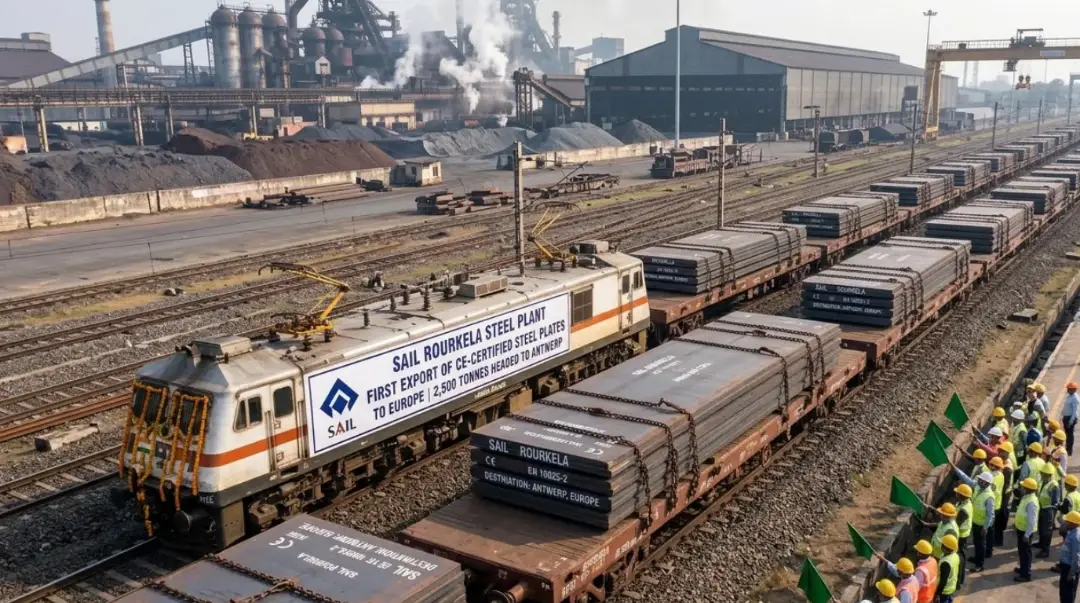
The Rourkela Steel Plant, operated by Steel Authority of India Limited, has begun dispatching its first batch of CE-certified hot-rolled steel plates to Europe, with approximately 2,500 tonnes moved by rail from the plant to Paradip Port for onward shipment to Antwerp, Belgium, on 13 November 2026 . The shipment is part of a larger 10,000-tonne export order secured by SAIL's central marketing organisation through its international trade division on 22 October.
The CE certification, granted by Norway's DNV in November 2023, covers hot-rolled coils and plates in thickness ranges of 3–16 millimetres and 5–16 millimetres respectively . This certification is a prerequisite for supplying structural and pressure vessel steel into European markets, where conformity with EU standards is mandatory for construction and industrial applications. The Rourkela plant's ability to produce CE-certified material positions it to compete for European orders that require documented compliance with European norms.
The logistics chain for the shipment illustrates the integration of rail and port infrastructure that supports India's steel exports. The plates are moved by rail from the Rourkela plant to Paradip Port in Odisha, where they will be loaded onto vessels for the sea voyage to Antwerp . The rail leg connects an inland steel production centre with an east coast port that has been expanding its cargo-handling capacity, and the port's rail connectivity allows it to serve the steel belt of Odisha and neighbouring states.
For SAIL, the CE-certified export represents a diversification of its market exposure. The company has historically focused on domestic supply and on exports to Asian and Middle Eastern markets, and entry into the CE-certified segment for Europe opens a market where quality documentation and compliance are prerequisites but where prices may be more favourable for certified material. The 10,000-tonne order is modest relative to SAIL's total production, but it establishes a reference shipment that could support further European orders if the material meets customer requirements.
The timing of the shipment aligns with the broader growth in India's steel exports. India has been increasing its steel production capacity, and domestic mills have been seeking export markets as domestic demand fluctuates. The European market, despite its carbon border adjustment mechanism and other regulatory requirements, remains attractive for steel producers that can meet its standards. The CE certification provides SAIL with a credential that other Indian mills may also seek, and the Rourkela shipment will be watched as an indicator of whether Indian steel can compete in Europe on quality as well as price.
For India's export logistics sector, the shipment adds a new flow of steel cargo through Paradip Port. The port has been handling record cargo volumes, and the addition of CE-certified steel plates for Europe diversifies its cargo mix. The rail link from Rourkela to Paradip is part of the broader rail freight network that connects Odisha's industrial belt to the coast, and the shipment demonstrates that the network can support time-sensitive export cargo that requires coordinated rail and port handling.
Looking ahead, the key question is whether the initial 2,500-tonne shipment leads to repeat orders and whether SAIL can scale its CE-certified exports to Europe. The company has not disclosed the buyer or the terms of the contract, and the commercial success of the order will depend on whether the plates meet the customer's specifications and whether SAIL can deliver on schedule. For now, the shipment marks a concrete step in Indian steel's entry into the European certified market, and it provides a reference point for other Indian mills considering similar exports.