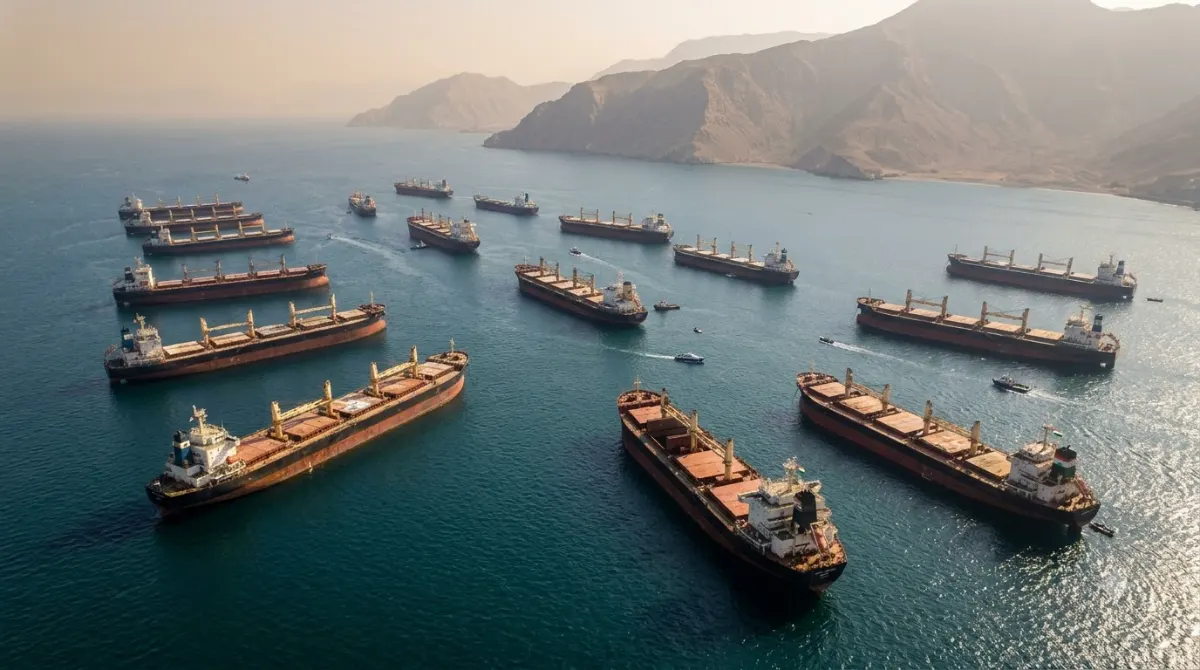
<p class="ds-markdown-paragraph" style="margin: 16px 0px; color: rgb(15, 17, 21); font-family: quote-cjk-patch, Inter, system-ui, -apple-system, BlinkMacSystemFont, "Segoe UI", Roboto, Oxygen, Ubuntu, Cantarell, "Open Sans", "Helvetica Neue", sans-serif; font-size: 16px;"><span class="">Sixteen vessels carrying fertiliser destined for India are stranded at the Strait of Hormuz, according to a confirmation from India's Ministry of Chemicals and Fertilizers on 16 November 2026 . The stranded cargoes comprise 330,000 tonnes of urea on eight ships, 257,000 tonnes of diammonium phosphate on four vessels, one shipment of liquid ammonia, and 110,000 tonnes of sulphur on three ships . The shipments were arranged to meet domestic agricultural demand ahead of India's summer crop season.</span></p><p class="ds-markdown-paragraph" style="margin: 16px 0px; color: rgb(15, 17, 21); font-family: quote-cjk-patch, Inter, system-ui, -apple-system, BlinkMacSystemFont, "Segoe UI", Roboto, Oxygen, Ubuntu, Cantarell, "Open Sans", "Helvetica Neue", sans-serif; font-size: 16px;"><span class="">The disclosure from Joint Secretary Vandana Preyasi provides the most detailed accounting yet of the fertiliser cargoes caught in the Hormuz disruption. The tonnages involved are substantial: 330,000 tonnes of urea alone represents a meaningful share of India's import requirements for the crop season, and the diammonium phosphate volumes are critical for the phosphatic fertiliser supply chain that supports wheat, rice, and pulse cultivation.</span></p><p class="ds-markdown-paragraph" style="margin: 16px 0px; color: rgb(15, 17, 21); font-family: quote-cjk-patch, Inter, system-ui, -apple-system, BlinkMacSystemFont, "Segoe UI", Roboto, Oxygen, Ubuntu, Cantarell, "Open Sans", "Helvetica Neue", sans-serif; font-size: 16px;"><span class="">The government's response has combined import diversification with domestic production support. Preyasi said India has already imported 5 million tonnes of fertiliser, including urea, to secure seasonal demand, and that domestic fertiliser production capacity has been enhanced . The government has also issued a global tender to import 1.7 million tonnes of urea, signalling that it is not relying solely on the stranded Hormuz cargoes to meet demand . Preyasi stated that "no major gap is expected in fertiliser supply for the current sowing season" and projected total fertiliser consumption for the season at 38.39 million tonnes.</span></p><p class="ds-markdown-paragraph" style="margin: 16px 0px; color: rgb(15, 17, 21); font-family: quote-cjk-patch, Inter, system-ui, -apple-system, BlinkMacSystemFont, "Segoe UI", Roboto, Oxygen, Ubuntu, Cantarell, "Open Sans", "Helvetica Neue", sans-serif; font-size: 16px;"><span class="">The timing of the disruption is critical because it coincides with the Rabi sowing season, when farmers apply fertiliser to wheat, gram, and oilseed crops. Any shortfall in supply during this window can affect yields and, ultimately, food grain production. The government's decision to disclose the stranded vessels and simultaneously announce alternative import arrangements suggests that it is managing the situation actively rather than allowing uncertainty to build in the market.</span></p><p class="ds-markdown-paragraph" style="margin: 16px 0px; color: rgb(15, 17, 21); font-family: quote-cjk-patch, Inter, system-ui, -apple-system, BlinkMacSystemFont, "Segoe UI", Roboto, Oxygen, Ubuntu, Cantarell, "Open Sans", "Helvetica Neue", sans-serif; font-size: 16px;"><span class="">For India's agricultural logistics sector, the stranded vessels represent a direct cost of the Hormuz disruption that has been less visible than the crude oil and LNG cargoes that dominate headlines. Fertiliser is a bulk commodity that moves on specialised vessels, and the inability to deliver these cargoes to Indian ports means that the supply chain must absorb additional costs—either through replacement imports from other sources, through domestic production increases, or through higher prices if the shortfall is not fully offset. The 1.7 million tonne urea tender is one mechanism for closing the gap, but the timing of deliveries will determine whether it arrives in time for the sowing season.</span></p><p class="ds-markdown-paragraph" style="margin: 16px 0px; color: rgb(15, 17, 21); font-family: quote-cjk-patch, Inter, system-ui, -apple-system, BlinkMacSystemFont, "Segoe UI", Roboto, Oxygen, Ubuntu, Cantarell, "Open Sans", "Helvetica Neue", sans-serif; font-size: 16px;"><span class="">The broader context is the cumulative strain on India's fertiliser supply chain from the maritime disruption. India is one of the world's largest importers of fertilisers, and its dependence on Gulf suppliers for urea and phosphates has made it vulnerable to the Hormuz closure. The government has been promoting domestic production and alternative sourcing, but the stranded vessels illustrate that even with these efforts, the physical disruption to shipping routes has real consequences for the availability and cost of agricultural inputs.</span></p><p class="ds-markdown-paragraph" style="margin: 16px 0px; color: rgb(15, 17, 21); font-family: quote-cjk-patch, Inter, system-ui, -apple-system, BlinkMacSystemFont, "Segoe UI", Roboto, Oxygen, Ubuntu, Cantarell, "Open Sans", "Helvetica Neue", sans-serif; font-size: 16px;"><span class="">Looking ahead, the key question is whether the stranded vessels can be released and their cargoes delivered before the sowing season demand peaks, or whether the government's alternative arrangements will need to carry the full burden. The 5 million tonnes already imported and the 1.7 million tonne tender provide a buffer, but the timing of delivery and the logistics of moving fertiliser from ports to farmers will determine whether the disruption translates into a genuine supply gap. For now, the government's disclosure of the stranded vessels provides transparency about the scale of the challenge, and its simultaneous announcement of alternative arrangements signals that it is preparing for the possibility that the Hormuz cargoes may not arrive in time.</span></p>
India's 16 Fertiliser-Laden Vessels Stranded at Hormuz, 330,000 Tonnes of Urea Among Delayed Cargoes
India's Ministry of Chemicals and Fertilizers confirmed on 16 November 2026 that 16 vessels carrying fertiliser and destined for India are stranded at the Strait of Hormuz. The cargoes include 330,000 tonnes of urea on eight ships, 257,000 tonnes of diammonium phosphate on four vessels, one shipment of liquid ammonia, and 110,000 tonnes of sulphur on three ships. The shipments were intended for the upcoming summer crop season. Joint Secretary Vandana Preyasi said India has already imported 5 million tonnes of fertiliser, including urea, and domestic production capacity has increased, with no major supply gap expected for the current sowing season.