
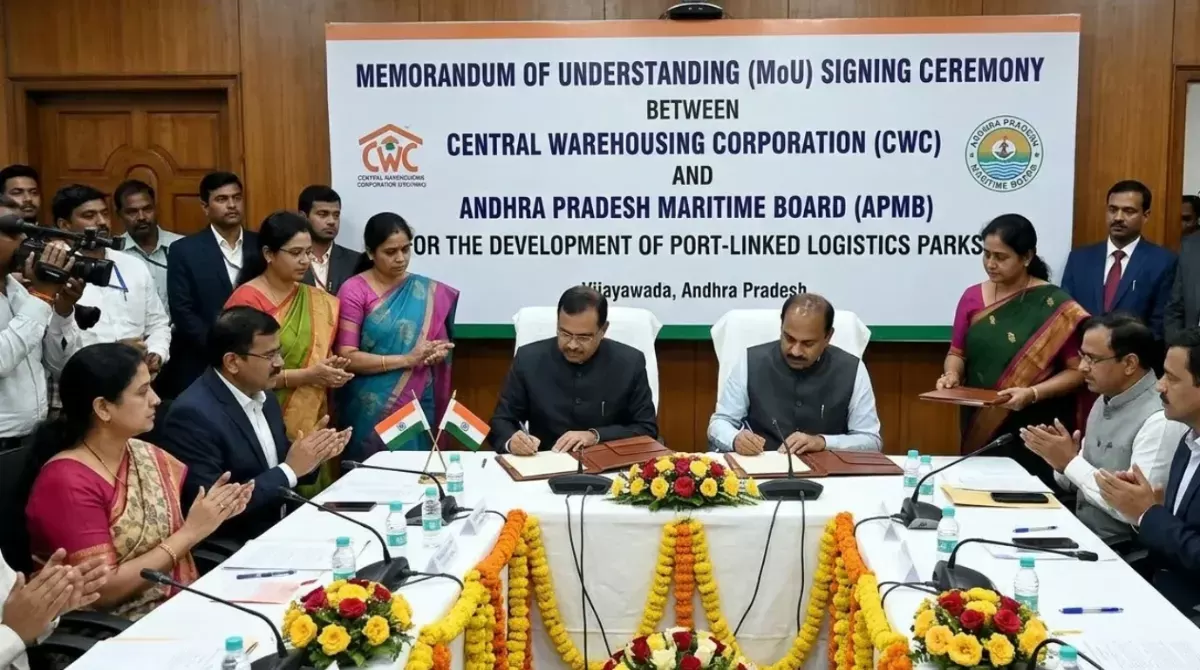
The Central Warehousing Corporation and the Andhra Pradesh Maritime Board have signed a memorandum of understanding to develop multimodal logistics parks across Andhra Pradesh, in an agreement aimed at connecting inland production centres with the state's port infrastructure . The MoU was signed on 13 November 2026 at the 31st CII Partnership Summit in Visakhapatnam, bringing together CWC's warehousing operations and the maritime board's port network.
The agreement focuses on how goods move between inland production centres, warehouses, and ports. Multimodal logistics parks can give shippers a place to consolidate cargo, store it, and transfer it between road and rail where both modes are available . At a port-linked facility, exporters can group smaller consignments before dispatch, while importers can consolidate onward deliveries from the gateway. The partners aim to shorten cargo turnaround times and lower logistics costs for manufacturers and exporters.
The signing was attended by Sandeep Kumar Reddy Dodla, CWC's regional manager for Amaravati, and Praveen Adhithya C. V., chief executive officer of APMB. Andhra Pradesh minister B. C. Janardhan Reddy, APMB Chairman Damacharla Satyanarayana, and CWC Executive Director B. Nirmal were present at the signing ceremony . The involvement of senior officials from both organisations indicates that the MoU has political backing at the state level, even though the operational details remain undefined.
The agreement fits into Andhra Pradesh's wider effort to link port development with industrial growth. The state's Industrial Development Policy for 2024–29 calls for logistics facilities that can hold imported and domestically sourced raw materials closer to manufacturers . It also prioritises road connections between freight rail corridors and existing and upcoming seaports. Those links matter to manufacturers because the cost and reliability of the inland leg help determine which port they use.
Visakhapatnam, Gangavaram, and Krishnapatnam are among the state's established maritime gateways. At the same summit, Union Minister for Ports, Shipping and Waterways Sarbananda Sonowal said Visakhapatnam Port handled a record 91.17 million tonnes of cargo in FY 2025–26, up about 10% from the previous year . The CWC–APMB announcement gave no indication of which gateways the proposed parks would serve, or whether they would be concentrated at one port or distributed across the state's coastline.
For India's logistics sector, the MoU is a framework agreement rather than a committed project. The absence of identified sites, investment figures, and construction timelines means that the practical impact cannot yet be assessed . The value of the agreement will depend on whether the two organisations can move from signing to site selection, funding, and development, and whether the logistics parks they build address the specific bottlenecks that shippers in Andhra Pradesh face.
The timing of the agreement aligns with the broader push to develop port-linked logistics infrastructure across India. States including Gujarat, Maharashtra, and Tamil Nadu have been investing in multimodal logistics parks and inland container depots to connect their industrial clusters with ports. Andhra Pradesh's effort is part of this pattern, and the involvement of CWC, a central public sector undertaking with a national warehousing network, adds a dimension that purely state-level initiatives may lack.
Looking ahead, the key milestones are the identification of park locations, the securing of land and investment, and the commencement of construction. The MoU does not specify a timeline for these steps, and the partners have not disclosed how they will share costs or decision-making. For now, the agreement signals that Andhra Pradesh is seeking to integrate its warehousing and port infrastructure more closely, and the coming months will show whether the framework translates into concrete facilities that reduce logistics costs for the state's exporters and manufacturers.