
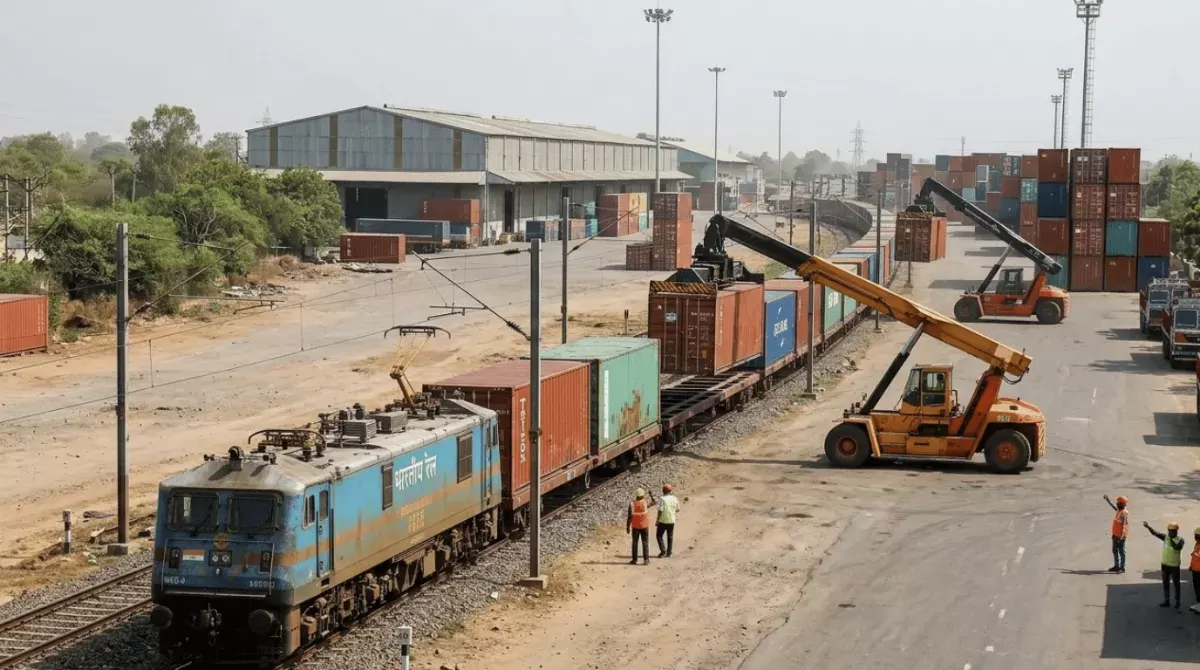
Adani Logistics has received its first trainload of polymers at its Virochannagar Inland Container Depot in Gujarat, with the rake originating from HPCL-Mittal Energy Limited's refinery and petrochemical complex in Bathinda, Punjab . The shipment, reported by Maritime Gateway on 13 November 2026, marks the addition of domestic petrochemical traffic to a rail-linked terminal that had previously handled primarily export-import container flows.
The cargo itself is a significant industrial input. Polymers are used in packaging, automotive components, construction products, textiles, and consumer goods, and they represent a high-volume, manufacturing-dependent commodity that moves between production sites and conversion facilities . The movement from Bathinda to Virochannagar is therefore not merely a rail operation but a link in the supply chain that connects a major petrochemical producer with the industrial consumers of Gujarat and beyond.
HMEL's Bathinda complex provides the scale behind the shipment. The joint venture between Hindustan Petroleum Corporation Limited and Mittal Energy Investments has a combined polymer capacity of 2.2 million tonnes a year, comprising 1.2 million tonnes of polyethylene and one million tonnes of polypropylene . These figures describe the plant's production capacity, and they indicate the potential volume of polymer cargo that could move along this corridor if the first rake is followed by regular services.
The Virochannagar depot's strategic position adds a port dimension to the domestic movement. The terminal is connected by rail to Mundra Port, and it began export-import operations in September 2025 with block train runs for Ocean Network Express and Emirates Shipping . The polymer rake adds an inbound industrial flow to a facility that had previously been oriented toward port-bound export traffic, diversifying its cargo mix and utilising its rail connectivity in both directions.
The rail link between Bathinda and Gujarat has an interesting symmetry. HMEL's pipeline subsidiary operates a 1,017-kilometre line carrying crude oil from Mundra to Bathinda . The polymer rake moves a manufactured petrochemical product in the opposite direction, from the Punjab production site to an inland freight terminal in Gujarat. This creates a two-way industrial logistics corridor in which crude moves north for processing and polymers move south for distribution or export.
Adani Logistics' broader network provides context for the Virochannagar operation. The depot is one of 12 rail-connected logistics parks listed by the company, and APSEZ reported rail container volumes of 695,517 TEUs and bulk rail cargo of 21.7 million tonnes across its logistics operations for FY 2025-26 . The group listed a fleet of 68 container rakes serving cargo across 18 states, indicating the scale of the rail logistics infrastructure that the Bathinda shipment is plugging into.
For India's domestic freight sector, the polymer movement illustrates the kind of industrial cargo that rail is well-suited to carry. Polymers are produced in large volumes at a single site and consumed across multiple locations, making them amenable to trainload movements that reduce road congestion and transport costs. The fact that Adani Logistics is developing this traffic on a route that also serves port-bound exports suggests that the terminal is evolving into a multi-purpose rail freight hub rather than a single-purpose container facility.
Looking ahead, the key question is whether the first polymer rake is the beginning of a regular service or an isolated shipment. Adani Logistics has not disclosed the rake's tonnage, the polymer grades carried, or any schedule for repeat services . If the movement becomes regular, it would establish a durable domestic petrochemical rail corridor between Punjab and Gujarat, complementing the port-bound container traffic that already flows through Virochannagar. For now, the first rake demonstrates that the infrastructure and commercial relationships are in place to move polymers by rail, and the coming months will show whether the volumes justify dedicated services.