
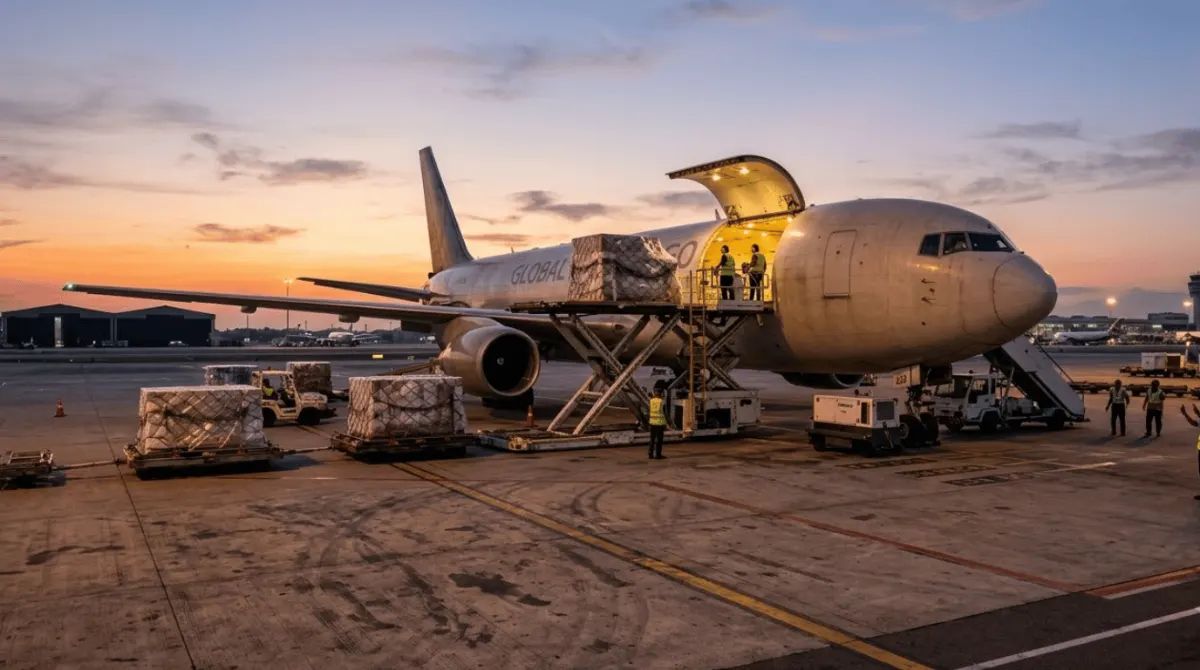
Air India plans to convert passenger aircraft into dedicated freighters as part of a broader revenue growth strategy, Singapore Airlines disclosed in an investor presentation on 12 November 2026 . The strategy was proposed by Air India's new Chief Executive Officer Tewolde Gebremariam, the former Ethiopian Airlines chief who took charge in October 2026, and it identifies cargo as an underutilised revenue opportunity for the loss-making carrier .
Singapore Airlines CEO Goh Choon Phong framed the cargo opportunity in direct terms. "India has significant cargo demand, but Air India hasn't really been looking at how best to tap it," he said at the group's post-earnings analyst briefing . Singapore Airlines owns 25.1% of Air India and records its share of the Indian carrier's profit or loss in its consolidated financial statements, making Air India's turnaround a direct concern for Singapore investors.
The freight conversion plan is one of several initiatives Gebremariam has introduced since taking over. Alongside cargo growth, Air India is targeting an increase in sales from overseas markets to mitigate the impact of rupee depreciation, rebalancing services between Mumbai and Delhi, and establishing a third hub in Bengaluru to reduce the additional flying distance and fuel burn caused by Pakistan's airspace closure . The airline is also expanding commercial partnerships with Singapore Airlines, with joint fares introduced in October 2026 that have increased average daily bookings on flights operated by both carriers .
The financial context for the strategy is severe. Air India reported a net loss of over ₹22,000 crore in FY26, driven by rupee depreciation and higher fuel burn from airspace closures, a loss that prompted a debate in Singapore's parliament . In H1 FY27, however, the airline's loss reduced by around ₹2,000 crore year-on-year, though Singapore Airlines cautioned that the decline in its share of Air India's losses was largely due to the reversal of earlier provisions rather than a genuine improvement in financial performance .
Air India's cargo arm has already shown signs of improvement. The presentation noted that cargo operations have benefited from better capacity utilisation and higher yields, and that one-stop operations forced by airspace closures have allowed the airline to carry heavier cargo loads to the US and Canada . These operational adaptations have provided a foundation for the freighter conversion strategy, demonstrating that Air India's cargo business can generate improved returns when capacity is deployed effectively.
The timing of the strategy reflects the broader state of India's air cargo market. India's air cargo sector handles around 3.5–3.7 million tonnes annually, with projections indicating growth to 10 million tonnes by 2031–32, but capacity remains concentrated in four major airports—Delhi, Mumbai, Bengaluru, and Chennai—which handle roughly 65% of exports . The conversion of passenger aircraft into freighters would add dedicated cargo capacity that is currently constrained, particularly as Middle Eastern carriers have reduced capacity and as Mumbai's airport undergoes infrastructure upgrades that have suspended dedicated freighter slots until mid-2027 .
For India's air cargo sector, Air India's freighter conversion plan represents a potential shift in the competitive landscape. The carrier has historically been a minor player in dedicated cargo operations, relying primarily on belly-hold capacity on passenger flights. Converting passenger aircraft into freighters would allow it to offer dedicated cargo services on routes where demand justifies the investment, competing more directly with specialist cargo carriers and with the Middle Eastern and European airlines that dominate India's international air freight lanes.
Looking ahead, the key questions are which aircraft Air India will convert, on which routes the freighters will be deployed, and whether the conversion programme proceeds on a timeline that allows the airline to capture the cargo demand it has identified. Singapore Airlines' presentation did not disclose these details, and the plan remains a strategic intention rather than a committed capital programme. For now, the disclosure signals that Air India's new leadership views cargo as a lever for revenue growth, and that Singapore Airlines, despite investor pressure, continues to support the turnaround effort.