
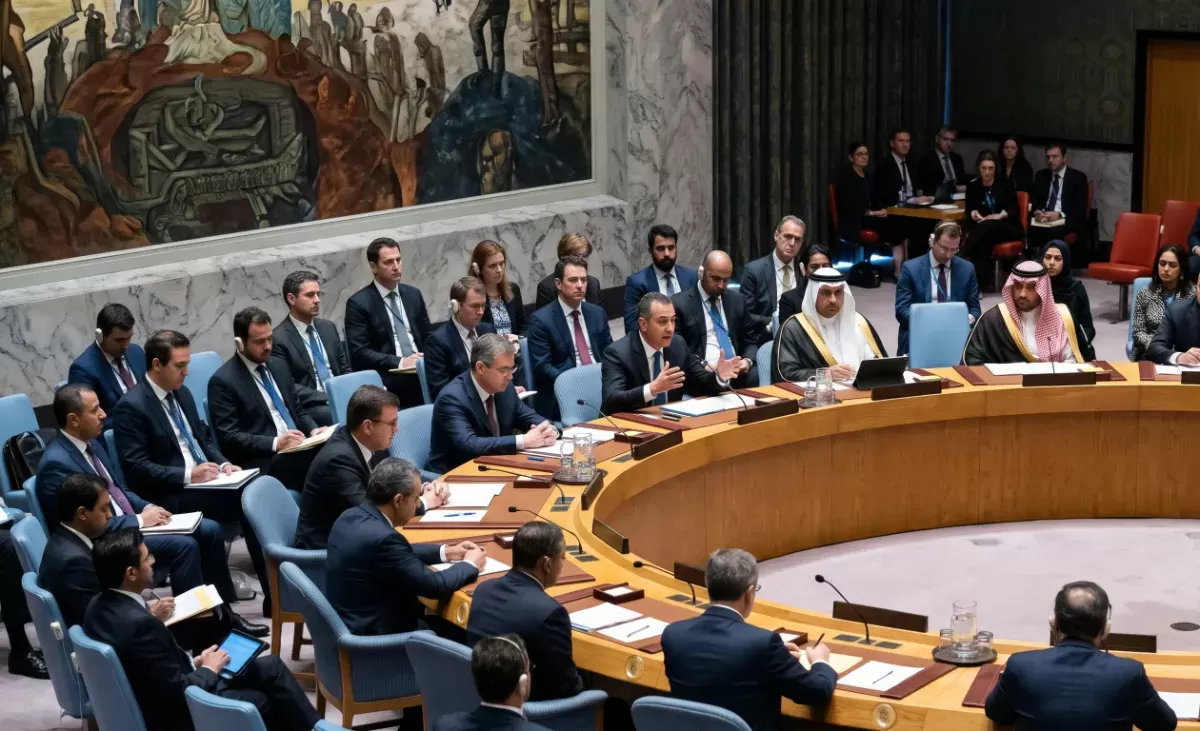
This Security Council meeting was requested by Bahrain, with core concerns focused on the ongoing threats to commercial shipping in the Strait of Hormuz and the Bab al-Mandab Strait. Khiari stated that the number of incidents against commercial vessels in October reached its highest monthly level since February 2026, with 134 confirmed incidents by the IMO, 25 seafarers killed, and multiple others injured or missing. He emphasized that civilian vessels and commercial shipping "must not become targets," and that the current situation "cannot be allowed to become the new normal".
The GCC representative, Bahraini Ambassador to the UN Jamal Fares Alrowaiei, provided more specific figures on behalf of Gulf states: since 28 February 2026, GCC member states and Jordan have suffered approximately 7,000 missile and drone attacks, with airports, ports, oil and gas facilities, power stations, and desalination plants all targeted. Approximately 1,600 vessels have been disrupted in the Strait of Hormuz, leaving over 23,000 seafarers stranded. He stated that "the security of the Arab Gulf is not merely a regional issue; it is a cornerstone of international peace and security," and called for full implementation of Security Council Resolution 2817 and stronger international action to protect shipping and supply chains.
US representative to the UN Jennifer Locetta directly accused Iran of attacking neighboring countries, firing on commercial vessels, supporting armed groups, and disregarding Security Council resolutions. She also accused the Houthis of escalating attacks on Saudi Arabia, including strikes on commercial vessels, airports, and energy infrastructure. She called on Security Council members to support regional peace and stability and protect commercial shipping.
Iranian representative Gholamhossein Darzi rejected the accusations, stating that the crisis stemmed from wars launched by the United States and Israel in June 2025 and February 2026, and that Iran itself was a victim. He rejected Resolution 2817 as politically motivated and accused Western countries of reversing the roles of aggressor and victim.
From an economic perspective, Khiari warned that disruptions to maritime navigation are driving up energy, transport, and insurance costs, fueling inflation, and threatening food security amid severely constrained fertilizer shipments. He emphasized that the transport of food, energy, fertilizer, and other essential goods must not be impeded, and that maritime chokepoints must never become instruments of coercion. While energy exports from the Gulf region have largely recovered through alternative routes, maritime shipment volumes remain below pre-conflict levels.
For the logistics and shipping industry, this Security Council meeting signals that the Strait of Hormuz crisis has escalated from a regional security issue to a core agenda item affecting global supply chains. The 134 confirmed incidents and 23,000 stranded seafarers indicate that commercial shipping in the region still faces systemic risks. The diverging positions among the US, Iran, and Gulf states suggest that a unified international response is difficult to achieve in the short term, and shipping companies and logistics operators may need to prepare for prolonged risk exposure.