
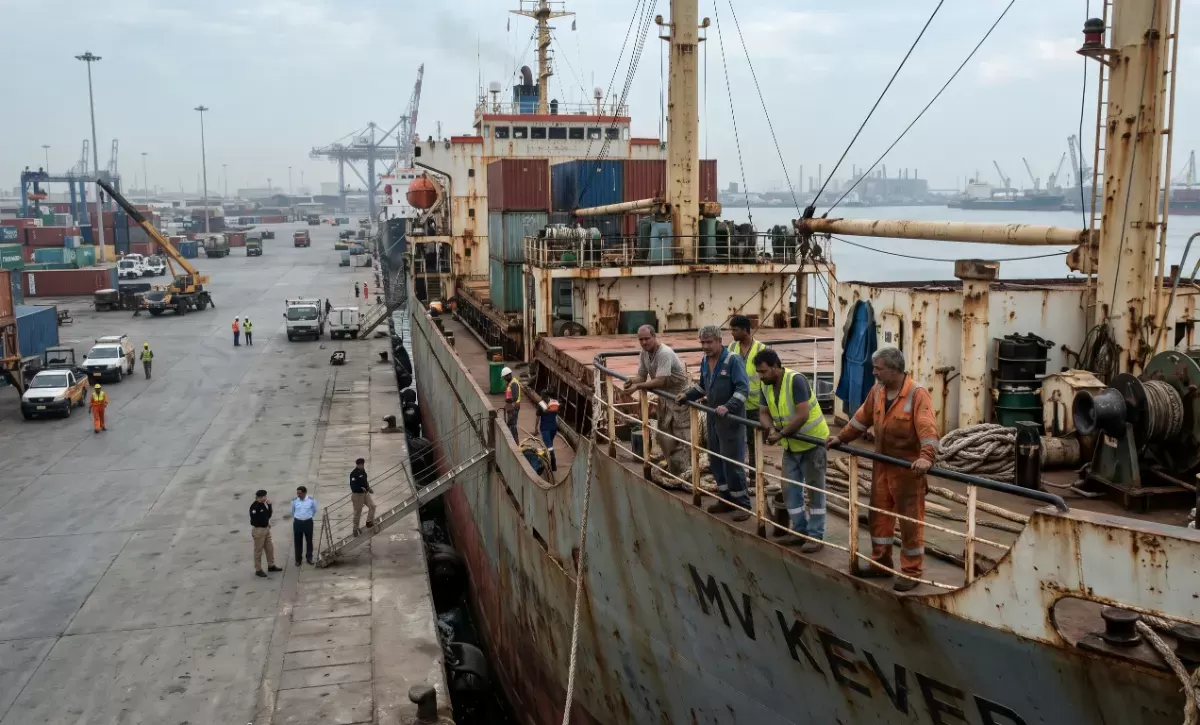
The six crew members boarded the cargo vessel in February 2026, transiting through Iran and Oman before arriving at Karachi Port in April. Upon the vessel's detention, port authorities reportedly seized the crew's passports, leaving the sailors unable to disembark even after their employment contracts expired. Among the stranded group is Vineet Kishore Mishra, a senior Merchant Navy officer from Prayagraj, whose family has appealed to the Indian government for intervention .
The core legal obstacle to the crew's departure is a fundamental principle of maritime regulation: seafarers cannot abandon a vessel while it remains in port unless a formal relief crew arrives to take over operations. MEA spokesperson Randhir Jaiswal explained, "You cannot just leave the ship. A replacement crew has to come before you leave." This requirement has kept the six Indians aboard despite the expiry of their contracts .
The dispute itself involves the ship's operator, Iran-based KEVER Shipping Company, and Karachi port authorities. According to reports, the vessel was detained over commercial and legal issues, and port officials seized the crew's passports as part of the proceedings. A senior Indian government official stated on 29 October that six replacement crew members were ready to board the vessel but were awaiting clearance from Karachi port authorities, leaving the handover in limbo .
Conditions aboard the detained vessel have been difficult for the stranded seafarers. Reports indicate erratic power supply and severely restricted mobile connectivity, with the crew managing to speak with relatives in India roughly once every two weeks. Families have described the ordeal as marked by anxiety and communication blackouts, with minimal updates on living conditions, food supplies, and health .
Diplomatic efforts have intensified in recent days. India made a formal consular request to Pakistan, and according to sources in Pakistan's Foreign Office, authorities have agreed to process the request and make arrangements for officials from the Indian High Commission in Islamabad to meet the crew at Berth No. 21, West Wharf. The consular access would allow Indian diplomats to assess the sailors' welfare and expedite documentation for their repatriation once replacement crew members embark .
The case has drawn attention to the broader welfare of Indian mariners abroad. During the same media briefing, the MEA announced that an emergency travel certificate had been issued to another Indian seafarer, Akshay Hareesh from Kerala, who was stranded at Chabahar Port in Iran after losing his passport and Continuous Discharge Certificate. The Indian Consulate in Bandar Abbas intervened after Hareesh contacted the mission on 9 November, and he is now cleared to return to India .
For the logistics and shipping sector, the incident underscores the vulnerabilities faced by seafarers when commercial disputes between vessel operators and port authorities escalate. The inability of crew members to disembark without replacement teams creates a structural risk for maritime labor, particularly when vessels are detained in foreign ports amid legal or commercial conflicts. The resolution of this case will depend on the arrival of relief crew and the completion of pending port formalities, with Indian diplomats now positioned to monitor the situation directly .