
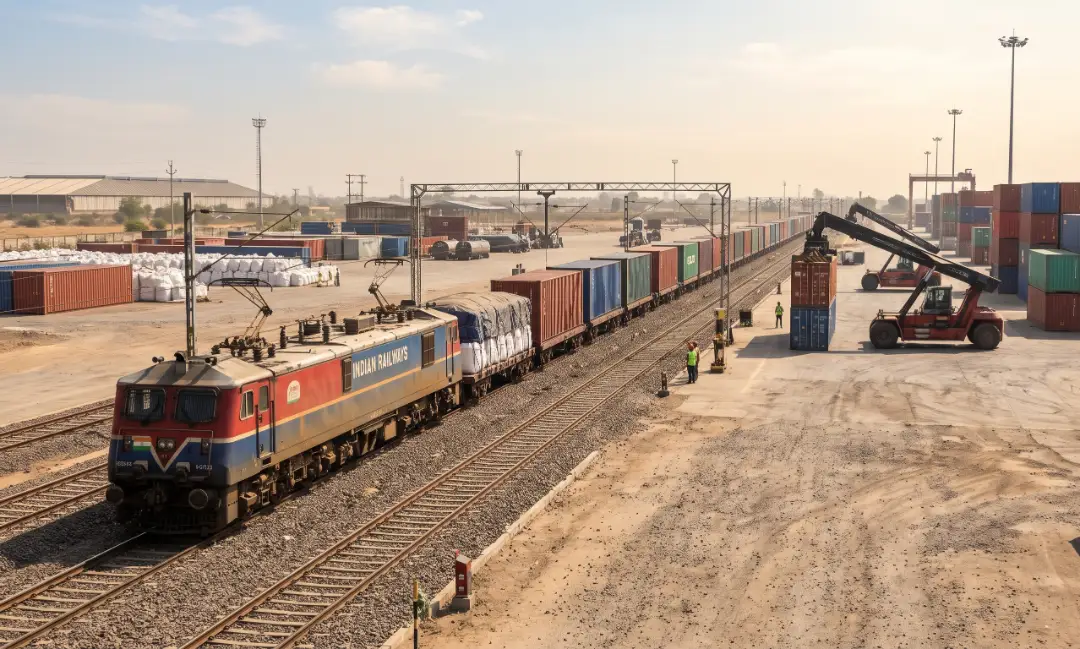
The inaugural polymer rake marks a meaningful expansion of Virochannagar's cargo profile. Until now, the depot's rail operations have been oriented toward port-bound export containers, with block trains dispatched for shipping lines including Ocean Network Express and Emirates Shipping to Mundra Port since September 2025. The Bathinda shipment introduces an inbound industrial flow that originates in Punjab's petrochemical heartland and terminates at an inland terminal in Gujarat, creating a new domestic logistics lane for a high-volume manufacturing input .
HMEL, a joint venture between Hindustan Petroleum Corporation and Mittal Energy Investments, operates a petrochemical complex at Bathinda with a combined polymer capacity of 2.2 million tonnes per year, comprising 1.2 million tonnes of polyethylene and one million tonnes of polypropylene. These polymers serve as raw materials for packaging, automotive components, construction products, textiles, and consumer goods. The rail movement therefore connects a major production site in northern India with a distribution point in the west, where the cargo can be processed or forwarded to downstream manufacturers .
The directional logistics dynamic is notable. A separate HMEL pipeline subsidiary already operates a 1,017-kilometre crude oil line running from Mundra to Bathinda. The new polymer rake effectively reverses the flow of petrochemical value, carrying finished polymer product from the inland refinery back toward the Gujarat coast. This creates a more balanced utilization of freight corridors between Punjab and Gujarat, rather than relying solely on inbound crude movement .
Virochannagar's evolution as a multimodal hub provides the infrastructure backdrop for this development. The facility is one of 12 rail-connected logistics parks listed by Adani Logistics. For the financial year 2025–26, Adani Ports and SEZ reported rail container volumes of 695,517 TEUs and bulk rail cargo of 21.7 million tonnes across its logistics operations, supported by a fleet of 68 container rakes serving cargo across 18 states. The addition of domestic polymer traffic strengthens the terminal's utilization beyond its port-linkage role .
From a supply chain perspective, the rail option offers advantages over road transport for polymer movement. Polymers are bulky, relatively low-value-per-tonne commodities where freight costs constitute a meaningful share of landed cost. Rail haulage between Punjab and Gujarat can reduce fuel consumption and road congestion compared to trucking, while also providing more predictable transit times for manufacturers who require steady feedstock supplies. The specific tonnage and polymer grades of the first rake were not disclosed, nor was a schedule for repeat services .
The development also reflects broader trends in India's domestic logistics landscape. As container rail infrastructure expands beyond port hinterland connectivity, operators are seeking two-way cargo flows to improve asset utilization and reduce empty running. The Bathinda-Virochannagar polymer lane represents precisely this kind of balanced freight pairing, where export container traffic to Mundra can be complemented by inbound domestic bulk cargo. For Adani Logistics, this diversification reduces dependence on cyclical export volumes and strengthens the commercial case for further investment in inland terminal capacity.
For the petrochemical sector, rail-based polymer distribution offers a potential hedge against road freight volatility. India's polymer demand continues to grow with packaging, automotive, and construction activity, and producers require reliable outbound logistics to reach dispersed converters and manufacturers. The successful establishment of a repeatable rail service on the Bathinda-Gujarat corridor could encourage similar arrangements from other petrochemical complexes, gradually shifting a portion of domestic polymer movement from road to rail and contributing to the logistics sector's broader modal diversification objectives .