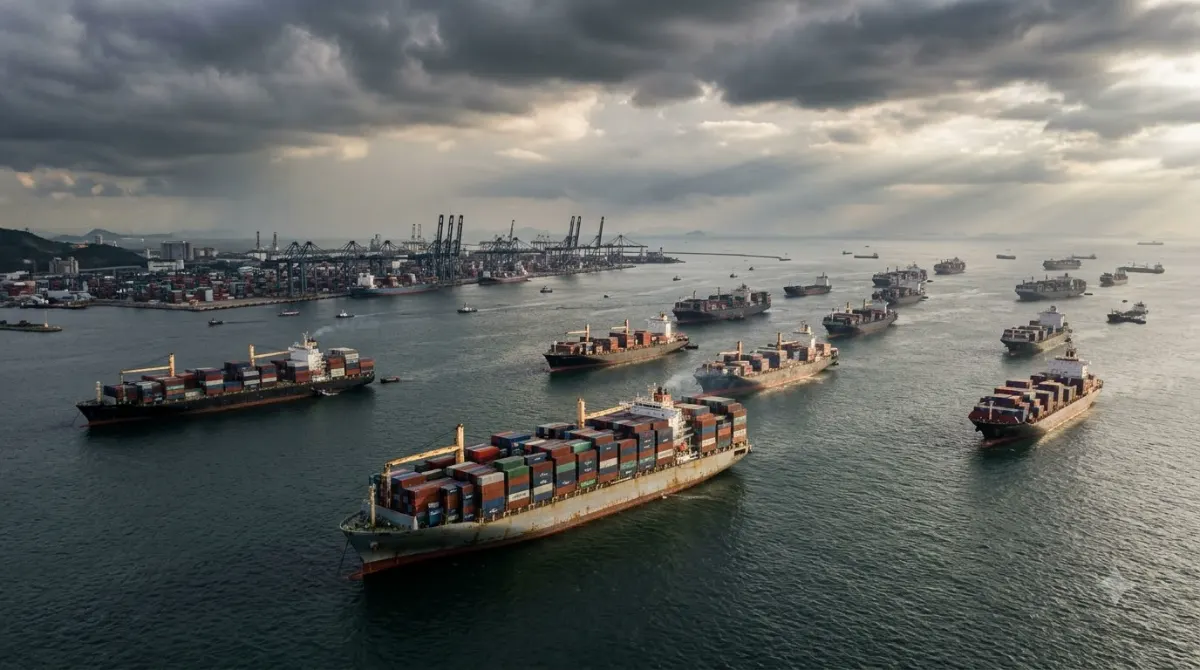
<p class="ds-markdown-paragraph" style="margin: 16px 0px; color: rgb(15, 17, 21); font-family: quote-cjk-patch, Inter, system-ui, -apple-system, BlinkMacSystemFont, "Segoe UI", Roboto, Oxygen, Ubuntu, Cantarell, "Open Sans", "Helvetica Neue", sans-serif; font-size: 16px;"><span class="">MSC CEO Soren Toft has declared that port congestion has become the container shipping industry's "new normal," in a quarterly update posted on social media that reflects the operating environment carriers have faced throughout 2026 . Toft said geopolitical uncertainty remains a persistent factor and that liner companies need to maintain agility in responding to disruptions that have become structural rather than episodic.</span></p><p class="ds-markdown-paragraph" style="margin: 16px 0px; color: rgb(15, 17, 21); font-family: quote-cjk-patch, Inter, system-ui, -apple-system, BlinkMacSystemFont, "Segoe UI", Roboto, Oxygen, Ubuntu, Cantarell, "Open Sans", "Helvetica Neue", sans-serif; font-size: 16px;"><span class="">The reliability data provides context for Toft's assessment. MSC recorded 68.9% schedule reliability, surpassing the Gemini Cooperation's 68.4% average, despite the congestion that affected major ports in August and September . The 0.5-percentage-point gap is small, but it challenges the narrative that the Gemini network's structure delivers superior resilience. MSC's standalone operating model, with its massive independent fleet, has proven capable of matching the alliance-backed reliability of its closest competitors.</span></p><p class="ds-markdown-paragraph" style="margin: 16px 0px; color: rgb(15, 17, 21); font-family: quote-cjk-patch, Inter, system-ui, -apple-system, BlinkMacSystemFont, "Segoe UI", Roboto, Oxygen, Ubuntu, Cantarell, "Open Sans", "Helvetica Neue", sans-serif; font-size: 16px;"><span class="">The volume picture tells a different story. Maersk's Q3 liftings fell 0.8% year-on-year and Hapag-Lloyd's declined 0.5%, despite the global market growing approximately 5.0% . The divergence between market growth and carrier volumes reflects the impact of Asian port congestion, which has delayed vessel rotations and reduced effective capacity. Carriers whose networks are concentrated on affected routes have seen volumes constrained even as overall demand expands.</span></p><p class="ds-markdown-paragraph" style="margin: 16px 0px; color: rgb(15, 17, 21); font-family: quote-cjk-patch, Inter, system-ui, -apple-system, BlinkMacSystemFont, "Segoe UI", Roboto, Oxygen, Ubuntu, Cantarell, "Open Sans", "Helvetica Neue", sans-serif; font-size: 16px;"><span class="">MSC's scale provides the foundation for its resilience. The carrier operates 1,024 container ships, of which 773 are owned and 251 chartered, with total capacity of 7.488 million TEU and a 21.5% market share . It holds an orderbook of 182 newbuildings totalling 3.377 million TEU, reinforcing its position as the industry's largest operator. This scale allows MSC to absorb disruptions that would strain smaller carriers, deploying vessels across its network to compensate for congestion at individual ports.</span></p><p class="ds-markdown-paragraph" style="margin: 16px 0px; color: rgb(15, 17, 21); font-family: quote-cjk-patch, Inter, system-ui, -apple-system, BlinkMacSystemFont, "Segoe UI", Roboto, Oxygen, Ubuntu, Cantarell, "Open Sans", "Helvetica Neue", sans-serif; font-size: 16px;"><span class="">For Indian shippers and logistics operators, MSC's assessment has direct relevance. The carrier is a major operator on India-linked routes, including services connecting Indian ports with Europe, the Mediterranean, and Asia. The congestion that Toft describes has affected Indian gateways as well, with JNPA and Mundra reporting high yard utilisation and vessel waiting times in recent weeks. Shippers using MSC services should factor the "new normal" of congestion into their planning, allowing additional buffer time for vessel arrivals and container availability.</span></p><p class="ds-markdown-paragraph" style="margin: 16px 0px; color: rgb(15, 17, 21); font-family: quote-cjk-patch, Inter, system-ui, -apple-system, BlinkMacSystemFont, "Segoe UI", Roboto, Oxygen, Ubuntu, Cantarell, "Open Sans", "Helvetica Neue", sans-serif; font-size: 16px;"><span class="">The broader industry context is one of structural adaptation to persistent disruption. The Middle East conflict, Red Sea security concerns, and port congestion have combined to create an operating environment in which schedule reliability is difficult to maintain and capacity management requires constant adjustment. Toft's message is that this is not a temporary phase to be endured but a condition to be managed, and that carriers must build their organisations around the expectation of continued volatility.</span></p><p class="ds-markdown-paragraph" style="margin: 16px 0px; color: rgb(15, 17, 21); font-family: quote-cjk-patch, Inter, system-ui, -apple-system, BlinkMacSystemFont, "Segoe UI", Roboto, Oxygen, Ubuntu, Cantarell, "Open Sans", "Helvetica Neue", sans-serif; font-size: 16px;"><span class="">Looking ahead, the key question is whether the congestion that has defined 2026 will ease as new capacity enters the market and as carriers adjust their networks. MSC's orderbook suggests that it expects to continue growing, and its reliability performance indicates that scale and ownership provide a buffer against disruption. For Indian exporters and importers, the practical implication is that working with carriers that have demonstrated reliability and network flexibility, rather than simply the lowest headline rate, may be the more prudent approach in an environment where congestion is the norm rather than the exception.</span></p>
MSC Chief Says Port Congestion Has Become the "New Normal" for Container Shipping as Geopolitical Uncertainty Persists
MSC CEO Soren Toft said in a quarterly update on social media that port congestion has become the industry's "new normal" and that geopolitical uncertainty remains, requiring liner companies to stay agile. The statement comes as MSC leads schedule reliability among major carriers at 68.9%, surpassing the Gemini Cooperation's 68.4%, while both Maersk and Hapag-Lloyd reported year-on-year volume declines in Q3, partly due to congestion at Asian ports. MSC operates 1,024 vessels with 7.488 million TEU of capacity and holds an orderbook of 182 ships totalling 3.377 million TEU.