
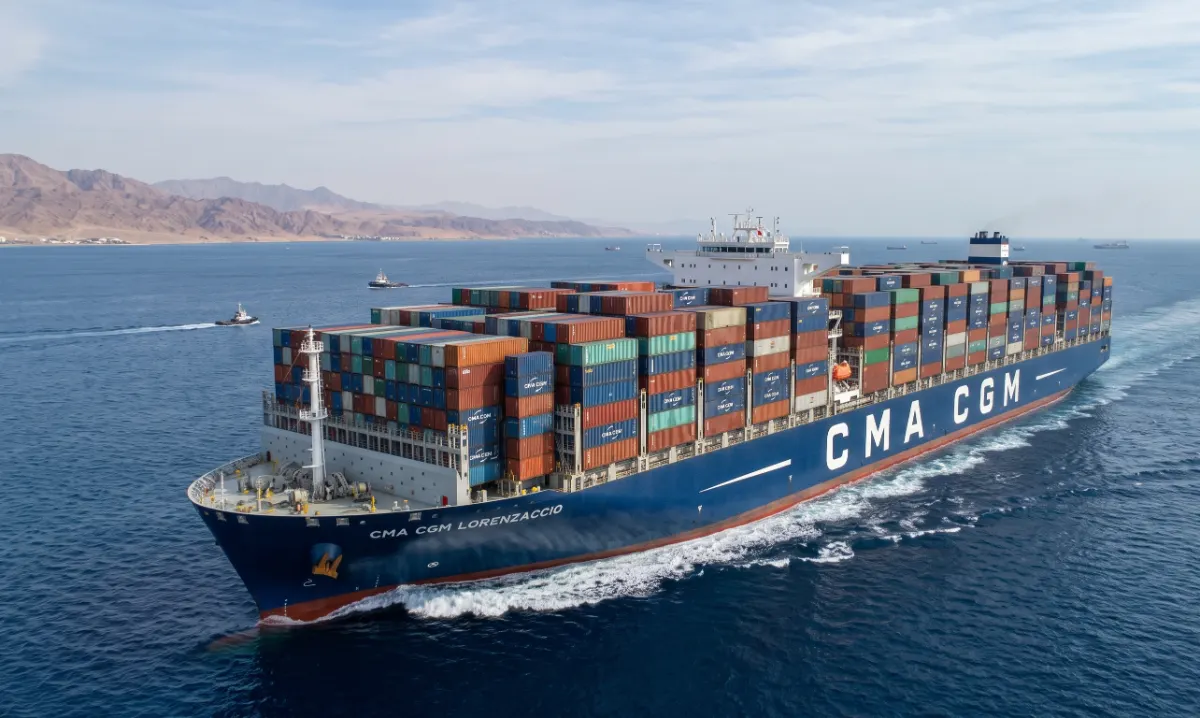
The CMA CGM Lorenzaccio is a 15,000 TEU methanol dual-fuel container vessel. According to data from the shipbuilder CSSC Tianjin Shipbuilding, the vessel has an overall length of 366 meters, a beam of 51 meters, a gross tonnage of 155,613, and a deadweight of 156,100 tonnes . The shipbuilder stated that the vessel features an optimized hull form, high-efficiency propeller, and energy-saving rudder bulb, and is capable of carrying refrigerated containers and dangerous goods containers . The delivery was completed 16 days ahead of the contractual schedule, reflecting the shipyard's construction efficiency. This vessel is the fifth methanol dual-fuel containership delivered by CSSC Tianjin Shipbuilding in 2026 .
The vessel's naming continues CMA CGM's distinctive tradition of naming ships after characters from French literature. The Lorenzaccio name originates from the protagonist of the 1834 play of the same name by French Romantic writer Alfred de Musset . This is the sixth vessel in this series, following previously delivered or named vessels including CMA CGM Eugenie, CMA CGM Monte Cristo, and CMA CGM Roi Arthur . CMA CGM stated that this naming approach "brings this literary heritage into a new chapter of our fleet, contributing to our Net Zero 2050 ambition" .
In terms of technical configuration, the vessel is equipped with methanol dual-fuel propulsion, capable of operating on either methanol or conventional marine fuel. This gives the vessel operational flexibility, allowing it to select the appropriate fuel based on methanol availability and pricing at different bunkering ports, while retaining the capability to reduce emissions when methanol is available . The dual-fuel design is a transitional solution adopted by the shipping industry in the context of increasingly stringent environmental regulations and uncertainty in alternative fuel supply infrastructure. The vessel is also equipped with an energy efficiency management system, intelligent engine room monitoring, and cargo hold management technology .
The vessel will be deployed on CMA CGM's Red Sea Express 2 (REX2) weekly service. According to publicly available information, the REX2 service calls at Asian ports including Shanghai, Qingdao, Ningbo, Shekou, Nansha, and Singapore, then heads to Red Sea destinations including Djibouti, Jeddah, Ain Sokhna (Egypt), and Aqaba (Jordan) . The service connects Asian manufacturing centers with Red Sea gateway ports serving East Africa, the Arabian Peninsula, and Egypt. Captain Predrag Vojvodic will command the vessel .
The deployment of the CMA CGM Lorenzaccio on the Red Sea route has a specific contextual backdrop. Since 2024, Red Sea shipping has faced security risks, and many carriers have adjusted Suez Canal and Cape of Good Hope routings based on risk assessments . CMA CGM's deployment of a large dual-fuel vessel on this route signals its commitment to maintaining service competitiveness on the Red Sea corridor while meeting emissions requirements through newer tonnage. For shippers and freight forwarders, this means the weekly capacity of the REX2 service will be provided in part by modern, large dual-fuel vessels .
From a fleet strategy perspective, the CMA CGM Lorenzaccio is part of CMA CGM's broader investment in alternative fuel vessels. CMA CGM has stated its ambition to operate approximately 200 containerships capable of using low-carbon energy by 2031, as part of its fleet decarbonization strategy . The group took delivery of 27 LNG- and methanol-powered vessels in 2025 and has invested nearly $30 billion in orders for vessels capable of using LNG or methanol, as part of its target to reach net-zero carbon emissions by 2050 . This investment direction reflects the shipping industry's response to International Maritime Organization greenhouse gas reduction targets.
For the logistics sector in India, South Asia, and the Middle East, the vessel's deployment has indirect but noteworthy implications. The Red Sea is a critical corridor for India-Europe and Middle East-Europe trade. The REX2 service directly connects Asian ports with Jeddah and Aqaba—two key gateways for Middle East trade—and Djibouti, the main gateway for East African markets . The addition of more modern, large tonnage on this corridor may improve service frequency and capacity stability, though the direct impact on India-related cargo depends on whether Indian ports are included in the REX2 rotation and the feeder network connections. CMA CGM has not disclosed in its public statements whether the vessel will call at Indian ports.