
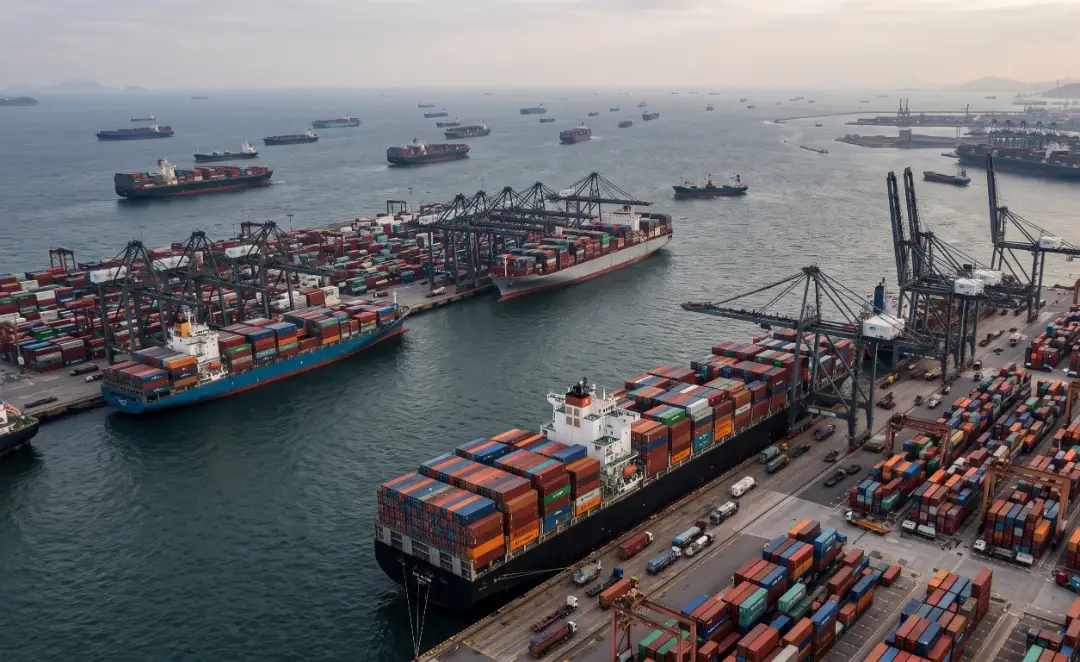
WiseTech Global's November Ocean Freight Risk Outlook, covering weeks 45 through 48, identifies the Asia-North America route as the highest-risk trade lane. Monthly on-time performance declined from 26.9% in September to 25.6% in October, though the latest weekly figure improved slightly to 27.3%. More critically, transit-time reliability—measuring whether actual container transit time aligns with the estimate provided at booking confirmation—fell to 21% in October, down six percentage points month-on-month, indicating that shorter published schedules do not necessarily translate into more predictable delivery times.
The capacity outlook for Asia-North America is particularly concerning. WiseTech expects capacity to tighten in the second half of November due to reduced planned carrier capacity rather than stronger demand. The demand-to-supply ratio is projected to reach 128% in week 47, signaling significant capacity constraints. The booking security risk indicator is forecast to climb to 71% by week 48, well above the historical average of 41%. Jon Charles, product manager at WiseTech, noted that the combination of tightening capacity and elevated booking acceptance risk constitutes "the strongest risk signal we look for, because it suggests tighter capacity is already changing booking request outcomes".
The Asia-Europe route presents a different but equally problematic picture. While capacity pressure is easing—with the demand-to-supply ratio projected to fall from 100% in week 45 to 73% by week 48—service performance continues to deteriorate. Only 9.3% of shipments arrived on time in October, down from 9.9% in September, marking the fifth consecutive month of decline. Delays of eight days or longer remained the most common outcome, affecting 39.1% of arrivals in the latest weekly data, while transit-time reliability fell five percentage points to 35%.
The Europe-North America route was assessed as the most stable of the three major east-west lanes, though it also experienced deterioration. On-time performance fell from 39.2% in September to 34.8% in October, and the latest weekly result dropped to 24.6%. Transit-time reliability declined three percentage points to 46%. Planned carrier capacity remains above forecast demand, and booking acceptance risk is below historical averages, but WiseTech flagged potential industrial action at European ports as an additional risk to vessel schedules.
Weather disruptions and port congestion remain underlying drivers of the reliability crisis. WiseTech cited continuing berthing delays and renewed weather disruption across East Asia as risks to vessel schedules, alongside potential industrial action. These factors compound the effects of earlier typhoon seasons and port bottlenecks that have disrupted vessel rotations throughout 2026, pushing scheduled sailings into subsequent weeks and creating vessel bunching that artificially inflates deployed capacity on key routes.
Carrier performance varies substantially across all three trade lanes, making carrier selection a critical risk management decision for shippers. On the Europe-North America route, October on-time arrival rates among the ten largest carriers ranged from approximately 10% to 71%. Even on the strongest-performing route, the gap between the best and worst carriers is wide enough that shippers who book without regard to carrier reliability expose themselves to significantly higher delay risk. WiseTech noted that service reliability remains weak across the carrier group, with even the strongest October on-time performer on Asia-North America achieving only around 30%.
The implications for shippers heading into year-end are significant. WiseTech advised forwarders and beneficial cargo owners to book early against contracted allocations, build additional time into delivery commitments, and factor individual carrier reliability into their planning. For Asia-North America in particular, the combination of tightening capacity, elevated booking rejection risk, and weak schedule reliability means that shipments for the holiday season face heightened uncertainty. The report's findings underscore a broader pattern in global container shipping: available capacity on paper does not guarantee that cargo will move on schedule, and the gap between published transit times and actual performance remains wide across all major trade lanes.