
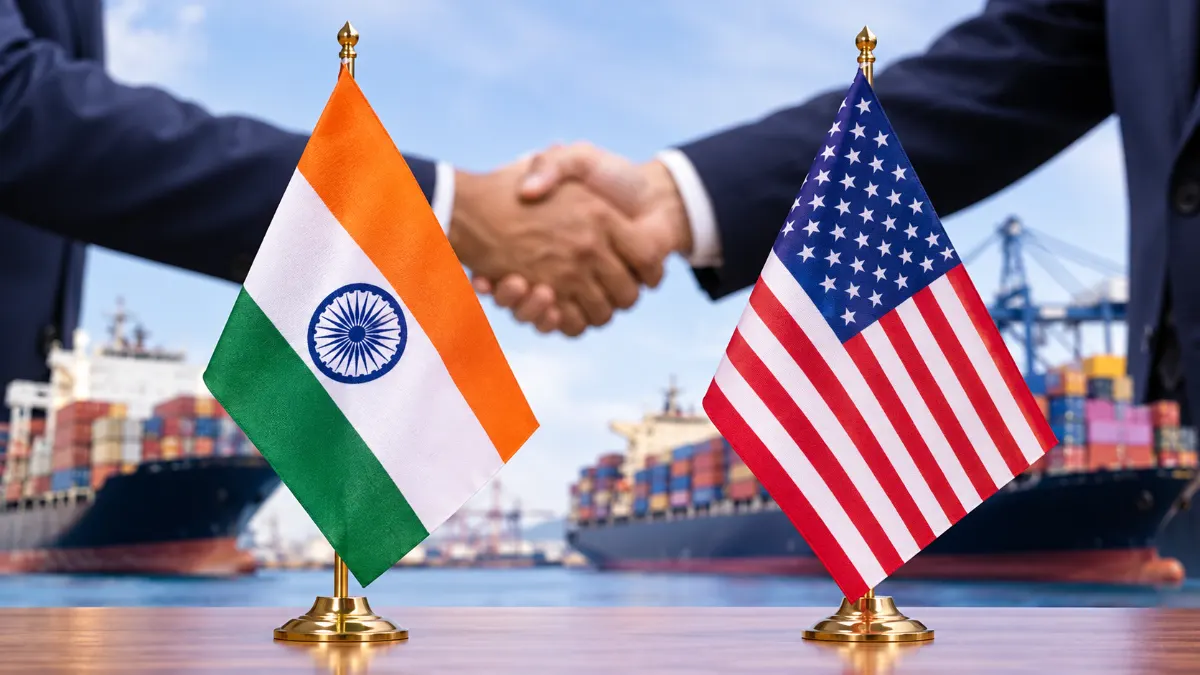
Goyal made these remarks while attending the 31st CII Partnership Summit in Visakhapatnam. He told reporters that India "has negotiated a very good set of outcomes" and that "in every respect, India will have one of the best deals with the US". He particularly emphasized the competitive dimension: post-agreement, India will gain "most preferred market access" in products of interest relative to countries producing similar goods and at similar stages of development. This statement responds to a core Indian concern—Indian exporters fear being placed at a tariff disadvantage in the US market compared to competitors in Bangladesh, Vietnam, Cambodia, and other Southeast/South Asian nations.
The agreement's negotiation process has experienced significant twists and turns. In February 2026, the two sides finalized the first-phase framework of the Bilateral Trade Agreement (BTA) following a phone call between Prime Minister Modi and President Trump. However, in February 2026, the US Supreme Court ruled to invalidate the reciprocal tariffs imposed under the International Emergency Economic Powers Act (IEEPA), fundamentally altering the US tariff landscape. The United States subsequently shifted to alternative legal instruments, including a Section 301 investigation into forced labor issues, imposing an additional 10% tariff on Indian goods (lower than the initially proposed 12.5%, but 43 countries still face the 12.5% rate). This has forced the two sides to reopen tariff negotiations.
From a logistics and trade facilitation perspective, technical-level discussions between the two sides have not been interrupted. On November 2-3, a two-member US customs and trade facilitation track team visited New Delhi for discussions with Indian counterparts, focusing on the customs chapter and trade facilitation matters of the agreement. Goyal noted that the US Deputy Chief Negotiator's visit was primarily for customs alignment discussions and did not constitute a formal round of negotiations. This indicates that while the political-level tariff issues remain deadlocked, technical preparations at the working level continue to advance, laying the groundwork for a rapid conclusion once a political decision is reached.
A core obstacle in the negotiations concerns guarantees regarding the "competitive edge." The Hindu BusinessLine cited sources stating that India needs to assess the impact of the US Section 301 investigation into "excess industrial capacity" on its own exports as well as those of competitors before it can finalize specific tariff commitments. This investigation, launched in March 2026, covers India, China, Vietnam, Bangladesh, Cambodia, Indonesia, the European Union, and 15 other economies. Furthermore, India seeks to include safeguards in the agreement against the United States invoking the Sanctions Russia and Iran Act (the "Lindsey Graham Act") to impose punitive tariffs of up to 100% on Indian goods in the future. These two demands reflect India's attempt to lock in predictable, non-discriminatory tariff treatment through the agreement.
Political-level variables also add uncertainty. The Republican Party suffered significant losses in the November 3 US midterm elections, with Democrats winning control of both the Senate and House of Representatives. Goyal explicitly stated that India does not link trade relations with the domestic political dynamics of partner countries: "We do not link our trade relations with internal elections or results of any kind". However, analysts point out that while the election outcome may increase scrutiny of the Trump administration's trade policies, it will not immediately constrain the President's authority to impose tariffs through executive action (such as Sections 301 and 232), and India still needs to remain vigilant.
Regarding the timeline, Goyal declined to provide a clear expectation. He stated that the agreement is "under discussion" and that "many factors determine these outcomes". Former US Assistant Secretary of State for South and Central Asian Affairs Nisha Biswal stated that both sides have the will to complete the first phase of the agreement before the G20 Summit in Florida in December 2026 (December 14-15), but she also described the negotiations as "complicated," particularly regarding India's demand for "comparative advantage" in the textile sector and other areas, which poses a challenge to the US side within its existing policy tool framework.
Beyond the US negotiations, Goyal also revealed that Guatemala and Ecuador have expressed interest in initiating separate trade agreement negotiations with India. He stated: "India today is looked upon as the trusted partner of the world. Otherwise they would not be wanting to do trade agreements with India". This statement is placed against the backdrop of India actively advancing its global trade agenda—the India-EU Free Trade Agreement is reportedly "complete" and awaiting approval from the European Council, with hopes of signing by the end of 2026 and operationalizing in the first half of 2027. The negotiation progress of the India-US agreement will directly affect the landed cost structure and market access conditions for India's exports to the United States, with particularly close attention from logistics and supply chain operators in textiles, pharmaceuticals, IT services, and agricultural products.