
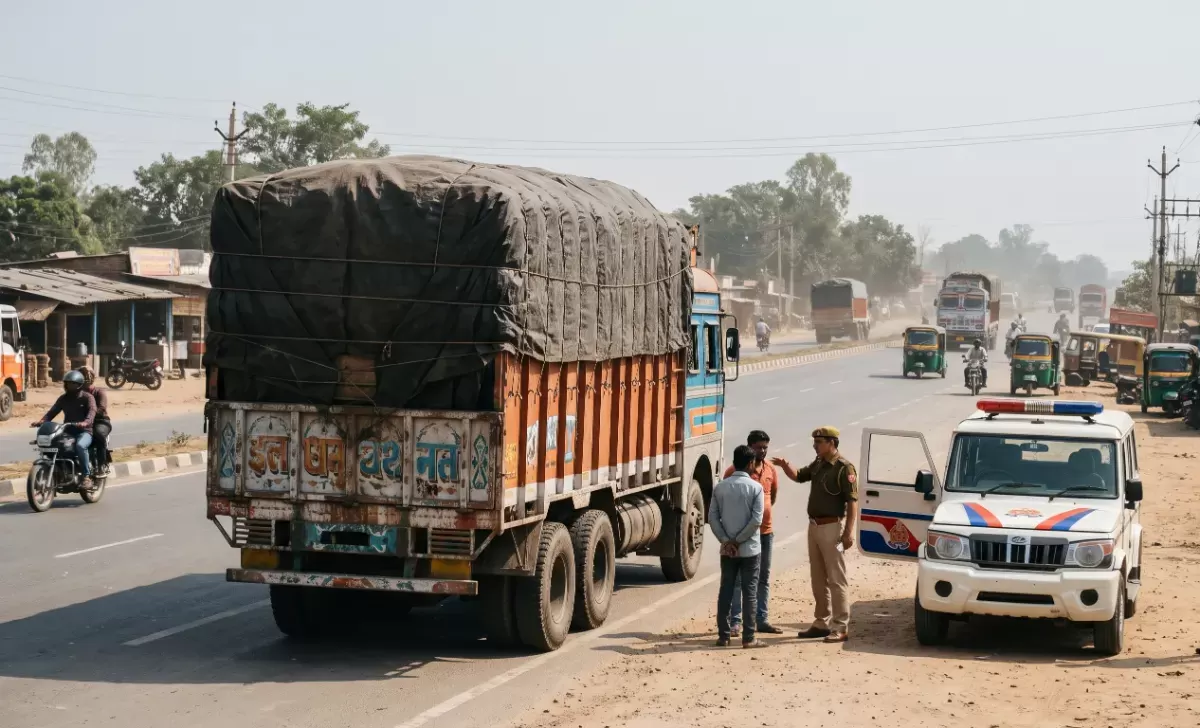
The shipment departed from Hindalco Industries Limited's Renukoot complex in Sonbhadra district, Uttar Pradesh, on October 31, 2026. The truck was loaded with 34,874 kilograms of aluminum, with an estimated value of approximately ₹1.63 crore. The consignment was destined for Bengaluru, Karnataka. The transport arrangement was made through Surat Goods Transport Private Limited, which in turn engaged a vehicle via an all-India transport company network. The driver was identified as Himmat Singh .
According to the complaint filed by Durgesh Kumar Chaubey, branch manager of Surat Goods Transport Private Limited, the driver contacted the broker shortly after departure and reported that his grandmother was unwell, stating he would pause near Aurangabad for a day. The driver subsequently cited a medical issue and said he would stay at home and resume the journey to Bengaluru on November 4. The transport company monitored the vehicle's location continuously during this period. When the company contacted the registered owner of the vehicle on November 8, they obtained a GPS tracking report .
The GPS data revealed that the vehicle was in the Pune region of Maharashtra between November 2 and 5. After that period, no clear location for the truck or its cargo could be established. This gap in tracking data raised suspicions that the aluminum may have been unloaded and removed somewhere along the route during that window. The transport company's complaint named the driver, the registered owner of the vehicle, and other individuals who claimed to have purchased the vehicle based on a notarized document .
Pipri police registered the case and Station House Officer Ajay Kumar Srivastava stated that a police team had been dispatched to Maharashtra to trace the vehicle, recover the cargo, and identify those involved. He claimed that the investigation team had obtained important leads and that the case was progressing. "The team has been sent to arrest the accused and recover the missing goods. The entire matter will be uncovered soon," Srivastava said. The police are examining the roles of the driver, the vehicle owner, and other suspects .
The incident is part of a pattern of aluminum cargo disappearances involving Hindalco shipments. The Jagran report noted that this is not the first such case, stating that "the series of aluminum consignments sent from Hindalco Industries Limited to different states of the country disappearing en route shows no signs of stopping." Previous cases have involved shipments bound for Maharashtra, Howrah, Haridwar, and Ludhiana. The recurrence suggests a systemic vulnerability in the road transport chain for high-value metal cargo originating from the Renukoot complex .
From a logistics risk perspective, the case illustrates several vulnerabilities in India's road freight ecosystem for industrial commodities. The involvement of multiple intermediaries—the shipper, the transport company, a broker, and the vehicle owner—creates layers of contractual relationships that can obscure accountability. The driver's initial reports of a family medical emergency and subsequent medical issue provided plausible reasons for route deviations and delays, potentially delaying the alarm being raised. The GPS tracking gap after November 5 is a critical evidentiary point, as it suggests either deliberate disabling of tracking or a period during which the vehicle was off the monitored network.
The value of the cargo—₹1.63 crore—places this incident in the category of major commercial theft, warranting serious police attention. For Hindalco, the loss represents both a direct financial hit and a supply chain disruption for the Bengaluru customer awaiting the aluminum. The case also raises questions about cargo insurance coverage and the liability allocation among the various transport intermediaries. Whether the shipment was insured and under what terms would determine the financial recovery path for the parties involved.
For logistics operators handling high-value industrial cargo, this case reinforces the importance of real-time GPS monitoring with tamper alerts, verified driver identity and background checks, and route deviation protocols that trigger immediate escalation. The multi-party structure of the transport arrangement—where the shipper contracts with one transport company, which subcontracts to a broker, who engages a vehicle owner—creates inherent opacity that can be exploited. The Pipri police investigation, now extending into Maharashtra, will determine whether this was an opportunistic theft or part of a more organized operation targeting Hindalco's outbound aluminum shipments.