
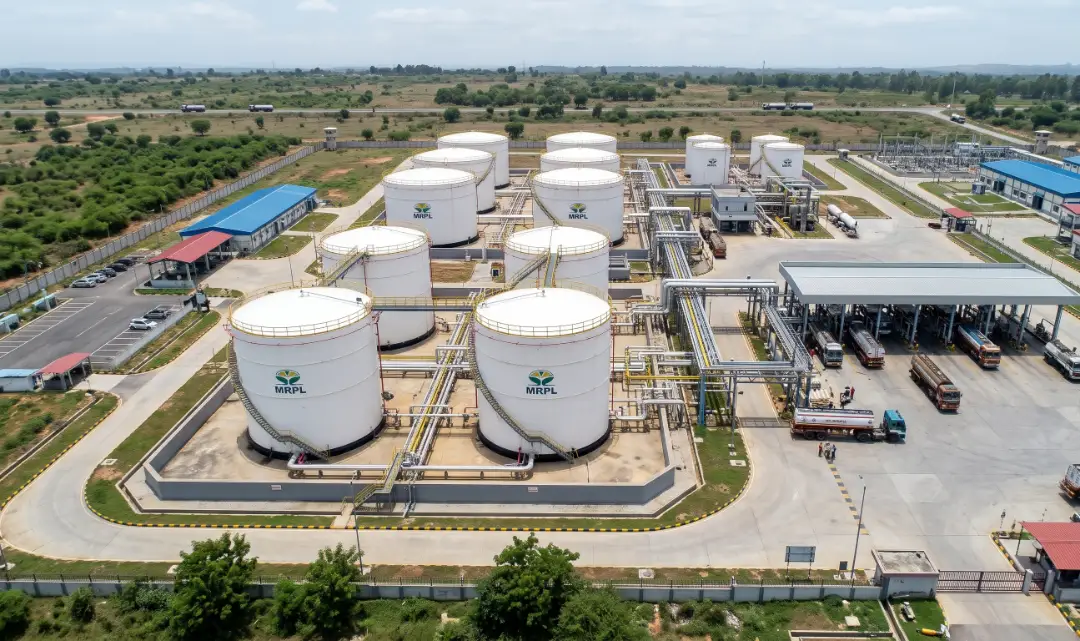
The Devangonthi Marketing Terminal is located in the eastern part of Bengaluru, covering an area of 20 acres. The facility was developed by Mangalore Refinery and Petrochemicals Limited (MRPL), a subsidiary of ONGC, with an investment of ₹33 crore. The terminal's core function is to receive refined petroleum products from the Mangaluru Refinery through the Petronet Mangalore-Hassan-Bangalore (PMHBL) pipeline, store them, and distribute them onwards by truck to customers in and around Bengaluru. The terminal began mechanical completion in May 2024 and was commissioned in August of the same year, with November 13, 2026 marking its formal dedication ceremony.
From a logistics infrastructure perspective, the terminal's most critical connection is the 363-kilometer PMHBL pipeline. This pipeline is operated by Petronet MHB Limited (PMHBL), with a licensed capacity of 5.6 million tons per annum and a designed capacity of 8.5 million tons per annum. The terminal has a storage capacity of 77,000 kiloliters, handling three main products: motor gasoline (petrol), high-speed diesel, and aviation turbine fuel (ATF). Bengaluru Airport is one of the terminal's key customers, and the ATF storage and distribution capability directly supports the airport's fuel supply needs.
The terminal is equipped with 10 automated truck loading bays and digital control systems, designed to improve loading efficiency and operational safety. Additionally, the facility includes dedicated ethanol and biodiesel storage and blending infrastructure, enabling the terminal to perform biofuel blending operations alongside conventional petroleum products. This configuration aligns with India's clean energy transition policy direction, providing logistical support for the government's ethanol blending program.
The most noteworthy environmental benefit of the project comes from the mode shift in transportation. Previously, fuel from the Mangaluru Refinery to the Bengaluru market relied primarily on long-distance road tanker transport, with routes passing through the ecologically sensitive Western Ghats. After the terminal is operational, a portion of the fuel will be transported via pipeline, reducing road transport mileage and associated carbon emissions, traffic risks, and road wear. MRPL estimates that this shift will avoid approximately 40,000 tons of carbon dioxide emissions annually. This figure reflects the emissions reduction from replacing road transport between the refinery and the terminal with pipeline transport, while the terminal's onward distribution by truck remains.
In terms of economic impact, MRPL expects the project to create over 280 direct and indirect employment opportunities. The terminal's operational model is to receive product via pipeline, store it, and then distribute it by truck, which means the workforce demand is concentrated in terminal operations, loading, maintenance, and logistics coordination. For the Karnataka fuel market, the terminal increases storage buffer near Bengaluru, potentially improving supply stability during peak demand periods or supply chain disruptions.
The Devangonthi terminal is part of MRPL's downstream marketing infrastructure expansion. As a refining company, MRPL has historically focused primarily on production, and this investment extends its capabilities in product distribution and market reach. The terminal supports MRPL's HiQ retail network expansion in Karnataka and provides the company with more direct supply capability to industrial customers. From a competitive standpoint, pipeline-connected terminals can offer more stable supply and potentially lower logistics costs compared to relying solely on long-distance road transport.
It is worth noting that the dedication ceremony for this terminal was held concurrently with multiple infrastructure projects in Bengaluru, including the Bengaluru Metro Pink Line, the Bengaluru-Goa Vande Bharat Express, and India's largest underground LPG storage cavern in Mangaluru, with a total value exceeding ₹15,600 crore. This arrangement reflects the Indian government's approach of packaging related infrastructure projects for centralized launch, with energy logistics infrastructure included as part of regional economic development. For logistics industry observers, the Devangonthi terminal exemplifies the model of "pipeline + terminal + truck distribution" for urban fuel supply, with its efficiency and emissions reduction benefits depending on the actual utilization of pipeline capacity and the optimization of terminal operating efficiency.