
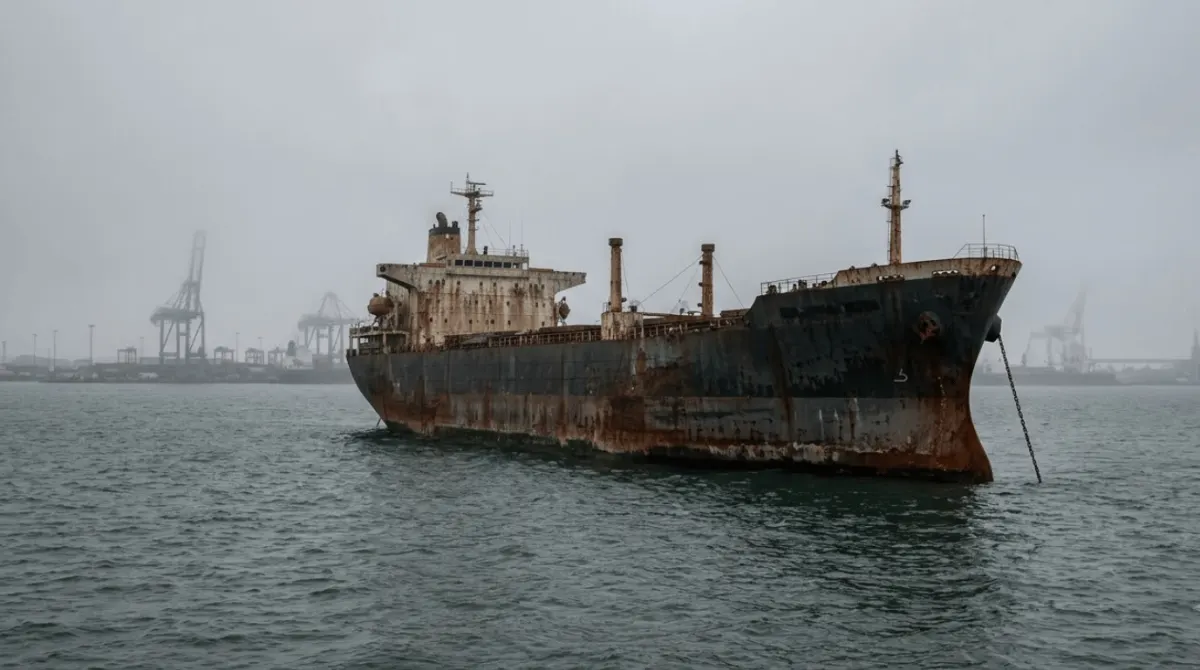
The Directorate General of Maritime Administration has issued a directive requiring all ports and state maritime boards to compile and submit information on abandoned and non-operational vessels within 15 days, in an effort to address maritime safety risks and seafarer welfare concerns that have accumulated in Indian waters . The notice, dated 9 November 2026 and reported by Safety4Sea on 12 November, establishes a national reporting framework for vessels that may pose risks to navigation, port operations, or the marine environment.
The scope of the reporting requirement is broad and deliberately inclusive. It covers vessels within port limits, berths, anchorages, and port approaches, regardless of whether crew members remain on board or whether the vessel has been formally declared abandoned . The categories that must be reported include abandoned or suspected abandoned vessels, ships detained by Port State Control or other statutory authorities, vessels under court orders or legal restrictions, and ships that are immobilised, disabled, laid-up, stranded, grounded, drifting, or unmanned . The notice also captures "other vessels of safety concern" whose condition or circumstances may threaten personnel, navigation, port infrastructure, security, or the marine environment.
For each vessel, port authorities must provide available information on its identity, location, operational condition, ownership and management, cargo and bunkers, and any existing safety or environmental concerns . This data collection is intended to create an updated national record that allows the DGMA and other competent authorities to understand the scale and nature of unresolved cases and to coordinate responses where vessels present ongoing risks.
The seafarer welfare dimension is central to the directive. The notice places particular emphasis on identifying welfare problems affecting crews on abandoned or immobilised vessels. Port authorities are required to record the number of people remaining on board, including crew members and other personnel, along with any outstanding welfare concerns . These may include unpaid wages, inadequate food and other provisions, medical assistance requirements, and difficulties arranging repatriation . Authorities must also report measures already taken to address vessel-related or crew-related concerns, together with any assistance or coordination required from the DGMA or other competent authorities.
The timing of the directive reflects a broader pattern of seafarer welfare incidents that have emerged during the maritime disruptions of 2026. India has been actively addressing cases of stranded seafarers, including the recent evacuation of 19 Indian nationals from Yemen and the repatriation of crew from vessels affected by the Gulf security crisis. The DGMA's notice creates a systematic mechanism for identifying vessels where crews may be in distress, rather than relying on ad hoc reporting or individual complaints.
For India's maritime administration, the reporting framework addresses a gap in the oversight of vessels that fall outside normal commercial operations. Ships that are abandoned, detained, or immobilised can remain in port waters for extended periods, creating safety hazards, environmental risks, and humanitarian concerns for any crew remaining on board. Without a consolidated national record, these vessels can fall through the cracks between port authorities, state maritime boards, and the DGMA, with no single agency having a complete picture of the problem.
The reporting deadlines are structured to balance thoroughness with urgency. All relevant port authorities must submit their initial consolidated reports within 15 days of the notice's issuance . New cases involving immediate or potential threats to life, port safety, navigation, infrastructure, security, or the marine environment must be reported immediately, and authorities must promptly report significant developments in existing cases and provide periodic updates until the matter has been resolved or the vessel no longer falls within the scope of the notice .
Looking ahead, the effectiveness of the directive will depend on the quality of the data that ports submit and the DGMA's capacity to act on it. The notice does not specify what follow-up actions the DGMA will take once the reports are received, but the framework implies that the consolidated record will inform decisions about vessel detention, crew repatriation, environmental remediation, or legal action. For seafarers on abandoned vessels in Indian ports, the directive offers a formal channel for their situation to be recognised and addressed, though the timeline for resolution will depend on the complexity of each case.