
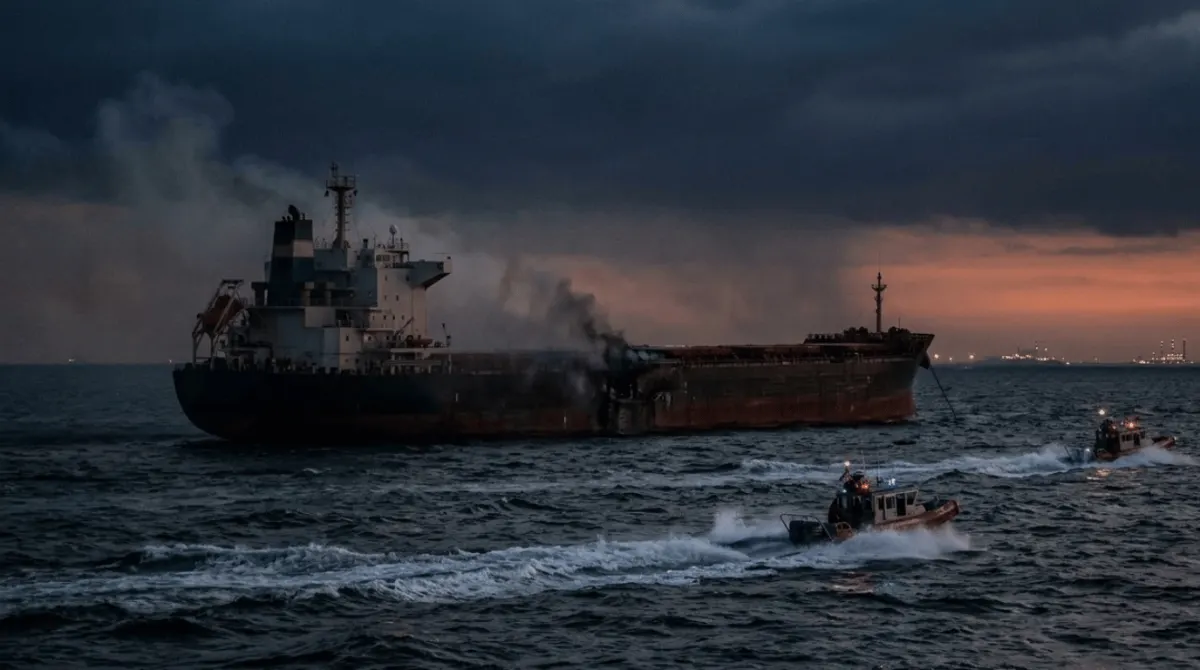
ADNOC Logistics & Services has confirmed that one of its vessels sustained damage in an attack in the United Arab Emirates' territorial waters on the afternoon of 10 November 2026, adding a new dimension to the maritime security crisis that has disrupted Gulf shipping throughout the year . The company, which serves as the integrated maritime logistics arm for the ADNOC Group, said in a statement carried by the official Emirates News Agency that response efforts by relevant teams were ongoing and that further updates would be provided as additional information became available .
The statement did not identify the vessel involved, its flag, its cargo, or the nature of the attack . It also did not attribute responsibility to any party. The absence of these details is consistent with the pattern that has characterised many incidents in the Gulf during the current conflict, where shipowners and operators have been reluctant to disclose information that could affect insurance, charter negotiations, or crew safety, and where attribution has often remained unclear.
The attack occurred on the same day as a projectile strike on the Liberia-flagged VLCC MT Fujairah Energy, which was transiting from Al Ruwais to Dubai when it was hit . That incident injured four crew members, including one Indian national who was taken ashore for medical treatment . The proximity in timing and location between the two incidents suggests a coordinated or opportunistic campaign targeting vessels in the UAE's maritime approaches, though no official link between them has been established.
The targeting of an ADNOC Logistics & Services vessel is significant because of the company's role in the UAE's energy supply chain. ADNOC L&S operates a large fleet of tankers, offshore support vessels, and integrated logistics assets that serve the UAE's crude and gas export operations. An attack on one of its vessels signals that the threat extends beyond independent commercial operators to the state-backed maritime infrastructure of a key Gulf producer, and it raises questions about the adequacy of protective measures for vessels operating in UAE waters.
For India, the incident has indirect but relevant implications. The UAE is a major supplier of crude oil and LPG to India, and ADNOC's logistics arm is part of the supply chain that moves those cargoes to Indian ports. The attack occurred in UAE territorial waters, not in the Strait of Hormuz itself, indicating that the threat perimeter extends across the Gulf's maritime space and into the approaches that Indian-bound cargoes transit. The persistence of attacks in these waters reinforces the risk premium that has inflated freight and insurance costs for India's energy imports throughout 2026.
The broader security environment provides context for the incident. The UAE has been a key mediator in the US-Iran conflict, and its territory hosts significant US military infrastructure. An attack in its territorial waters, even without attribution, carries the potential to draw the UAE more directly into the confrontation or to complicate its diplomatic role. The UAE has previously condemned attacks on commercial shipping, including the strike on Qatar's LNG carrier Al Mayeda, and it has advocated for the protection of maritime navigation as a regional priority.
The timing of the attack also coincides with the ongoing diplomatic efforts to de-escalate the conflict. Iran has maintained a two-day proposal to reopen the Strait of Hormuz, and Qatari and Omani mediators have been shuttling between Tehran and Washington. Attacks on commercial vessels in the Gulf, particularly in the territorial waters of a mediator state, could undermine those efforts by demonstrating that the parties conducting the attacks are not responsive to diplomatic signals, or by creating incidents that escalate tensions rather than reduce them.
Looking ahead, the key questions are whether the attack on the ADNOC vessel will be attributed to a specific actor, whether it represents an escalation or a continuation of the existing pattern, and whether it will affect ADNOC's operations or the UAE's security posture. The company has not disclosed the extent of the damage or whether the vessel remained operational. For the shipping industry, the incident reinforces the assessment that the Gulf remains a high-risk environment where vessels of all flags and ownership are vulnerable, and that the risk extends beyond the Hormuz chokepoint to the territorial waters of the region's major energy producers.