
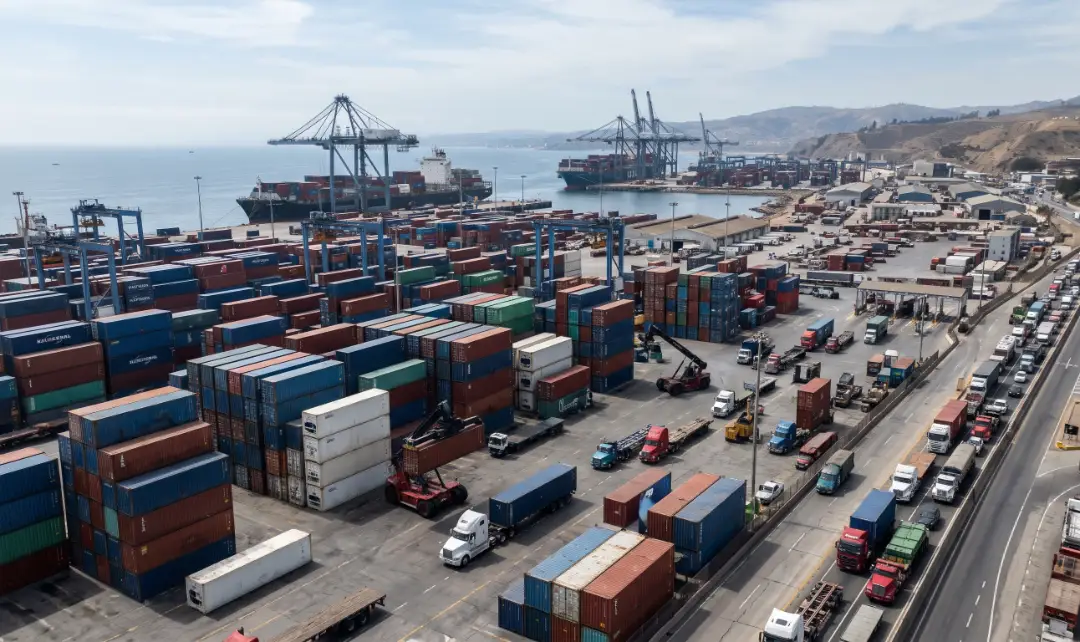
The Port of San Antonio, Chile's principal gateway for fresh fruit exports, has resumed operations after a nine-day blockade by independent truck drivers that threatened the opening weeks of the 2026-2027 cherry export season. The strike, led by the Agrupación de Camioneros Independientes de San Antonio (Agreporsai), began on the night of 28 October 2026 and involved approximately 150 trucks blocking access to off-dock container depots and logistics facilities in the port zone . The action concluded on Friday 6 November after negotiations mediated by the government's Undersecretariat of Economy produced an agreement with the six cargo-generating companies operating the affected depots: Agunsa, Contopsa, Medlog, Sitrans, DYC, and CIS .
The human and operational impact of the blockade was substantial. According to Diario Financiero, the mobilization left close to 2,500 containers accumulated and more than 500 work shifts lost, while forcing modifications to cherry shipments bound for China . Other reports placed the container backlog higher, with some sources citing figures exceeding 3,000 containers prevented from entering or leaving the port . Storage capacity at the affected facilities reached approximately 90 percent during the blockade, and around 200 trucks were left idle as depot access remained blocked . At least two Cherry Express vessels were diverted to the Port of Valparaíso, and one vessel departed carrying only half its planned cherry cargo .
The economic stakes were elevated by the timing of the dispute. San Antonio handles nearly half of Chile's fresh fruit exports, and during the 2025-2026 cherry season, its terminals shipped more than 16,500 refrigerated containers of cherries to China, equivalent to approximately 347,000 tonnes . The first Cherry Express vessel of the 2026-2027 campaign was scheduled to depart on 9 November, with loading set for 7 November, placing the blockade directly in the critical path of the season's opening shipments . Frutas de Chile cancelled its participation in the official cherry season launch on 4 November, citing concerns over the blockade's impact on growers, exporters, and thousands of workers dependent on timely shipments .
The agreement that ended the strike rests on three principal pillars. First, an immediate 8% increase in cargo transport rates takes effect, addressing the hauliers' central grievance that freight rates had been frozen for years while fuel costs nearly doubled since 2022 . Second, a rate adjustment mechanism linked to the diesel price index maintained by Chile's National Statistics Institute (INE) will govern future revisions, providing an objective formula for cost pass-through . Third, independent hauliers gain the right to organize and bid directly as contractors for the logistics operators, rather than working exclusively through intermediaries . State-backed financing through the Fogain program was also made available, offering working capital with 90-95% state guarantees, six-month grace periods, and extended repayment terms .
A fourth element of the agreement addresses port access control. The port authority committed to implementing a mandatory registration system, under which the flow of traffic toward the terminals will be monitored and the entry of unregistered trucks prohibited . This measure responds to complaints from registered drivers about informal or foreign operators entering the port without proper documentation. The agreement did not, however, resolve all outstanding issues: one off-dock warehouse remained outside the agreement as of the initial settlement, and exporters indicated that its eventual incorporation would be necessary to safeguard the continuity of the cold chain .
The operational recovery is now underway. Port operators are working to clear the container backlog, restore refrigerated container movements, and reorganize shipping schedules disrupted by the diversions to Valparaíso . Iván Marambio, president of Frutas de Chile, welcomed the agreement as "a very important step for our industry, especially during a key period for Chilean fruit exports," while emphasizing that the remaining depot's participation would be needed to fully secure the logistics chain . The resolution of the San Antonio dispute removes an immediate threat to Chile's cherry export campaign, but it also highlights the fragility of the landside logistics links that connect agricultural production to global markets during peak seasons.