
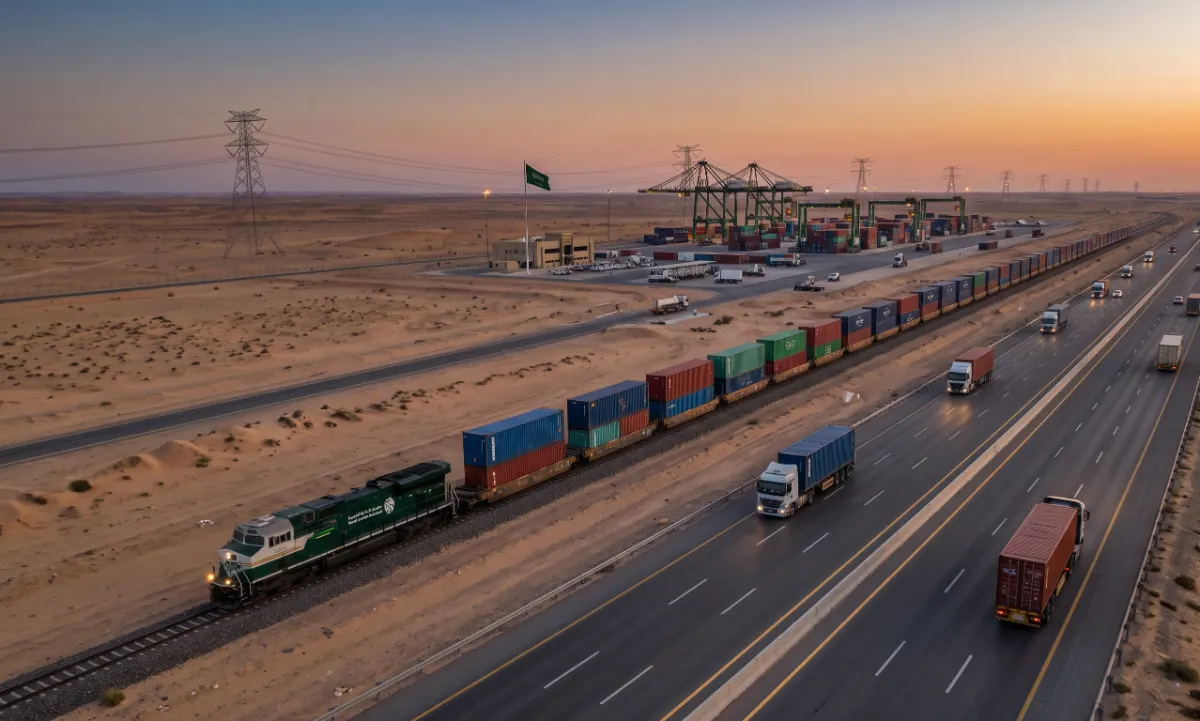
Demand for Saudi Arabia's inland Landbridge corridor rose during October 2026 as shippers sought alternatives to maritime routings affected by disruptions around the Strait of Hormuz and evolving conditions at the UAE port of Khor Fakkan. Maersk's November IMEA Market Update, published on 9 November, identified the trend as customers explore more flexible routing options into Saudi Arabia and the wider Gulf, with interest expected to continue into November as shippers seek to reduce exposure to port and shipping disruptions .
The Landbridge corridor serves as an overland alternative for cargo entering Saudi Arabia and neighbouring Gulf markets. Maersk noted that the trend highlights the value of coordinating ocean and landside planning across a customer's chosen service providers. However, the carrier cautioned that available transport capacity, border processing requirements, and onward delivery arrangements must be confirmed for each shipment before routing decisions are finalised. Customers considering the Landbridge are encouraged to contact Maersk early to verify space, customs requirements, documentation, and delivery feasibility, particularly for urgent or high-volume shipments .
The increase in Landbridge utilisation reflects a broader pattern of logistics adaptation across the Gulf region during 2026. Saudi Arabia's overland trucking corridors gained strategic importance as the Strait of Hormuz disruption forced logistics providers to seek routes bypassing the maritime chokepoint. The corridor connects Red Sea gateways such as Jeddah with inland destinations and Arabian Gulf ports, offering an alternative to sea routings that transit Hormuz . Saudi Arabia Railways has also launched freight routes connecting Arabian Gulf ports to logistics zones in the Kingdom's northern and central regions, while the Kingdom joined the GCC railway agreement in late May 2026 .
Separately from the operational Landbridge corridor, Saudi Arabia is advancing the Saudi Landbridge rail project, a planned 1,500-kilometre east-west railway connecting Jeddah on the Red Sea with Dammam and Jubail on the Arabian Gulf. The project, a cornerstone of Vision 2030, includes approximately 950 kilometres of new railway between Jeddah and Riyadh, a link between Dammam and Jubail, and upgrades to existing rail infrastructure. Spanish engineering firm Sener was awarded the lead design contract, with completion targeted for 2034 . The rail project is intended to reduce reliance on maritime routes around the Arabian Peninsula and strengthen Saudi Arabia's position as a logistics hub linking Asia, Europe, and Africa.
For shippers using the current Landbridge corridor, operational constraints remain a consideration. Congestion at alternative gateways has been a recurring challenge, with Jeddah experiencing yard density pressures during periods of peak diversion demand earlier in 2026. Maersk's November update advised that alternative routings may extend transit times and involve additional costs for transport, handling, customs clearance, and storage, reinforcing the need for early coordination and verification before committing cargo . The Landbridge's role as a pressure valve for Gulf logistics depends on maintaining capacity and processing efficiency at border crossings, bonded facilities, and final-mile delivery networks as demand fluctuates with maritime conditions.
From a policy perspective, the rising interest in the Landbridge aligns with Saudi Arabia's broader ambitions to develop inland logistics infrastructure and reduce dependence on maritime chokepoints. The Kingdom's investment in rail connectivity, including both the operational freight routes and the long-term Landbridge rail project, reflects a strategic assessment that overland corridors will remain relevant even if Strait of Hormuz conditions normalise. For Indian shippers with Gulf-bound cargo, the Landbridge offers an alternative routing option, though transit time and cost implications must be weighed against direct maritime services. Maersk's advisory to verify capacity and customs arrangements before booking underscores that the corridor is not yet a frictionless substitute for established sea routes, but rather a supplementary option whose viability varies by shipment urgency, destination, and documentation readiness.