
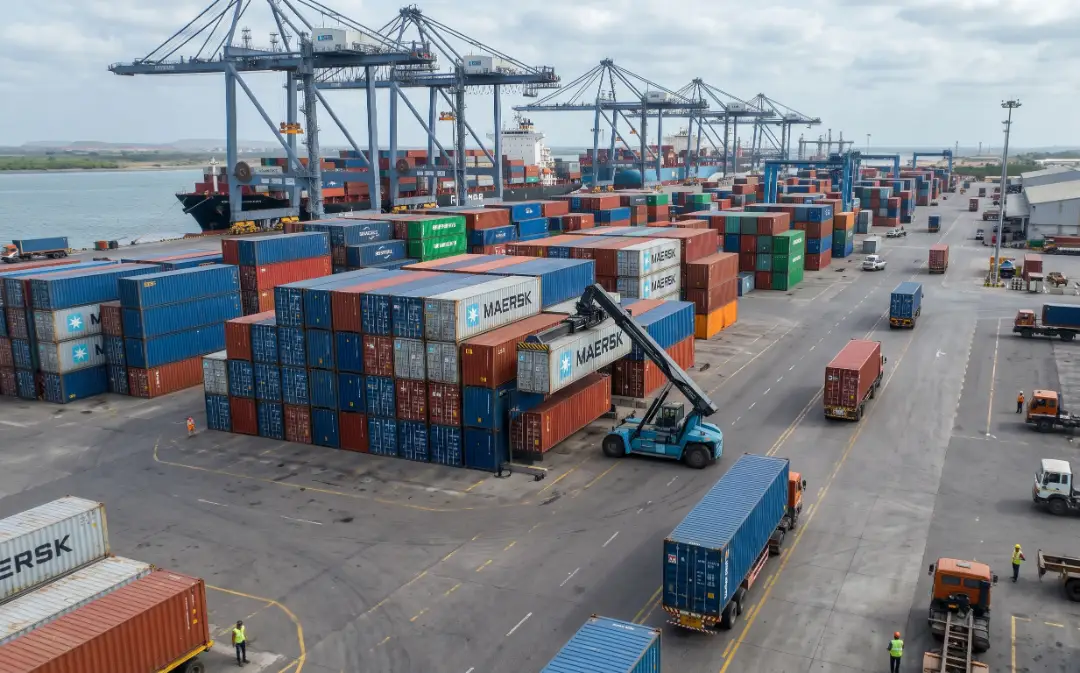
Maersk's substantial increase in empty container handling fees at Mundra Port marks a new escalation in India's export logistics cost pressures. According to a trade notice issued by the carrier, effective 1 November 2026, the lo-lo charge for a 20-foot empty container at Mundra increased from $23 to $51, while the charge for a 40-foot empty container rose from $31 to $67, with local taxes additional. In absolute terms, customers now face an additional $28 per 20-foot container and $36 per 40-foot container before tax, representing increases of 122% and 116% respectively.
Maersk advised customers in the notice to "take note of this change and make the necessary arrangements to ensure smooth container pick-up and drop-off operations," and requested that customers settle the charges directly with nominated depot service providers. This direct settlement requirement had already sparked controversy at Chennai Port, where local customs brokers threatened to boycott MSC's export cargo over similar empty container fee disputes.
The timing of the fee increase is significant. It comes as India's export sector is already grappling with multiple pressures, including disruptions in West Asia leading to longer vessel routings, delays in empty container return to Indian ports, and congestion at transshipment hubs. India's merchandise exports grew 23% year-on-year to $44.40 billion in September 2026, with cumulative April-September exports up 18.51% to $259.89 billion, putting additional strain on equipment supply. Growth was led by electronic goods, engineering products, and petroleum products—all categories that depend heavily on container availability and reliable inland movement.
The fee increase is not an isolated event but part of a broader restructuring of empty container operations at Mundra. In September 2026, Adani Ports and Special Economic Zone (APSEZ) implemented a policy requiring shipping lines to nominate empty containers only to designated facilities within the Mundra Port and SEZ area, freezing depot codes for yards outside port limits. The policy, which APSEZ said was intended to address depot code misuse, improve security, and reduce road congestion, triggered a strike by depot operators and approximately 1,500 transporters, with the Mundra Customs Brokers' Association estimating around 5,000 containers per day were affected. The dispute was partially resolved in late September when APSEZ reinstated depot codes and agreed on a charge mechanism of ₹2,500 per 20-foot container and ₹3,500 per 40-foot container levied on shipping lines.
The current fee increase by Maersk operates within this restructured framework, where shipping lines pass on empty container handling costs to customers. Industry sources told The Loadstar that other carriers are expected to issue similar trade notices for their empty operations at Mundra, suggesting the cost pressure will become industry-wide rather than carrier-specific.
The broader policy environment is also responding to these pressures. The Directorate General of Foreign Trade (DGFT) has begun consultations with exporters on a possible relief package addressing rising inland freight costs and container shortages. Exporters have reported that higher inland transportation charges, uneven container availability, and increased depot handling costs are eroding margins before cargo even leaves the factory gate. The government's challenge is to design targeted relief that addresses operational bottlenecks without creating broad subsidies that miss the exporters most exposed to the current disruption.
From a market perspective, the doubling of empty container repositioning fees signals that equipment tightness at Mundra is being priced into the supply chain. While the fee increase directly affects exporters and their agents, its underlying cause—slower container turnaround and constrained empty availability—reflects deeper structural pressures. The resolution of these pressures will depend on whether new capacity within the port SEZ can efficiently absorb volumes previously handled by external depots, and whether the broader container supply cycle normalizes as West Asia disruptions ease. For now, exporters using Mundra face higher costs at the very first stage of the shipment process, adding to an already challenging operating environment.