
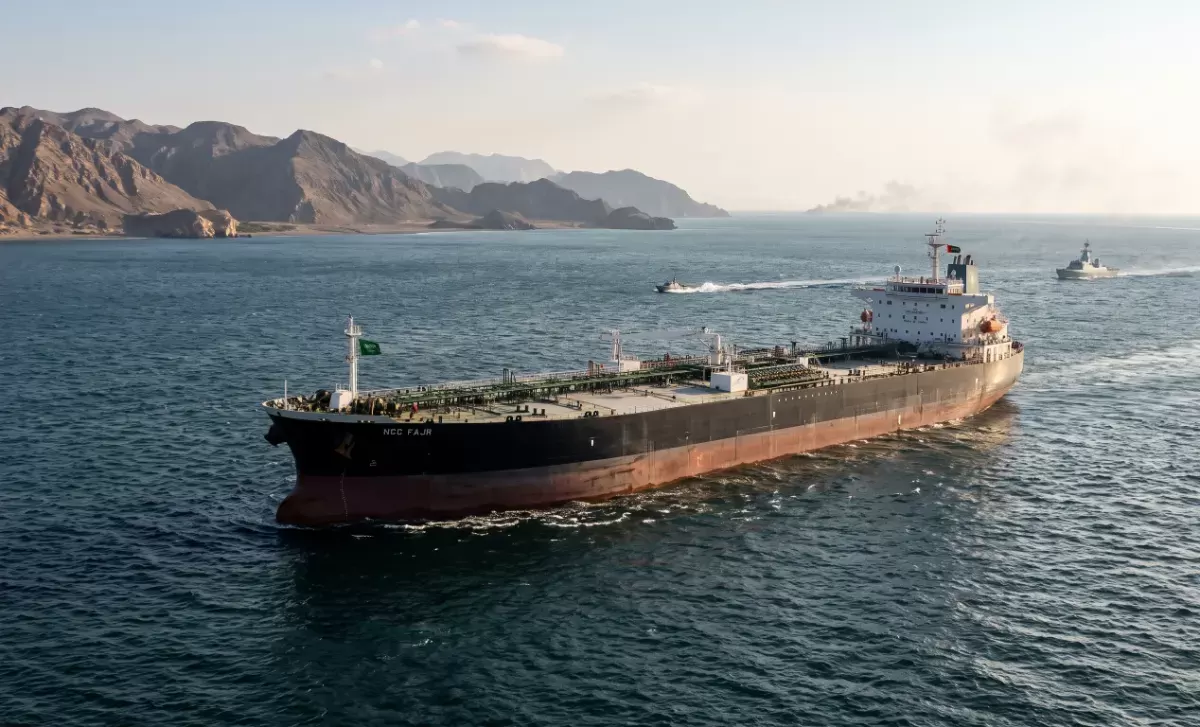
The NCC FAJR incident was disclosed by Minister Sonowal in a post on X on Wednesday, November 11, 2026. According to the minister, the Saudi-flagged oil tanker was involved in a "possible attack" while transiting the Strait of Hormuz. He confirmed that all three Indian seafarers aboard, along with the entire crew, were safe. Sonowal added that authorities are "continuously monitoring" the situation and are in contact with the ship management company to ensure the safety and wellbeing of the seafarers .
The minister did not specify the nature of the attack, the time it occurred, the vessel's cargo, or its destination. No injuries were reported among the crew. The lack of detail is consistent with the preliminary stage of reporting in active maritime security incidents, where verification often lags behind initial notifications.
The NCC FAJR incident occurred within a compressed timeframe of multiple maritime security events in the Arabian Gulf and Strait of Hormuz. On November 10, a Liberia-flagged very large crude carrier, MT Fujairah Energy, was struck by a projectile while transiting from Al Ruwais to Dubai. That vessel carried six Indian seafarers. Four crew members were injured, including one Indian national who suffered minor injuries and was taken ashore for medical examination. The remaining 18 crew members, including the other five Indians, were reported safe .
Also on November 10, UKMTO reported an incident involving a tanker in the Strait of Hormuz, citing military authorities, though the warning did not identify the vessel or specify the nature of the event . Earlier the same day, UKMTO had reported a separate incident in which a tanker was struck by an unidentified projectile approximately 19 nautical miles northeast of Limah, Oman, with the crew reported safe . Abu Dhabi-based ADNOC Logistics & Services also confirmed that one of its vessels sustained damage in an attack in UAE territorial waters on November 10 .
Iran's army issued a statement on Wednesday claiming that an oil tanker had struck a naval mine and caught fire in the Strait of Hormuz, asserting that the vessel was using an unauthorized route. The statement, carried by state TV, did not identify the tanker. US Central Command, which has been escorting ships through the waterway, has previously stated that all mines had been cleared from the strait . The conflicting accounts underscore the contested nature of security information in the region.
The Strait of Hormuz remains the world's most critical oil transit chokepoint, normally carrying approximately one-fifth of global oil supplies. Since the outbreak of the Middle East war in late February 2026, Tehran has heavily restricted traffic through the strategic waterway, insisting that vessels use routes authorized by the Islamic Republic. The United States responded with a naval blockade on Iranian ports and has been assisting tankers in transiting the strait .
For India, the sequence of incidents has direct implications for seafarer safety and shipping operations. Indian nationals serve extensively on vessels of various flag registries operating in the region, expanding their exposure beyond Indian-flagged shipping. The Ministry of External Affairs has previously confirmed that 23 Indian nationals, including 15 seafarers, lost their lives in the ongoing West Asia conflict . The government's practice of publicly confirming the safety of Indian crew members following each incident reflects the heightened sensitivity to seafarer welfare amid sustained maritime security threats.
From a logistics perspective, the continued targeting of commercial vessels in the Strait of Hormuz reinforces elevated war risk premiums and the potential for further rerouting of cargo. Shipowners and charterers operating in the region face difficult decisions regarding crew safety, insurance costs, and route viability. For Indian shippers and importers dependent on Gulf trade lanes, the cumulative effect of these incidents is likely to sustain the elevated freight rates and extended transit times that have characterized the market since the Strait closure began.