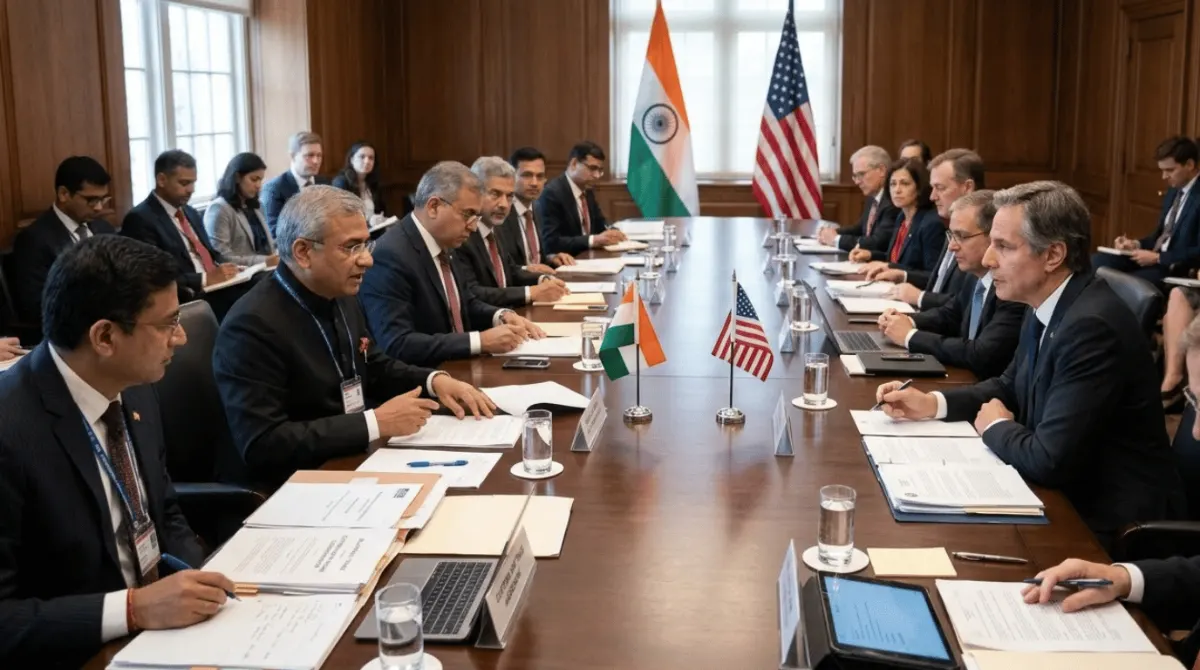
<p class="ds-markdown-paragraph" style="margin: 16px 0px; color: rgb(15, 17, 21); font-family: quote-cjk-patch, Inter, system-ui, -apple-system, BlinkMacSystemFont, "Segoe UI", Roboto, Oxygen, Ubuntu, Cantarell, "Open Sans", "Helvetica Neue", sans-serif; font-size: 16px;"><span class="">India and the United States have resumed negotiations on the first phase of a bilateral trade agreement, with the latest round of discussions centering on customs procedures and trade facilitation measures, according to an Indian official cited by Reuters and reported by Chinese state media on 11 November 2026 . The talks, which included a visit by US officials to India earlier in the month, signal that both sides are continuing to work toward a deal despite the shifting political environment in Washington.</span></p><p class="ds-markdown-paragraph" style="margin: 16px 0px; color: rgb(15, 17, 21); font-family: quote-cjk-patch, Inter, system-ui, -apple-system, BlinkMacSystemFont, "Segoe UI", Roboto, Oxygen, Ubuntu, Cantarell, "Open Sans", "Helvetica Neue", sans-serif; font-size: 16px;"><span class="">The focus on customs and trade facilitation is significant because these are the operational provisions that determine how quickly and at what cost goods move between the two countries. For Indian exporters, improvements in customs procedures at US ports and streamlined documentation requirements could reduce clearance times and lower the landed cost of their products, complementing the tariff reductions that a trade deal would provide. For US exporters, similar facilitation measures in India would address some of the procedural friction that has historically constrained market access.</span></p><p class="ds-markdown-paragraph" style="margin: 16px 0px; color: rgb(15, 17, 21); font-family: quote-cjk-patch, Inter, system-ui, -apple-system, BlinkMacSystemFont, "Segoe UI", Roboto, Oxygen, Ubuntu, Cantarell, "Open Sans", "Helvetica Neue", sans-serif; font-size: 16px;"><span class="">The timing of the negotiations is inseparable from the US midterm elections held on 3 November, in which President Trump's Republican Party suffered major losses and lost control of both the Senate and the House of Representatives . The political shift has implications for the trade agenda: a Democratic-controlled Congress may scrutinise trade agreements more closely, particularly on labour and environmental provisions, and the administration's negotiating leverage could be affected by the changed political landscape. The Indian official's disclosure that talks are continuing suggests that both sides see value in maintaining momentum despite the uncertainty.</span></p><p class="ds-markdown-paragraph" style="margin: 16px 0px; color: rgb(15, 17, 21); font-family: quote-cjk-patch, Inter, system-ui, -apple-system, BlinkMacSystemFont, "Segoe UI", Roboto, Oxygen, Ubuntu, Cantarell, "Open Sans", "Helvetica Neue", sans-serif; font-size: 16px;"><span class="">For India, the bilateral trade deal is a priority because the US is one of its largest export markets. Indian merchandise exports to the US have remained strong despite tariff disruptions, and a deal that reduces tariff barriers and improves customs facilitation would provide a more predictable framework for that trade. The negotiations are also part of India's broader strategy of concluding trade agreements with major economies, including the UK, EU, and Canada, to diversify export destinations and reduce dependence on any single market.</span></p><p class="ds-markdown-paragraph" style="margin: 16px 0px; color: rgb(15, 17, 21); font-family: quote-cjk-patch, Inter, system-ui, -apple-system, BlinkMacSystemFont, "Segoe UI", Roboto, Oxygen, Ubuntu, Cantarell, "Open Sans", "Helvetica Neue", sans-serif; font-size: 16px;"><span class="">The customs and trade facilitation focus reflects a recognition that tariff reductions alone are insufficient to unlock trade potential. Procedural barriers, documentation requirements, and clearance delays can add costs that offset the benefits of lower tariffs. By addressing these operational issues, the agreement could deliver practical improvements for businesses that are currently navigating a complex and often opaque customs environment on both sides.</span></p><p class="ds-markdown-paragraph" style="margin: 16px 0px; color: rgb(15, 17, 21); font-family: quote-cjk-patch, Inter, system-ui, -apple-system, BlinkMacSystemFont, "Segoe UI", Roboto, Oxygen, Ubuntu, Cantarell, "Open Sans", "Helvetica Neue", sans-serif; font-size: 16px;"><span class="">For India's logistics sector, a trade facilitation agreement with the US would have indirect but meaningful implications. Faster customs clearance at US ports would improve the reliability of India-US supply chains, making Indian exports more competitive and encouraging US buyers to source from Indian suppliers. Improved procedures in India would ease the import of US goods, including machinery, components, and agricultural products, some of which move through Indian ports and airports. The agreement would not directly affect shipping rates or capacity, but it would reduce the friction costs that add to the total logistics burden.</span></p><p class="ds-markdown-paragraph" style="margin: 16px 0px; color: rgb(15, 17, 21); font-family: quote-cjk-patch, Inter, system-ui, -apple-system, BlinkMacSystemFont, "Segoe UI", Roboto, Oxygen, Ubuntu, Cantarell, "Open Sans", "Helvetica Neue", sans-serif; font-size: 16px;"><span class="">Looking ahead, the key question is whether the negotiations can produce a concluded first phase despite the changed political environment in Washington. The Indian official's statement that talks are continuing provides some reassurance, but the loss of Republican control of Congress introduces new variables, including the possibility of greater congressional oversight and the need to build bipartisan support for any agreement. For now, the resumption of negotiations signals that both governments remain committed to the process, and the focus on customs and trade facilitation suggests that the first phase of the deal will be practical and operational rather than sweeping in scope.</span></p>
India and US Resume Negotiations on First Phase of Bilateral Trade Deal, Focus on Customs and Trade Facilitation
Indian and US officials have resumed negotiations to finalise the first phase of a bilateral trade agreement, with discussions in early November focused on customs and trade facilitation issues, according to an Indian official cited by Reuters. US officials visited India earlier in the month for the talks. The negotiations come as President Trump's Republican Party lost control of both chambers of Congress in the 3 November midterm elections, potentially altering the political calculus for the trade deal.