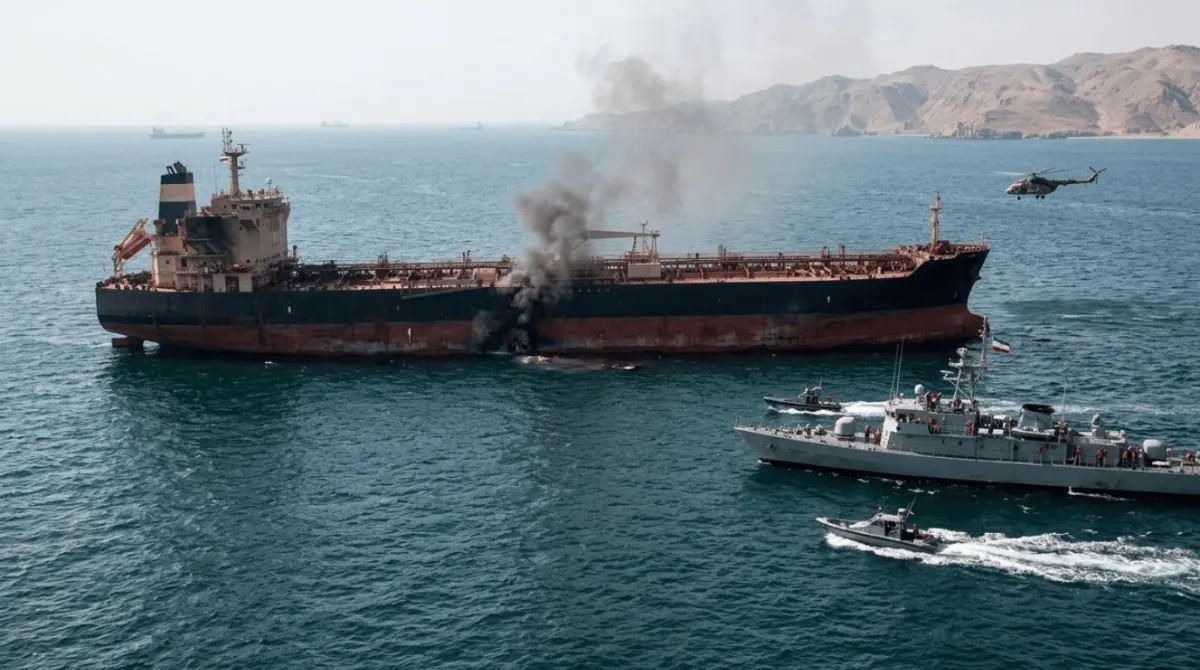
<p class="ds-markdown-paragraph" style="margin: 16px 0px; color: rgb(15, 17, 21); font-family: quote-cjk-patch, Inter, system-ui, -apple-system, BlinkMacSystemFont, "Segoe UI", Roboto, Oxygen, Ubuntu, Cantarell, "Open Sans", "Helvetica Neue", sans-serif; font-size: 16px;"><span class="">Iran's army stated on 11 November 2026 that an oil tanker had struck a naval mine and caught fire in the Strait of Hormuz, the latest in a series of claims from Tehran that vessels are being destroyed on routes it considers unauthorized . According to a statement carried by Iranian state TV and reported by The Hindu, the naval forces said the "violating oil tanker caught fire after striking a naval mine in an unsafe, prohibited area in the east of the Strait of Hormuz" in the early hours of the morning . The claim follows an IRGC statement on 10 November that two oil tankers had suffered explosions and caught fire while attempting to cross unauthorized routes, with one described as a supertanker that hit a mine and the other said to be operating under US military protection </span><span class="">.</span><span class="_5f9bba8" data-citation-group="1" style="margin-left: 2px; margin-right: 2px;"><a href="https://en.abna24.com/news/1889279/IRGC-Navy-says-two-oil-tankers-explode-while-attempting-unauthorized" target="_blank" rel="noreferrer" aria-label="2" style="color: rgb(57, 100, 254); transition: box-shadow 0.2s cubic-bezier(0.4, 0, 0.2, 1); border-color: rgba(255, 255, 255, 0); border-width: 2px 3px; margin-left: -3px; margin-right: -3px; text-decoration: none; position: relative;"></a></span></p><p class="ds-markdown-paragraph" style="margin: 16px 0px; color: rgb(15, 17, 21); font-family: quote-cjk-patch, Inter, system-ui, -apple-system, BlinkMacSystemFont, "Segoe UI", Roboto, Oxygen, Ubuntu, Cantarell, "Open Sans", "Helvetica Neue", sans-serif; font-size: 16px;"><span class="">The Iranian claims directly contradict the American position. The United States has imposed a naval blockade on Iranian ports and has been escorting tankers through the strait, which normally carries about one-fifth of global oil supplies . US Central Command has said it helped Gulf countries export 1.5 billion barrels of oil via Hormuz since the summer and claimed last month that all mines had been cleared from the waterway . The IRGC's assertion that unauthorized routes remain mined and that vessels cooperating with US forces face consequences is therefore a direct challenge to Washington's narrative that the corridor is becoming safer.</span></p><p class="ds-markdown-paragraph" style="margin: 16px 0px; color: rgb(15, 17, 21); font-family: quote-cjk-patch, Inter, system-ui, -apple-system, BlinkMacSystemFont, "Segoe UI", Roboto, Oxygen, Ubuntu, Cantarell, "Open Sans", "Helvetica Neue", sans-serif; font-size: 16px;"><span class="">The competing accounts cannot both be accurate, and independent verification is difficult. The UK Maritime Trade Operations agency and the Joint Maritime Information Center have documented multiple incidents in and around the strait in recent days, including attacks off Oman's Musandam coast and projectile strikes on tankers </span><span class="">. But the specific Iranian claim that vessels are striking mines—as opposed to being hit by projectiles or drones—has not been corroborated by any independent maritime security source. The IRGC's statements have consistently framed the incidents as enforcement against unauthorized transit, a characterization that serves Tehran's assertion of control over the waterway.</span><span class="_5f9bba8" data-citation-group="2" style="margin-left: 2px; margin-right: 2px;"><a href="https://safety4sea.com/us-disables-bulk-carrier-as-tanker-attacks-continue-near-strait-of-hormuz/" target="_blank" rel="noreferrer" aria-label="6" style="color: rgb(57, 100, 254); transition: box-shadow 0.2s cubic-bezier(0.4, 0, 0.2, 1); border-color: rgba(255, 255, 255, 0); border-width: 2px 3px; margin-left: -3px; margin-right: -3px; text-decoration: none; position: relative;"></a></span></p><p class="ds-markdown-paragraph" style="margin: 16px 0px; color: rgb(15, 17, 21); font-family: quote-cjk-patch, Inter, system-ui, -apple-system, BlinkMacSystemFont, "Segoe UI", Roboto, Oxygen, Ubuntu, Cantarell, "Open Sans", "Helvetica Neue", sans-serif; font-size: 16px;"><span class="">The operational environment in the strait remains severely constrained regardless of which account is accurate. The JMIC's advisory issued on 8 November maintained the regional maritime threat level at "severe," with deliberate attacks considered highly likely . It noted that the 5 November attack on an outbound tanker east of Khasab was the fifth off the Musandam coast since 1 November, demonstrating that further attacks on transiting vessels are highly likely . Maritime traffic through the strait is expected to remain at reduced levels compared with the 2025 baseline of approximately 138 vessels per day, and vessels transiting with AIS on can expect elevated targeting risk and directed hails from Iranian forces .</span></p><p class="ds-markdown-paragraph" style="margin: 16px 0px; color: rgb(15, 17, 21); font-family: quote-cjk-patch, Inter, system-ui, -apple-system, BlinkMacSystemFont, "Segoe UI", Roboto, Oxygen, Ubuntu, Cantarell, "Open Sans", "Helvetica Neue", sans-serif; font-size: 16px;"><span class="">For India, the contradictory claims matter less than the operational reality they reflect: the Strait of Hormuz remains unsafe for commercial shipping. India's crude and LNG imports depend on this corridor, and the attack on the VLCC MT Fujairah Energy on 10 November injured an Indian seafarer, demonstrating that the threat extends to vessels carrying Indian crew regardless of flag </span><span class="">. The continued uncertainty over whether mines, projectiles, or drones are responsible for the attacks does not change the practical implication for Indian refiners and importers: the corridor is unreliable, and the procurement diversification and delivered-basis arrangements that Indian companies have undertaken remain justified.</span><span class="_5f9bba8" data-citation-group="3" style="margin-left: 2px; margin-right: 2px;"><a href="https://newsonair.gov.in/minister-sonowal-says-all-six-indian-seafarers-safe-after-projectile-attack-in-persian-gulf/" target="_blank" rel="noreferrer" aria-label="3" style="color: rgb(57, 100, 254); transition: box-shadow 0.2s cubic-bezier(0.4, 0, 0.2, 1); border-color: rgba(255, 255, 255, 0); border-width: 2px 3px; margin-left: -3px; margin-right: -3px; text-decoration: none; position: relative;"></a></span></p><p class="ds-markdown-paragraph" style="margin: 16px 0px; color: rgb(15, 17, 21); font-family: quote-cjk-patch, Inter, system-ui, -apple-system, BlinkMacSystemFont, "Segoe UI", Roboto, Oxygen, Ubuntu, Cantarell, "Open Sans", "Helvetica Neue", sans-serif; font-size: 16px;"><span class="">Looking ahead, the key question is whether the Iranian claims will be followed by further incidents or whether they represent a messaging campaign designed to assert control without provoking a wider response. The US has not publicly responded to the specific claim about the 11 November tanker, and the IRGC has not identified the vessel involved. For shipping and energy markets, the pattern of competing narratives and unverified claims sustains the risk premium that has inflated freight and insurance costs throughout 2026. For India, the practical response remains the same: treat Hormuz as a high-risk corridor, diversify supply, and protect seafarers to the extent possible in an environment where the parties to the conflict cannot agree on the most basic facts about what is happening in the waterway.</span></p>
Iran's Army Claims Tanker Struck Mine in Hormuz on 11 November, Contradicting US Assertion That Routes Are Cleared
Iran's army claimed on 11 November 2026 that an oil tanker struck a naval mine and caught fire in the eastern Strait of Hormuz after entering a prohibited area without authorization. The claim follows a similar statement from the Islamic Revolutionary Guard Corps a day earlier that two tankers exploded and caught fire on unauthorized routes. The US military has said it cleared all mines from the strait and has been escorting ships through the waterway, creating a direct contradiction between Washington and Tehran over the corridor's safety. No independent source has verified the Iranian claims.