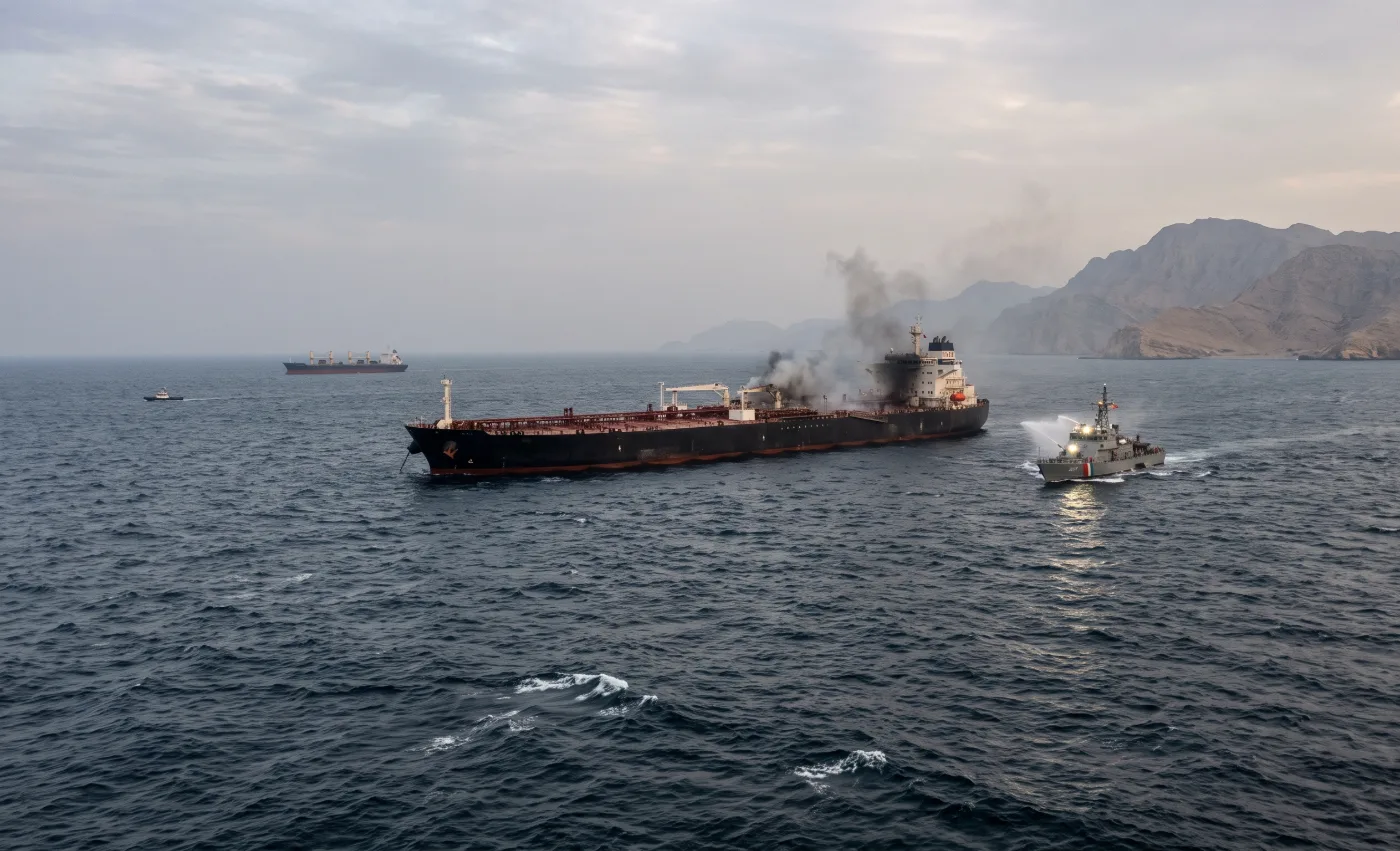
<p class="ds-markdown-paragraph" style="margin: 16px 0px; color: rgb(15, 17, 21); font-family: quote-cjk-patch, Inter, system-ui, -apple-system, BlinkMacSystemFont, "Segoe UI", Roboto, Oxygen, Ubuntu, Cantarell, "Open Sans", "Helvetica Neue", sans-serif; font-size: 16px;"><span class="">The United Kingdom Maritime Trade Operations agency has reported a second tanker incident in the Strait of Hormuz within 24 hours, issuing Warning 202-26 classified as "suspicious activity" on 11 November 2026 . The agency stated that the report came from military authorities but provided no further details about the nature of the incident, the vessel's identity, its flag, or its cargo . The status of the crew, the extent of any damage, and the possible environmental impact remained unknown at the time of the warning .</span></p><p class="ds-markdown-paragraph" style="margin: 16px 0px; color: rgb(15, 17, 21); font-family: quote-cjk-patch, Inter, system-ui, -apple-system, BlinkMacSystemFont, "Segoe UI", Roboto, Oxygen, Ubuntu, Cantarell, "Open Sans", "Helvetica Neue", sans-serif; font-size: 16px;"><span class="">The incident follows a separate report on 10 November, when the master of a tanker reported being struck by an unidentified projectile approximately 19 nautical miles northeast of Limah, Oman . In that earlier incident, UKMTO said the crew were safe and no environmental damage had been reported . The agency advised vessels transiting the area to exercise caution and report any suspicious activity while authorities investigate . It did not identify either vessel or the party responsible for the incidents .</span></p><p class="ds-markdown-paragraph" style="margin: 16px 0px; color: rgb(15, 17, 21); font-family: quote-cjk-patch, Inter, system-ui, -apple-system, BlinkMacSystemFont, "Segoe UI", Roboto, Oxygen, Ubuntu, Cantarell, "Open Sans", "Helvetica Neue", sans-serif; font-size: 16px;"><span class="">Separately, Iran's army navy claimed on 11 November that an oil tanker caught fire after striking a naval mine in an area east of the Strait of Hormuz, which it described as an "unsafe and prohibited" maritime zone . The statement, carried by Iranian state TV and the ISNA news agency, provided no further details about the vessel or its crew . The Iranian navy said its forces were monitoring and controlling the eastern section of the strait and urged shipowners to coordinate with Iran's armed forces to ensure safe passage .</span></p><p class="ds-markdown-paragraph" style="margin: 16px 0px; color: rgb(15, 17, 21); font-family: quote-cjk-patch, Inter, system-ui, -apple-system, BlinkMacSystemFont, "Segoe UI", Roboto, Oxygen, Ubuntu, Cantarell, "Open Sans", "Helvetica Neue", sans-serif; font-size: 16px;"><span class="">The relationship between the UKMTO report and the Iranian claim was not immediately confirmed. The UKMTO advisory did not specify the cause of the incident or confirm whether the tanker had struck a mine, and it did not identify the vessel or provide its location beyond the Strait of Hormuz . The two reports appear to concern a potentially related incident, but independent confirmation that they refer to the same tanker was not available at the time of reporting .</span></p><p class="ds-markdown-paragraph" style="margin: 16px 0px; color: rgb(15, 17, 21); font-family: quote-cjk-patch, Inter, system-ui, -apple-system, BlinkMacSystemFont, "Segoe UI", Roboto, Oxygen, Ubuntu, Cantarell, "Open Sans", "Helvetica Neue", sans-serif; font-size: 16px;"><span class="">The incidents add to a pattern of escalating maritime tensions in the strait. On 10 November, Iran's Islamic Revolutionary Guard Corps claimed that three oil tankers had caught fire in the strait after using routes Tehran had not authorised . The IRGC alleged one of the vessels was a supertanker that hit a mine, and another was under US military escort when it attempted to cross an "illegal" route . US Central Command has maintained that it has helped Gulf countries export 1.5 billion barrels of oil via Hormuz since the summer and claimed last month that all mines had been cleared from the waterway .</span></p><p class="ds-markdown-paragraph" style="margin: 16px 0px; color: rgb(15, 17, 21); font-family: quote-cjk-patch, Inter, system-ui, -apple-system, BlinkMacSystemFont, "Segoe UI", Roboto, Oxygen, Ubuntu, Cantarell, "Open Sans", "Helvetica Neue", sans-serif; font-size: 16px;"><span class="">The competing narratives leave the shipping industry with a difficult risk assessment. The UKMTO warnings confirm that incidents are occurring but do not attribute them, while Iranian claims assert that vessels using unauthorised routes are being targeted by mines. Regardless of which account is accurate, the operational reality is that the Strait of Hormuz remains a high-risk corridor, and the IMO has stated it cannot confirm the safety of the strait and is not recommending transits.</span></p><p class="ds-markdown-paragraph" style="margin: 16px 0px; color: rgb(15, 17, 21); font-family: quote-cjk-patch, Inter, system-ui, -apple-system, BlinkMacSystemFont, "Segoe UI", Roboto, Oxygen, Ubuntu, Cantarell, "Open Sans", "Helvetica Neue", sans-serif; font-size: 16px;"><span class="">For India, the incidents reinforce the exposure of Indian seafarers and energy imports to the Gulf security crisis. The attack on the VLCC MT Fujairah Energy on 10 November injured an Indian seafarer, demonstrating that the threat extends to vessels carrying Indian crew regardless of flag . India's crude and LNG imports depend on this corridor, and the persistence of incidents sustains the risk premium that has inflated freight and insurance costs throughout 2026. The procurement diversification and delivered-basis arrangements that Indian refiners have undertaken remain justified by the security environment that these incidents reflect.</span></p><p class="ds-markdown-paragraph" style="margin: 16px 0px; color: rgb(15, 17, 21); font-family: quote-cjk-patch, Inter, system-ui, -apple-system, BlinkMacSystemFont, "Segoe UI", Roboto, Oxygen, Ubuntu, Cantarell, "Open Sans", "Helvetica Neue", sans-serif; font-size: 16px;"><span class="">Looking ahead, the key questions are whether the incidents will be attributed to a specific actor and whether the tempo of attacks will escalate or stabilise. The UKMTO has advised vessels to transit with caution, but caution is not a substitute for a resolution of the underlying conflict. For now, the Strait of Hormuz remains a corridor where commercial shipping operates under sustained threat, and the second incident in 24 hours confirms that the risk is neither diminishing nor confined to a single pattern of attack.</span></p>
UKMTO Reports Tanker Incident in Strait of Hormuz
The United Kingdom Maritime Trade Operations (UKMTO) centre reported late Tuesday, November 10, 2026, that a tanker was involved in an incident in the Strait of Hormuz, citing military authorities. The warning did not identify the vessel, the nature of the incident, or the time it occurred, and the status of the crew, extent of damage, and possible environmental impact remained unknown. Earlier the same day, UKMTO reported a separate incident in which a tanker was struck by an unidentified projectile approximately 19 nautical miles northeast of Limah, Oman, with the crew reported safe and no environmental damage. The reports coincide with a confirmed attack on a Liberia-flagged VLCC carrying Indian seafarers and an attack on an ADNOC Logistics & Services vessel in UAE territorial waters, though the relationship between the incidents has not been established.