
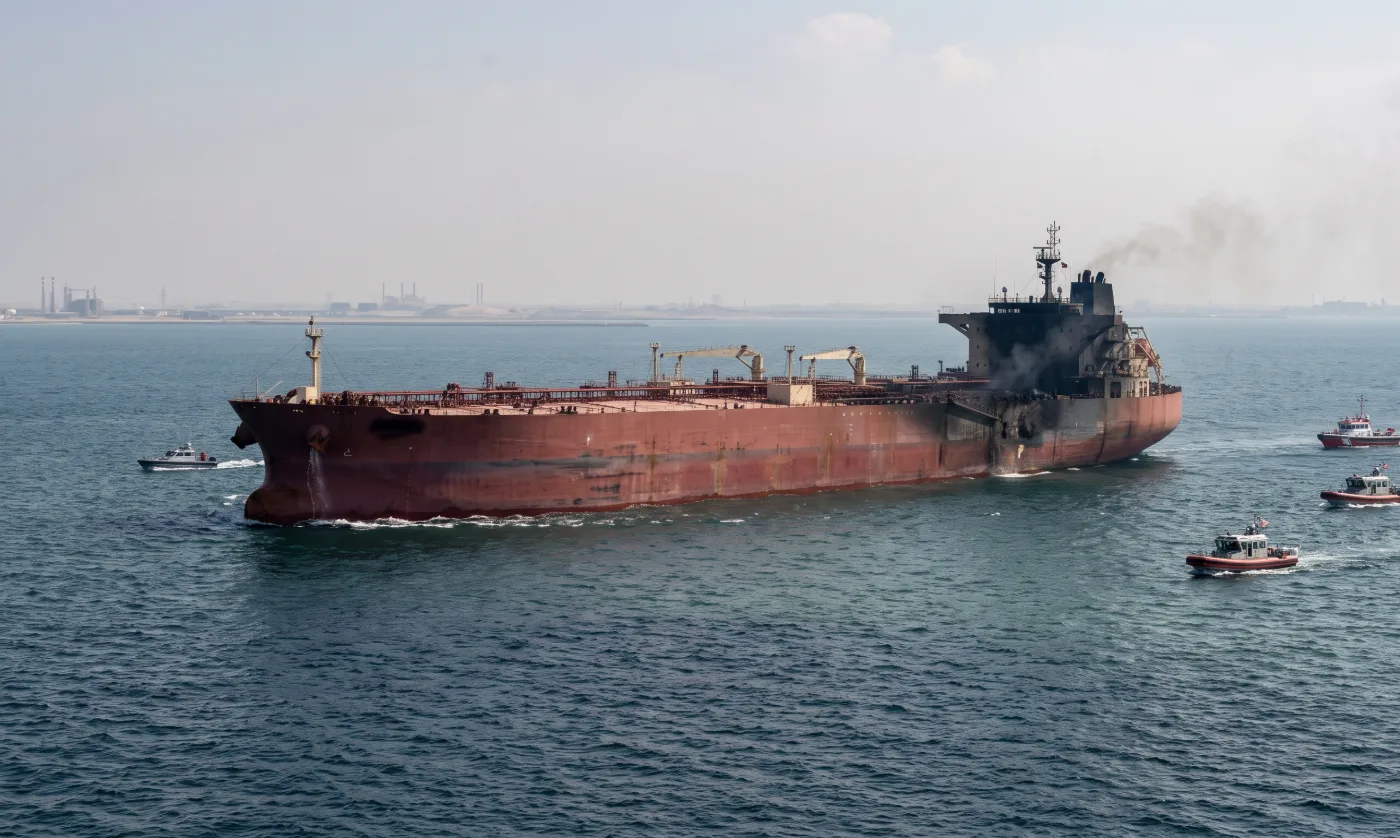
A Liberia-flagged very large crude carrier carrying six Indian seafarers was struck by a projectile in the Persian Gulf on 10 November 2026, injuring four crew members including one Indian national, in the latest attack on commercial shipping in the region . The vessel, MT Fujairah Energy, was transiting from Al Ruwais to Dubai when the projectile hit, according to Union Minister for Ports, Shipping and Waterways Sarbananda Sonowal .
Sonowal confirmed the incident in a post on X on 11 November, stating that the injured Indian seafarer suffered minor injuries and was safely taken ashore for further medical examination . "The remaining 18 crew members, including the other 5 Indian seafarers, are safe and accounted for," he said . The minister added that India is "continuously monitoring the situation and remain in close contact with the ship management company to ensure the ongoing security, medical care and wellbeing of our seafarers" .
The attack on MT Fujairah Energy is the latest in a series of incidents targeting commercial vessels in the Gulf and its approaches, and it directly involves Indian nationals among the crew . The vessel is a very large crude carrier, a category of tanker that has been repeatedly targeted during the conflict, and its transit from Al Ruwais to Dubai placed it on a route that serves the UAE's energy infrastructure . The fact that the injured crew member was Indian and required shore-based medical treatment underscores the direct exposure of Indian seafarers to the maritime security crisis .
For India, the incident reinforces the risks that its maritime workforce faces in the Gulf. India supplies a substantial share of the global maritime workforce, and Indian nationals serve on vessels of all flags across the region . The injury to an Indian seafarer on a Liberia-flagged vessel is a reminder that the flag a ship carries does not determine the nationality of the crew who bear the physical risks of transiting contested waters. The government's response, through the Shipping Minister's public statement and the Ministry's contact with the ship management company, follows the pattern established in previous incidents where Indian crew were affected .
The timing of the attack aligns with a period of intensified maritime confrontation. The UK Maritime Trade Operations agency has reported multiple incidents in the Strait of Hormuz and the wider Gulf in recent days, and Iran's IRGC has claimed mine strikes on tankers using unauthorised routes . The attack on MT Fujairah Energy occurred in the Persian Gulf, outside the immediate Hormuz chokepoint, indicating that the threat perimeter extends across the region's maritime space .
The human cost of the regional conflict for Indian seafarers has become increasingly severe. Ministry of External Affairs spokesperson Randhir Jaiswal confirmed earlier in November that India has lost 23 nationals in the ongoing conflict in West Asia, including 15 Indian seafarers . Separately, five other Indian nationals were killed in attacks on commercial shipping in the Black Sea region, while two remain missing . These figures represent the cumulative toll of attacks on commercial vessels across two distinct maritime theatres.
For Indian refiners and importers, the attack adds to the evidence that the Gulf corridor remains unreliable despite US assertions that transit routes have been cleared . India sources substantial volumes of crude and LNG from Gulf producers, and the routes serving those suppliers pass through the waters where this attack occurred. The persistence of attacks reinforces the case for the procurement diversification and risk-management measures that Indian refiners have already undertaken, from delivered-basis crude purchases to reduced term contract exposure.
Looking ahead, the immediate priority for the Indian government is the medical care and safe return of the injured seafarer, and the continued monitoring of the other five Indian nationals on board . The broader question is whether the attack will be attributed to a specific actor and whether it represents an escalation or a continuation of the existing pattern. No group has claimed responsibility, and the absence of attribution leaves the strategic intent unclear. For now, the injury to an Indian seafarer on a VLCC in the Persian Gulf is a concrete reminder that the maritime security crisis of 2026 continues to impose a human cost on the crews who keep global trade moving .