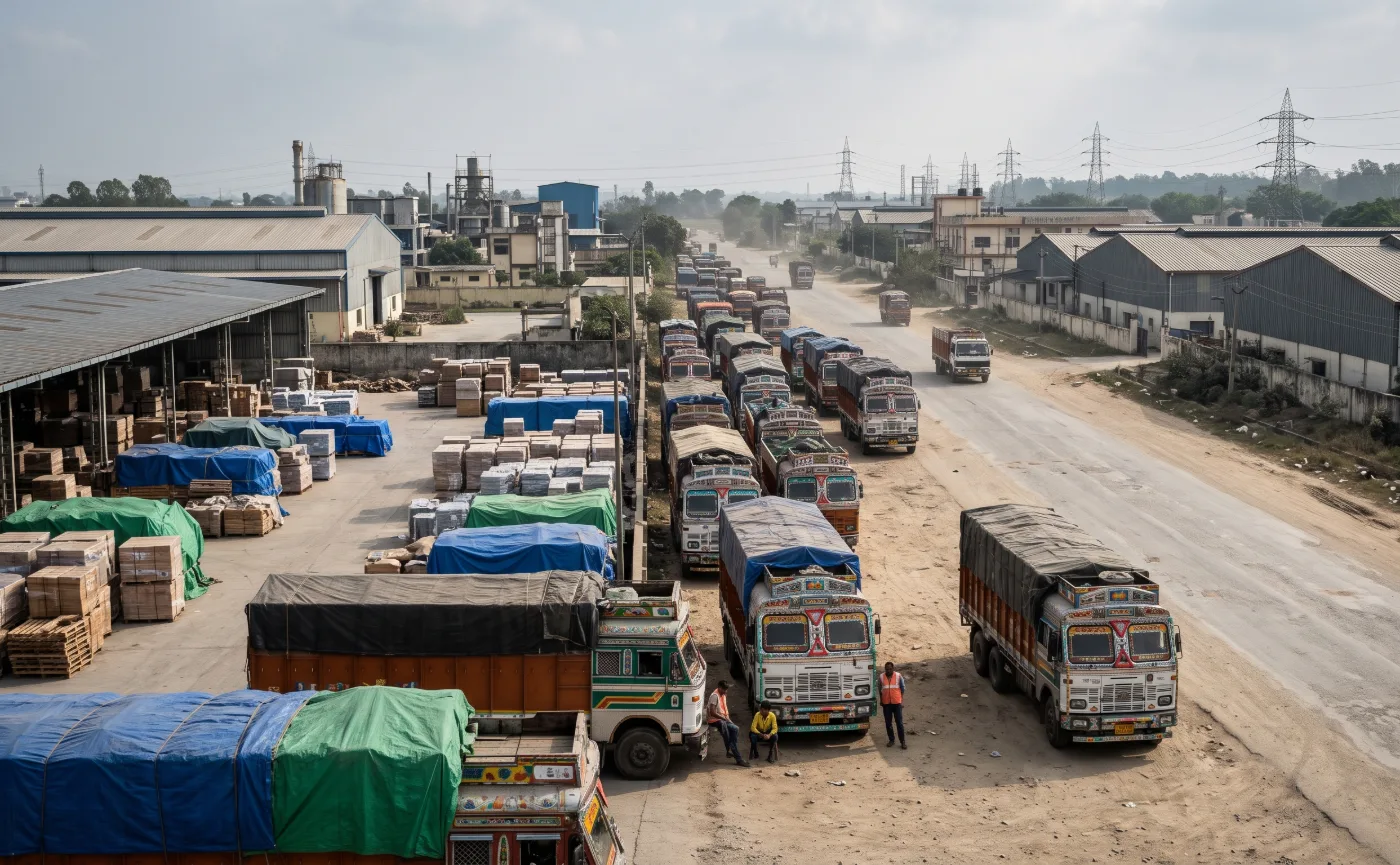
<p class="ds-markdown-paragraph" style="margin: 16px 0px; color: rgb(15, 17, 21); font-family: quote-cjk-patch, Inter, system-ui, -apple-system, BlinkMacSystemFont, "Segoe UI", Roboto, Oxygen, Ubuntu, Cantarell, "Open Sans", "Helvetica Neue", sans-serif; font-size: 16px;"><span class="">The SIDCUL industrial area in Rudrapur has seen freight movement collapse by nearly half in the days following Diwali, as a large share of truck drivers and loading workers travelled to their home states for Chhath Puja, leaving factories without the transport capacity needed to move raw materials in and finished goods out . According to data compiled by the SIDCUL Association, daily truck dispatches have fallen from 1,200–1,400 before Diwali to 600–700, while cargo volumes have dropped from 18,000–20,000 metric tonnes to 8,000–10,000 tonnes .</span></p><p class="ds-markdown-paragraph" style="margin: 16px 0px; color: rgb(15, 17, 21); font-family: quote-cjk-patch, Inter, system-ui, -apple-system, BlinkMacSystemFont, "Segoe UI", Roboto, Oxygen, Ubuntu, Cantarell, "Open Sans", "Helvetica Neue", sans-serif; font-size: 16px;"><span class="">The impact on production has been severe. Several factories have reported a 30–40% decline in output, with the association estimating an overall production drop of up to 45% during the period . Raw materials are not reaching plants at the required pace, and finished goods are accumulating in warehouses without being dispatched. The disruption extends beyond the individual factories to the broader supply chains that depend on SIDCUL's output, which feeds markets across northern India and beyond.</span></p><p class="ds-markdown-paragraph" style="margin: 16px 0px; color: rgb(15, 17, 21); font-family: quote-cjk-patch, Inter, system-ui, -apple-system, BlinkMacSystemFont, "Segoe UI", Roboto, Oxygen, Ubuntu, Cantarell, "Open Sans", "Helvetica Neue", sans-serif; font-size: 16px;"><span class="">The labour shortage is the root cause. Drivers and workers from Bihar, Uttar Pradesh, Jharkhand, and West Bengal have returned to their home states for Chhath Puja, and many trucks that left with cargo have not returned because their drivers are still on holiday . This seasonal pattern is familiar to the region's industrialists, but the extended Chhath break this year has made the impact more pronounced than usual. Ajay Tiwari, former president of the SIDCUL Association, said the situation is expected to normalise after 15 November .</span></p><p class="ds-markdown-paragraph" style="margin: 16px 0px; color: rgb(15, 17, 21); font-family: quote-cjk-patch, Inter, system-ui, -apple-system, BlinkMacSystemFont, "Segoe UI", Roboto, Oxygen, Ubuntu, Cantarell, "Open Sans", "Helvetica Neue", sans-serif; font-size: 16px;"><span class="">The truck shortage has pushed freight rates up by 15–20%, adding a cost pressure on top of the volume disruption . For an industrial hub that competes on cost and delivery reliability, this combination of higher freight costs and unpredictable dispatch schedules creates a difficult operating environment. Gajendra Singh, president of the SIDCUL Association, sought to downplay the severity, stating that dispatch has been affected but that supplies should return to normal within two to three days .</span></p><p class="ds-markdown-paragraph" style="margin: 16px 0px; color: rgb(15, 17, 21); font-family: quote-cjk-patch, Inter, system-ui, -apple-system, BlinkMacSystemFont, "Segoe UI", Roboto, Oxygen, Ubuntu, Cantarell, "Open Sans", "Helvetica Neue", sans-serif; font-size: 16px;"><span class="">For Uttarakhand's industrial economy, the SIDCUL disruption is a reminder of the region's dependence on migrant labour for logistics operations. The drivers and loading workers who move goods through Rudrapur are predominantly from other states, and their seasonal migration for festivals creates a recurring bottleneck that is difficult to mitigate without a local workforce trained in logistics operations. The problem is not unique to SIDCUL—industrial clusters across northern India face similar patterns—but the concentration of manufacturing in the Rudrapur belt makes the impact particularly visible.</span></p><p class="ds-markdown-paragraph" style="margin: 16px 0px; color: rgb(15, 17, 21); font-family: quote-cjk-patch, Inter, system-ui, -apple-system, BlinkMacSystemFont, "Segoe UI", Roboto, Oxygen, Ubuntu, Cantarell, "Open Sans", "Helvetica Neue", sans-serif; font-size: 16px;"><span class="">The timing of the disruption is also significant because it comes as the broader logistics environment is already strained. Freight rates on India's major export routes remain elevated due to the West Asia conflict and Hormuz disruption, and container availability has been tight. The SIDCUL crunch is a domestic, labour-driven disruption rather than a maritime one, but it compounds the sense of operational uncertainty that has characterised India's logistics sector in the second half of 2026.</span></p><p class="ds-markdown-paragraph" style="margin: 16px 0px; color: rgb(15, 17, 21); font-family: quote-cjk-patch, Inter, system-ui, -apple-system, BlinkMacSystemFont, "Segoe UI", Roboto, Oxygen, Ubuntu, Cantarell, "Open Sans", "Helvetica Neue", sans-serif; font-size: 16px;"><span class="">Looking ahead, the situation is expected to ease as workers return from their home states after Chhath. The industrialists' confidence that normalcy will return by mid-November is grounded in the familiar rhythm of the festival calendar, but it also reflects the absence of a structural solution to the recurring problem. For SIDCUL to avoid similar disruptions in future years, the region would need either a larger local logistics workforce or better coordination with transport operators to plan for the seasonal migration. For now, the factories wait for the drivers to come back, and the warehouses fill with goods that cannot move.</span></p>
Post-Diwali Labor Crunch Slashes Freight Movement in Uttarakhand Hub
The Sidcul industrial area in Rudrapur is experiencing a severe post-festival transport and supply chain disruption, with daily truck movements falling from 1,200–1,400 before Diwali to just 600–700 as of November 10, 2026—a decline of 45–50%. The exodus of drivers and workers from Bihar, Uttar Pradesh, Jharkhand, and West Bengal for Chhath Puja has created a truck shortage, pushing freight rates up by 15–20%. Factory production has dropped 30–40% due to raw material shortages, while finished goods remain stuck in warehouses awaiting dispatch. Industry association leaders expect normalcy to return only after November 15