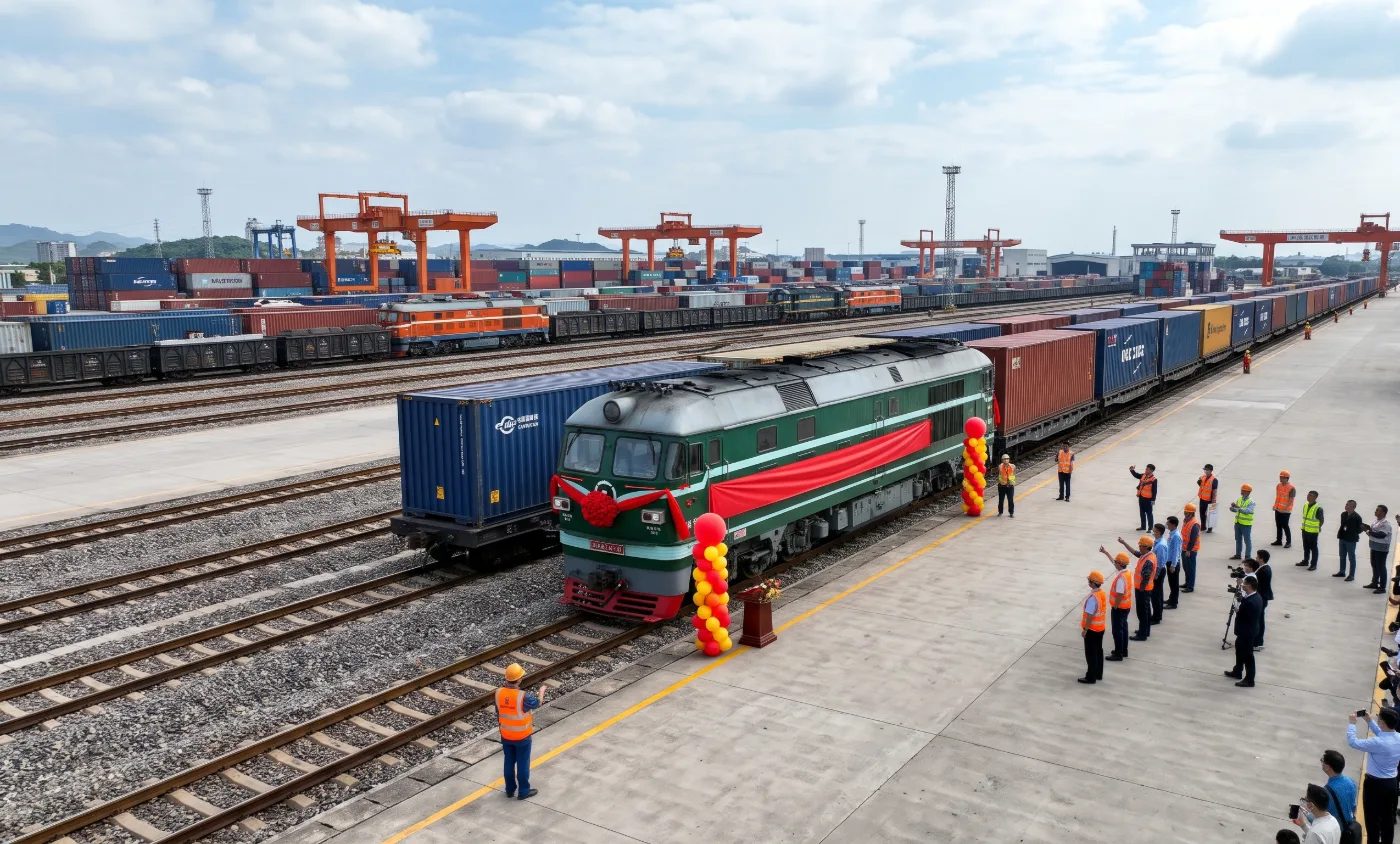
<p class="ds-markdown-paragraph" style="margin: 16px 0px; color: rgb(15, 17, 21); font-family: quote-cjk-patch, Inter, system-ui, -apple-system, BlinkMacSystemFont, "Segoe UI", Roboto, Oxygen, Ubuntu, Cantarell, "Open Sans", "Helvetica Neue", sans-serif; font-size: 16px;"><span class="">Guangxi has opened its first rail-sea intermodal freight route to South Asia, with a dedicated train departing Liuzhou Railway Port on 6 November 2026 carrying 12 forty-foot containers of auto parts destined for India via Qinzhou Port . The service, reported by Xinhua and China Railway, marks the first time the Western Land-Sea New Corridor has been extended to the South Asian subcontinent, and it establishes a direct logistics link between southwest China's manufacturing base and Indian markets.</span></p><p class="ds-markdown-paragraph" style="margin: 16px 0px; color: rgb(15, 17, 21); font-family: quote-cjk-patch, Inter, system-ui, -apple-system, BlinkMacSystemFont, "Segoe UI", Roboto, Oxygen, Ubuntu, Cantarell, "Open Sans", "Helvetica Neue", sans-serif; font-size: 16px;"><span class="">The cargo reflects the industrial geography of the route's origin. Liuzhou is a national base for auto parts production and vehicle exports, and the train's load of automotive components is representative of the region's export profile. Under the previous logistics arrangement, these goods would have been transported in fragmented segments by road to collection points in the Pearl River Delta before being consolidated for ocean shipment . The new "block train plus liner" model connects the inland origin directly to the coastal port, eliminating the intermediate road leg and the delays associated with fragmented transfers.</span></p><p class="ds-markdown-paragraph" style="margin: 16px 0px; color: rgb(15, 17, 21); font-family: quote-cjk-patch, Inter, system-ui, -apple-system, BlinkMacSystemFont, "Segoe UI", Roboto, Oxygen, Ubuntu, Cantarell, "Open Sans", "Helvetica Neue", sans-serif; font-size: 16px;"><span class="">The time saving is the route's primary commercial advantage. According to Wu Peiqin, deputy manager of the Liuzhou South Business Department at China Railway Nanning Bureau's Nanning Railway Logistics Center, the new model reduces total transit time by approximately three days compared with the previous method . For auto parts exporters, where delivery schedules are tied to production cycles and inventory costs, a three-day reduction in transit time translates into more flexible order acceptance, lower working capital requirements, and improved reliability for customers in India.</span></p><p class="ds-markdown-paragraph" style="margin: 16px 0px; color: rgb(15, 17, 21); font-family: quote-cjk-patch, Inter, system-ui, -apple-system, BlinkMacSystemFont, "Segoe UI", Roboto, Oxygen, Ubuntu, Cantarell, "Open Sans", "Helvetica Neue", sans-serif; font-size: 16px;"><span class="">The operational model is designed for regularity rather than one-off shipment. China Railway Nanning Bureau has been operating scheduled auto parts trains on a weekly basis, and the South Asia route is intended to follow the same pattern. The "block train plus liner" arrangement provides fixed departure times and dedicated vessel connections at Qinzhou Port, giving exporters a predictable schedule that can be planned around . The railway has established a dedicated service team to coordinate container loading plans, capacity allocation, and loading operations to support the route's reliability.</span></p><p class="ds-markdown-paragraph" style="margin: 16px 0px; color: rgb(15, 17, 21); font-family: quote-cjk-patch, Inter, system-ui, -apple-system, BlinkMacSystemFont, "Segoe UI", Roboto, Oxygen, Ubuntu, Cantarell, "Open Sans", "Helvetica Neue", sans-serif; font-size: 16px;"><span class="">The Western Land-Sea New Corridor provides the strategic framework for the service. The corridor is a national-level initiative designed to connect China's western interior with international markets through Guangxi's ports, using rail for the inland leg and sea for the international leg. Liuzhou Railway Port, Qinzhou Port East Station, and the Beibu Gulf port cluster serve as the key nodes . The South Asia route extends the corridor's southbound coverage beyond Southeast Asia to the Indian subcontinent, creating a complementary logistics matrix alongside the existing ASEAN services.</span></p><p class="ds-markdown-paragraph" style="margin: 16px 0px; color: rgb(15, 17, 21); font-family: quote-cjk-patch, Inter, system-ui, -apple-system, BlinkMacSystemFont, "Segoe UI", Roboto, Oxygen, Ubuntu, Cantarell, "Open Sans", "Helvetica Neue", sans-serif; font-size: 16px;"><span class="">For India, the new route represents an additional channel for Chinese manufactured goods, particularly auto components, to enter the Indian market. It also offers a potential return leg for Indian products, including agricultural goods and minerals, to reach southwest China through the same corridor. The route's efficiency gains could make Chinese auto parts more competitive on landed cost in India, while giving Indian exporters a new option for accessing inland Chinese markets without routing through eastern coastal ports.</span></p><p class="ds-markdown-paragraph" style="margin: 16px 0px; color: rgb(15, 17, 21); font-family: quote-cjk-patch, Inter, system-ui, -apple-system, BlinkMacSystemFont, "Segoe UI", Roboto, Oxygen, Ubuntu, Cantarell, "Open Sans", "Helvetica Neue", sans-serif; font-size: 16px;"><span class="">The timing of the launch aligns with the broader disruption to traditional shipping routes. With the Strait of Hormuz constrained and Red Sea transits subject to security risks, overland and multimodal corridors through Central and South Asia have become more strategically important for trade between China, South Asia, and the Middle East. The Guangxi route is not a direct substitute for the maritime corridors that have been disrupted, but it adds a land-based alternative for a specific segment of China-India trade.</span></p><p class="ds-markdown-paragraph" style="margin: 16px 0px; color: rgb(15, 17, 21); font-family: quote-cjk-patch, Inter, system-ui, -apple-system, BlinkMacSystemFont, "Segoe UI", Roboto, Oxygen, Ubuntu, Cantarell, "Open Sans", "Helvetica Neue", sans-serif; font-size: 16px;"><span class="">Looking ahead, the key milestone is the transition from a first departure to regular, scheduled service. The railway has indicated that it will adjust train frequency based on export order volumes, expand the number of South Asian destinations served, and broaden the range of goods carried . For the route to become commercially significant, it will need to demonstrate consistent utilisation and reliable transit times that justify shippers switching from established road-and-port routings. For now, the launch marks the Western Land-Sea New Corridor's extension into South Asia, and it signals that China is building multimodal logistics infrastructure that can adapt to the disruptions affecting maritime trade.</span></p>
China Opens New Rail-Sea Freight Route to South Asia via Guangxi
Guangxi launched its first dedicated rail-sea intermodal service to South Asia under the Western Land-Sea New Corridor on November 6, 2026. A train carrying 12 forty-foot containers of auto parts departed from Liuzhou Railway Port for Qinzhou Port, where cargo will be transshipped onto ocean-going vessels bound for India. The new "block train + liner" model is expected to save approximately three days in transit time compared to the previous fragmented method of road transport to the Pearl River Delta for consolidation and export. The service is positioned to support Guangxi-manufactured automotive exports and reduce cross-border logistics costs for local enterprises.