
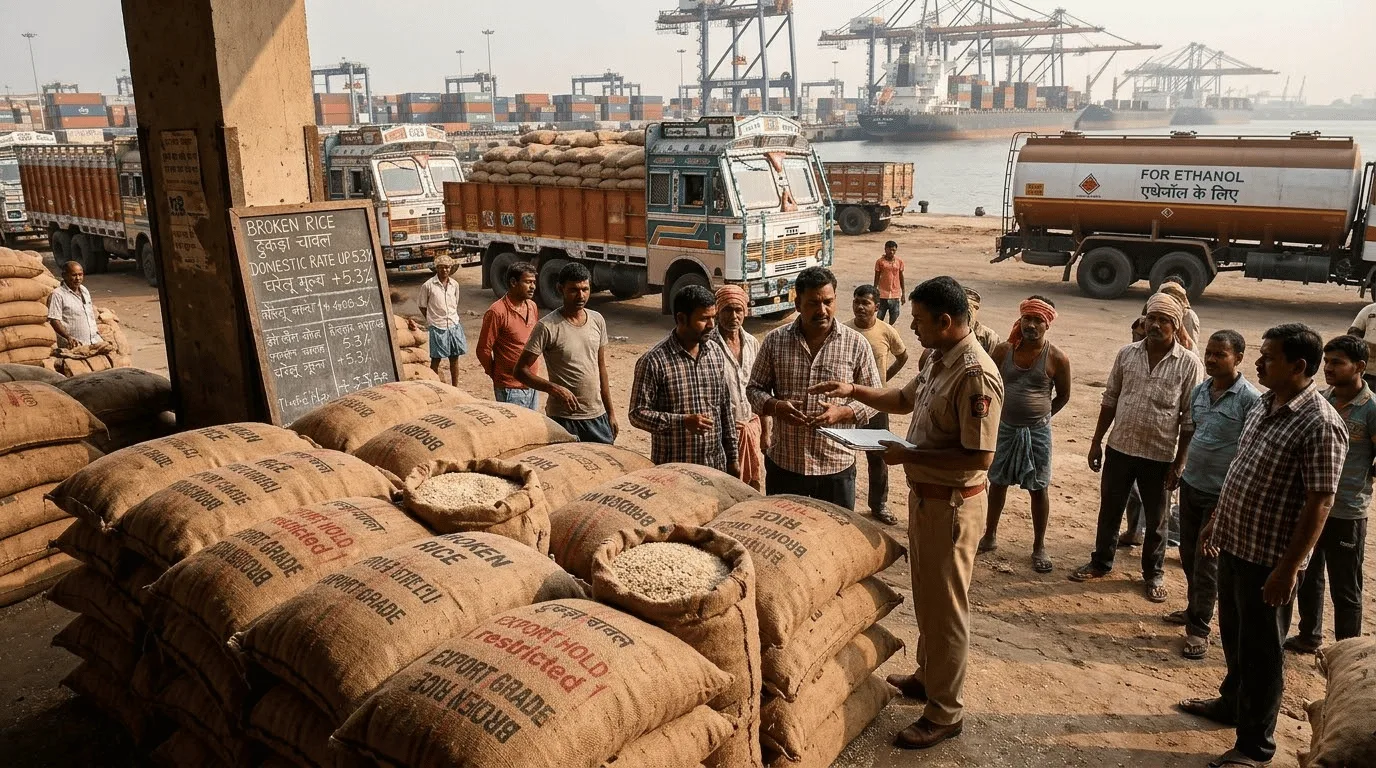
The price pressure driving the speculation is measurable. National wholesale prices for broken rice reached ₹3,036 per quintal on 2 November, up from ₹2,883 on 10 October, a 5.3% increase in just three weeks . This increase has raised concerns among domestic buyers, particularly ethanol distilleries that use broken rice as a feedstock for India's ethanol blending programme. Distilleries compete directly with poultry feed producers and exporters for the same grain supplies, and the government has prioritised ethanol production as part of its energy security strategy.
The supply outlook adds to the pressure. S&P Global Energy CERA forecasts Indian rice production at 146 million metric tons in the 2026/2027 season, down 8 million tons from a year earlier, partly because of El Niño conditions . A smaller crop would tighten domestic availability and make the government more inclined to restrict exports to ensure adequate supply for domestic consumers and ethanol producers.
For West African buyers, the prospect of Indian restrictions is a significant concern. Senegal is particularly exposed: it imported 1.39 million metric tons of broken rice worth $536.3 million in 2025, with India supplying 399,057 tons, or 28.7% of the total, ahead of Thailand, Pakistan, and Brazil . While Senegal sources from multiple countries, a restriction in India would remove one of its largest suppliers without guaranteeing that equivalent quantities would be immediately available from alternative sources at comparable prices.
The historical precedent is instructive. India banned broken rice exports on 8 September 2022, and Senegal and Gambia subsequently obtained special exemptions in March 2023, allowing them to import 250,000 and 100,000 metric tons respectively . Those exemptions eased immediate supply pressure but did not restore predictable access, and the ban remained in place until March 2025. The current speculation suggests that the government is weighing similar measures again, with the same potential consequences for dependent buyers.
For India's agricultural export logistics, any restriction would reduce outbound volumes of broken rice through Indian ports, affecting shipping lines, freight forwarders, and port handling operations that serve this trade. The rice export trade has already been subject to policy volatility, and the DGFT's recent revision of rice export policy for European countries indicates that the government is actively managing the sector. A new restriction on broken rice would add another layer of uncertainty for exporters and their logistics partners.
Looking ahead, the key question is whether the government will formalise restrictions and in what form. The absence of an official notification means that the trade is operating on expectation rather than policy, and exporters with existing contracts may face uncertainty about whether their shipments will be permitted. For Senegal and other West African buyers, the outcome will determine whether they need to secure alternative supply arrangements or seek diplomatic exemptions as they did in 2023.