
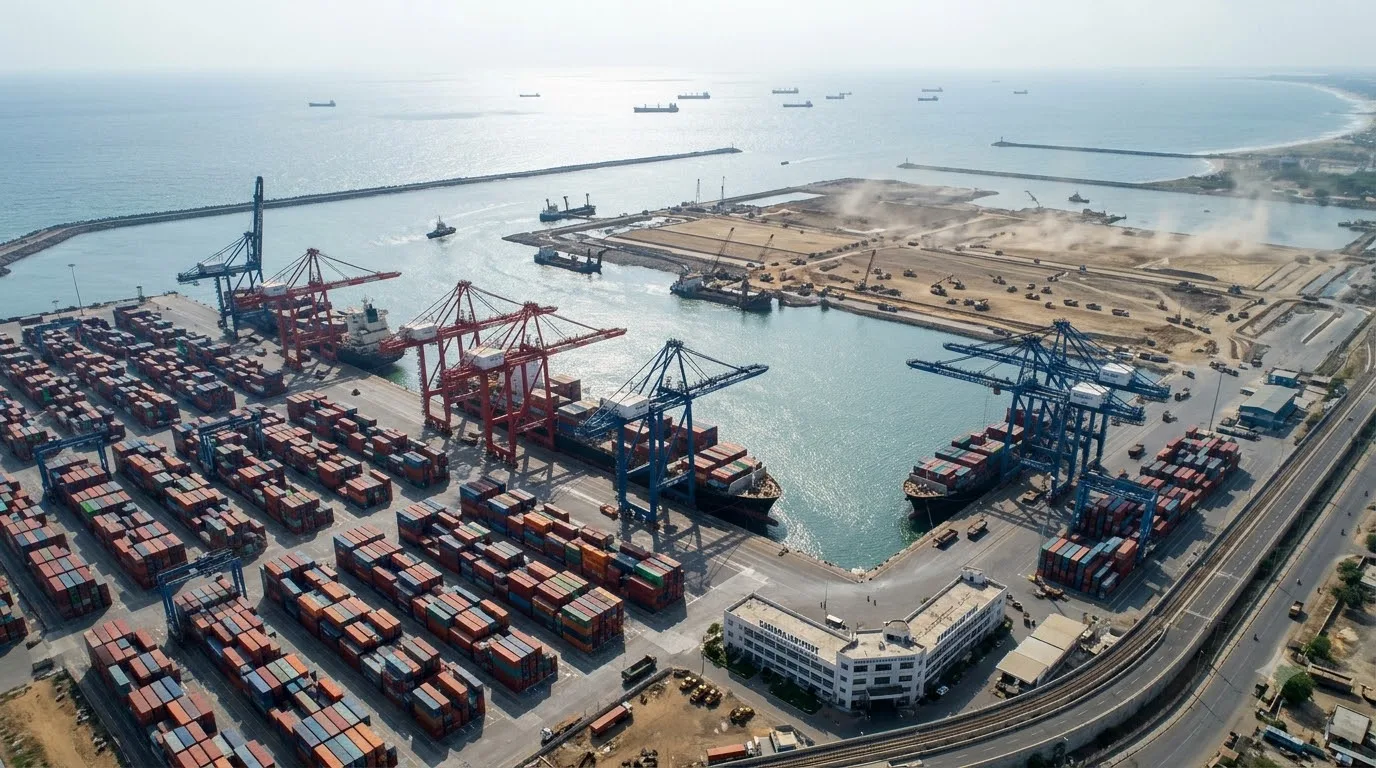
Kamarajar Port Limited is set to open bids on 11 November 2026 for its second container terminal, a ₹4,288-crore project that represents one of the largest container-handling infrastructure investments currently under procurement on India's east coast . The tender, issued in August 2026 under reference KPL/PPD/CT-2/PPP/2026, advances a process that began with an expression of interest in December 2025 and a pre-application conference that attracted terminal developers and stakeholders from major Indian ports .
The project's specifications are designed for the next generation of container vessels. The terminal will be developed on a Design, Build, Finance, Operate and Transfer basis with a 40-year concession period, offering an annual capacity of 2 million TEUs . It is designed to handle vessels up to 24,000 TEUs with a maximum length overall of 400 metres, positioning Kamarajar to accommodate the largest container ships in the global fleet . The project is intended to meet growing EXIM and transshipment demand and strengthen the port's position as a container-handling hub, in line with the Maritime Amrit Kaal Vision 2047.
The existing container terminal at Kamarajar, operated by Adani Ennore Container Terminal Private Limited under a concession signed in 2014, has a design capacity of 1.4 million TEU per year, with its first phase entering commercial operation in FY2017-18 . The second terminal would more than double the port's container-handling capacity, giving Kamarajar the ability to compete more effectively with Chennai and other east coast gateways for container traffic.
The port's recent performance provides context for the expansion. Kamarajar handled 49.08 million tonnes of cargo in the year ended March 31, 2026, against 48.41 million tonnes a year earlier, and recorded profit after tax of ₹5.96 billion . A ₹4.4 billion capital dredging programme has given the port an operational draft of 18 metres, enabling it to accommodate larger vessels . The port operates under a landlord-port model and is wholly owned by Chennai Port Authority, with nine operational berths and total cargo-handling capacity of 58.44 million tonnes per year.
For India's container logistics sector, the Kamarajar tender is significant because it represents additional capacity on a corridor where demand has been growing. JNPA has been setting monthly records, Cochin Port has led major ports in container growth, and the government has been actively promoting port expansion through public-private partnerships. The Kamarajar terminal adds to this pipeline, and its 2 million TEU capacity would provide a meaningful increment to the east coast's container handling capability.
The timing of the bid opening is notable because it coincides with a period of elevated freight rates and shipping disruptions. The Hormuz crisis and Red Sea diversions have increased costs and uncertainty for Indian exporters, and additional container capacity at Kamarajar could, over time, provide more options for cargo owners and carriers seeking alternatives to congested gateways. The terminal's ability to handle 24,000 TEU vessels would also position it for the trend toward larger ships that has characterized global container shipping.
Looking ahead, the key milestone is the bid opening on 11 November and the subsequent evaluation and award process. The project's success will depend on whether the bids received are commercially viable and whether the selected developer can deliver the terminal on schedule. For Kamarajar Port, the second container terminal represents a bet that east coast container demand will continue to grow and that the port can capture a larger share of that growth. For India's port sector, it is another test of whether the PPP model can deliver container capacity at the scale and pace that the country's trade requires.