
The CFO's remarks were reported by Chinese financial media on November 10, addressing three key points: Hormuz LNG flows are gradually recovering but remain below pre-war levels; no decision has been made on alternative export facilities; and the company's growth plans are not yet reflected in its stock price. These brief comments represent the most current official position on ADNOC's strategic options for bypassing the Strait of Hormuz.
The Strait of Hormuz has been the most critical chokepoint for UAE and Qatari LNG exports. Since the outbreak of the US-Iran conflict in February 2026, Iran has attacked tankers transiting the strait with missiles and drones, severely restricting energy exports from the region. Although the US Navy has provided escort for some vessels, ADNOC Gas's LNG shipments have still not returned to pre-war levels.
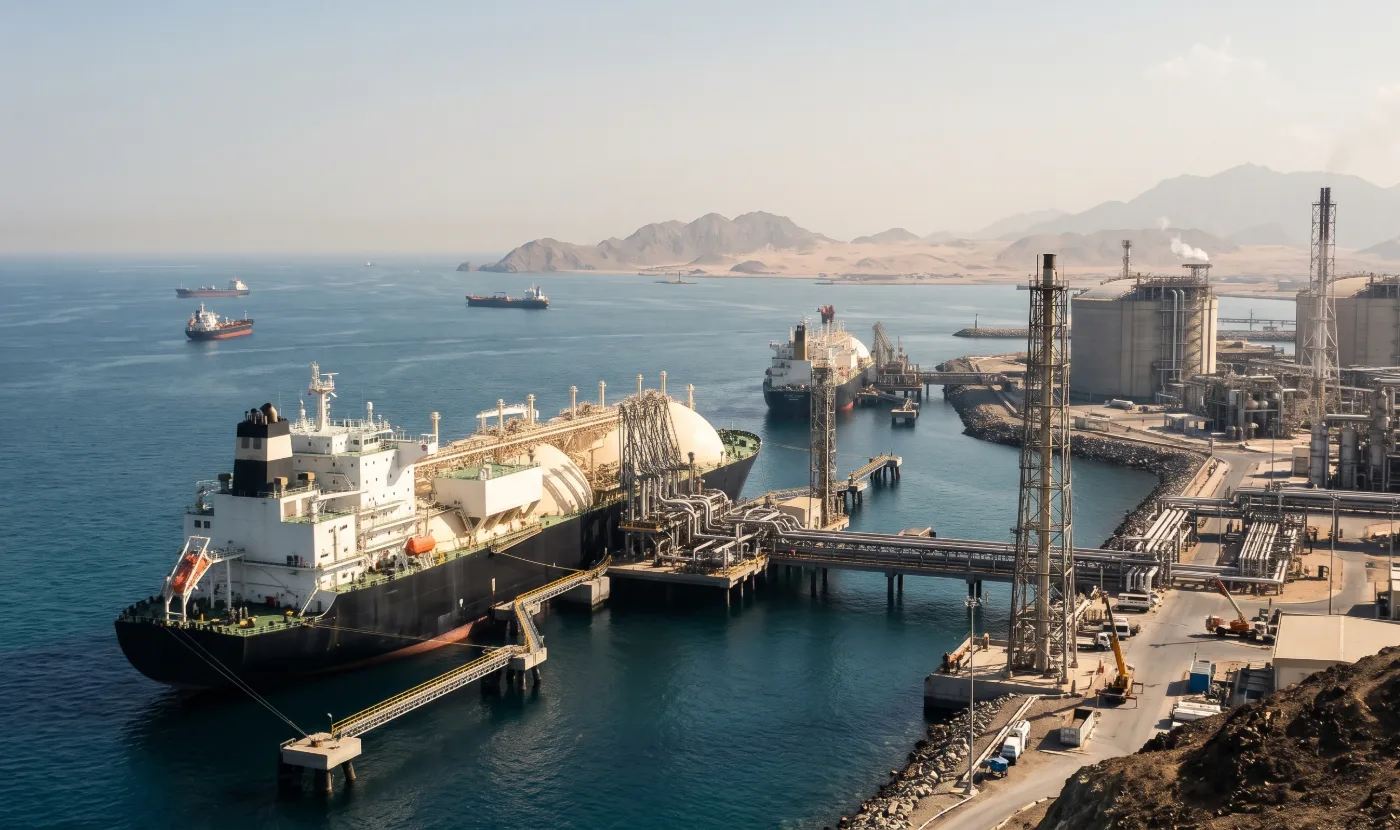
ADNOC Gas has been evaluating the feasibility of building an LNG export facility at Fujairah on the UAE's east coast. Fujairah is located on the Gulf of Oman, outside the Strait of Hormuz, where cargoes could reach international markets without transiting the strait. Previously, Bloomberg reported that ADNOC Gas was considering options on the east coast, with the CFO stating that no final decision had been made. Energy Intelligence reported that the facility under consideration has a capacity of approximately 4 million tonnes per annum, which would be the UAE's third LNG plant and the first not dependent on Hormuz transit.
CEO Fatema Al Nuaimi stated in an interview: "At this stage, we have not made a decision on any of these projects." She added that the relevant projects remain at the evaluation and research stage. This indicates that despite the severe disruption to Hormuz transits caused by the conflict, the alternative facility decision faces multiple barriers including capital cost, gas source pipelines, and long-term customer commitments.
ADNOC Gas's financial performance provides some buffer for the delay in decision-making. Third-quarter net profit doubled quarter-on-quarter to $1.34 billion, driven by higher-margin export LNG sales and strong domestic demand in the UAE. CFO Peter van Driel stated: "Every month, the number of cargo vessels transiting the Strait of Hormuz is gradually improving".
ADNOC's growth plans include the Ruwais LNG project under construction within the Gulf, which will more than double its export capacity to approximately 15 million tonnes per annum, but that facility likewise relies on Hormuz transit. A potential Fujairah facility would provide a true bypass route, but it would require building a pipeline connecting western gas fields to the east coast, involving billions of dollars in investment and years of construction time.
The significance of the CFO's November 10 remarks lies in their confirmation that despite the monthly recovery in Hormuz transits, ADNOC is not rushing to commit to a costly alternative. The "no decision" means the UAE's LNG export strategy will continue to depend on the security situation in the Strait of Hormuz in the near term, with the Fujairah option remaining a strategic reserve rather than an operational plan.