
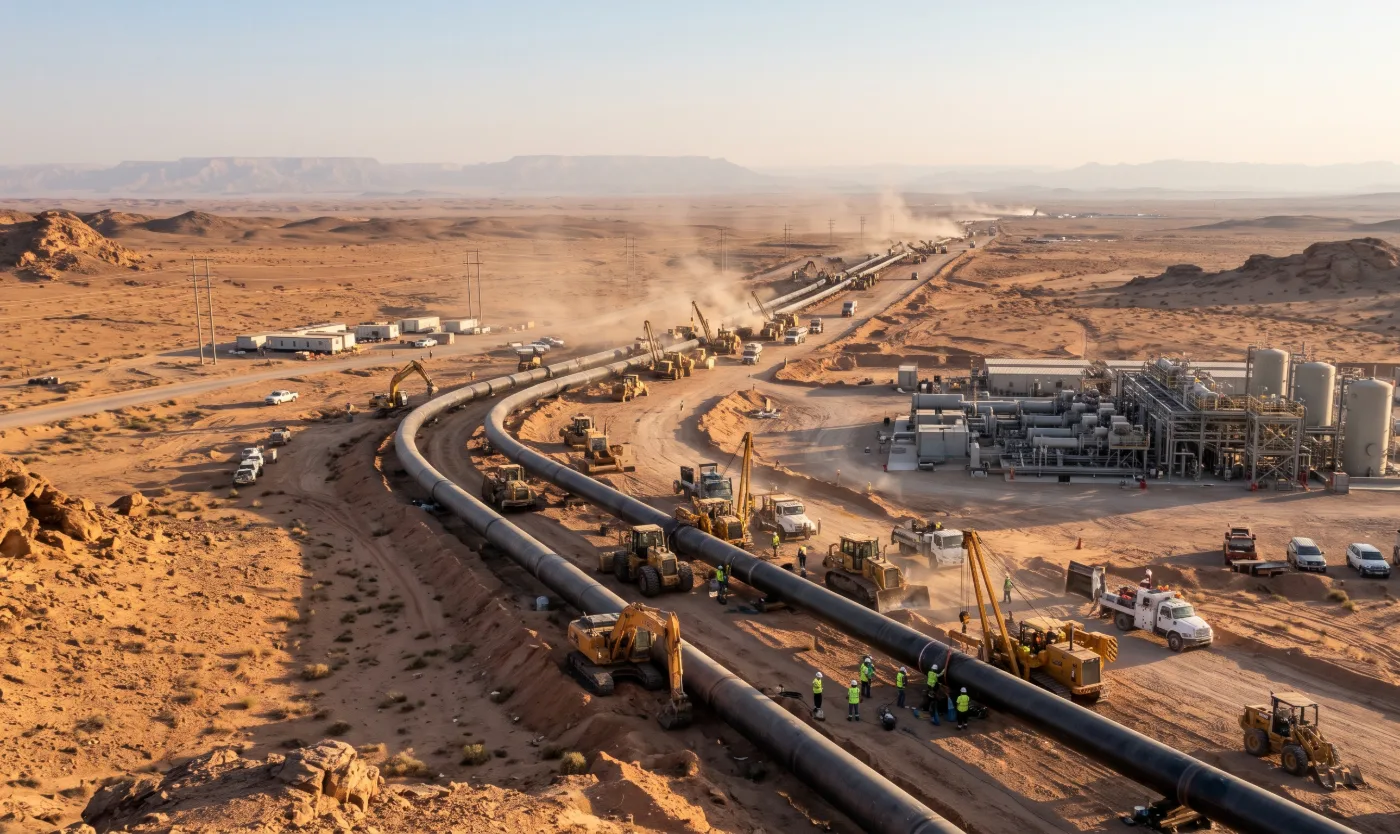
Aramco CEO Amin Nasser first disclosed the 10 million barrels per day target in an interview with Al Arabiya Business in October 2026, stating that the company was conducting engineering studies for additional crude export routes to reduce exposure to disruptions in major shipping corridors. In a third-quarter earnings call on November 3, Nasser further confirmed: "Regarding the expansion of our East-West Pipeline and the additional networks we are building, this work has already started".
The East-West Pipeline, approximately 1,200 kilometers long, runs from Abqaiq in eastern Saudi Arabia to Yanbu on the Red Sea coast, with current capacity of approximately 7 million barrels per day. Before the conflict, the pipeline typically transported approximately 2 million barrels per day, but after the Strait of Hormuz was effectively blocked, Aramco increased throughput to full capacity, reaching 7 million barrels per day by late March 2026, of which approximately 2 million barrels per day supplied Saudi domestic refineries. Saudi Energy Minister Prince Abdulaziz bin Salman stated at the WPC Energy Congress in Riyadh in October that Saudi Arabia plans to increase pipeline export capacity to destinations outside the Gulf to 10 million barrels per day within two to three years through upgrading pumping stations and repurposing a domestic gas pipeline.
Nasser emphasized the strategic value of this pipeline. He stated that global markets have lost approximately 3 billion barrels of oil supply since the crisis began, and oil prices could have risen further, but the East-West Pipeline was one of the factors preventing a sharper increase. He also revealed that Aramco recovered the full construction costs of the pipeline within 15 days of the current disruption. The pipeline has been attacked multiple times during the conflict—a UAV attack in September originating from Iraq damaged a pumping station, forcing a precautionary shutdown until September 22 for repairs. Nasser stated that Aramco restored the pipeline to operation within days of the attack, with 90% of the required materials sourced from within Saudi Arabia.
In addition to pipeline expansion, Aramco is studying additional export routes and overseas storage capacity. Nasser stated that Aramco currently has three oil export routes: the Strait of Hormuz, the Bab el-Mandeb Strait, and the Sidi Kerir port in Egypt. He said the company holds the largest overseas inventory among energy companies and is working to double overseas storage capacity, particularly in Asia. Details of new export routes will not be disclosed until final investment decisions are made.
However, analysts hold cautious views on the actual effectiveness of the expansion. Gilbert Metcalf, former Deputy Assistant Secretary for Environment and Energy at the U.S. Treasury Department, noted that even if Saudi Arabia increases pipeline throughput to 10 million barrels per day, it would only add approximately 2% of oil to the global market, and the pipeline itself remains vulnerable to drone and missile attacks, with uncertainty about refining capacity for processing the crude. Furthermore, southbound tankers departing from Yanbu must pass through the Bab el-Mandeb Strait, where Houthi forces have declared a maritime blockade of Saudi Arabia and seized control of areas around the strait in September, adding risk to the Red Sea export route.
Aramco's financial performance provides support for the expansion. The company's third-quarter reported net profit surged more than one-third year-on-year, aided by a one-time gain from the sale of its stake in PRefChem to Petronas, while adjusted net income increased 9%. Third-quarter capital expenditures were $10.5 billion, down from $12.6 billion in the same period last year. Nasser stated that Aramco can bring its maximum sustainable production capacity of 12 million barrels per day to market within three weeks if the government requests it, but any further capacity expansion requires government authorization.