
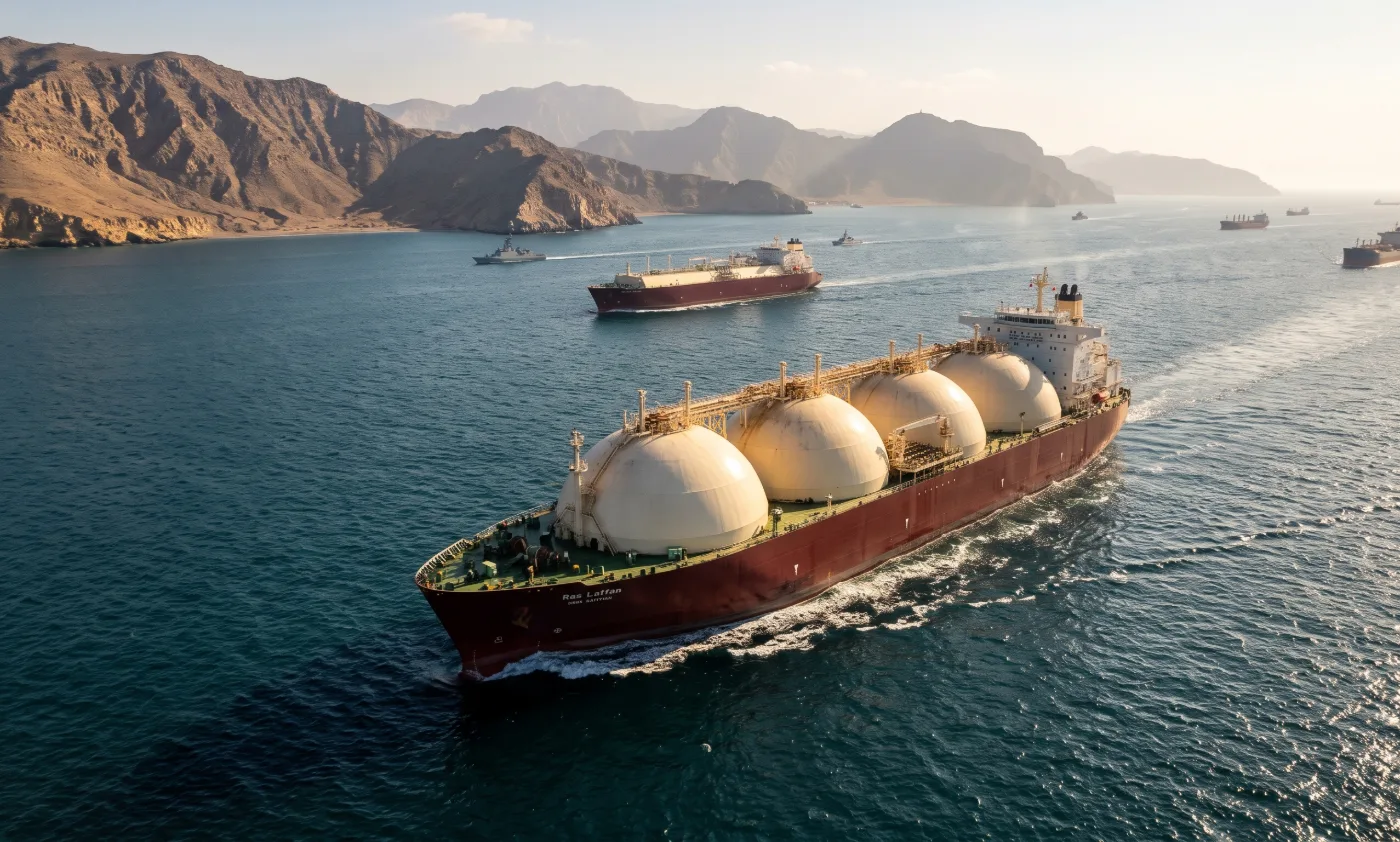
Vessel tracking data from S&P Global Energy showed that 31 laden LNG tankers exited the Strait of Hormuz in October, of which 23 were loaded at Ras Laffan in Qatar and eight at Das Island in the United Arab Emirates . The October tally was the highest since February, when the conflict began, and represented a meaningful recovery from September's 23 vessels .
The regional composition of the recovery reveals divergent trajectories. "We are looking at UAE back to pre-war transit levels and Qatar at over 30% of pre-war Hormuz transits," said Eric Yep, a senior principal analyst at S&P Global Energy . The UAE's Das Island terminal held steady at seven loadings in October, unchanged from September, while Qatar's recovery remained partial despite the headline improvement .
Kpler's ship-tracking data provided a complementary view, showing 42 LNG cargoes loaded in October, up from 27 in September. Ras Laffan's October loadings reached 35 cargoes, surpassing 2.7 million tonnes, the highest monthly volume since the war started . For context, Qatar exported nearly 6.2 million tonnes in February before the conflict disrupted shipping .
The recovery has been accompanied by operational adaptations. Two vessels carrying LNG from Ras Laffan conducted ship-to-ship transfers off Oman's Sohar anchorage after exiting the strait. The SC Prestige transferred its cargo to the BW ENN Crystal Sky, now bound for South Korea, while the Al Mafyar transferred LNG to Shandong Redwood and Ejnan, both of which delivered to Pakistan . These STS operations allow cargoes to reach destinations without requiring the original vessel to complete the full voyage through high-risk waters.
Despite the improvement, the absolute numbers remain severely depressed relative to pre-war norms. A separate Kpler dataset cited by EXPRO Consulting reported that October shipments through Hormuz amounted to approximately 2.9 billion cubic metres of gas, only around 31% of January's pre-war level of 9.5 bcm carried by 101 tankers . The recovery is real but partial, constrained by continued security risks and operational limitations.
ADNOC's CFO provided a corporate perspective on the recovery on November 10, stating that LNG cargo flows through the Strait of Hormuz are improving month-on-month but remain below pre-conflict levels . The CFO also confirmed that no decision has been made regarding alternative LNG export facilities that would bypass Hormuz entirely, and that the company's growth plans have not yet been reflected in its share price . This suggests that despite the operational recovery, strategic uncertainty persists regarding the long-term reliability of the Hormuz route.
The broader shipping context remains fragile. October's LNG recovery occurred alongside continued security incidents in the strait and surrounding waterways. Lloyd's List Intelligence recorded at least 28 attacks or security incidents in the first half of October alone, the highest monthly total since the war began, with containerships, bulk carriers, and gas carriers increasingly caught in attacks alongside tankers . The recovery in LNG flows is therefore occurring in an environment of sustained risk, supported by US military escorts for some vessels and the use of older carriers and tracking-disabled transits .
For South Asian buyers, particularly Pakistan and India, the partial recovery offers limited relief. The Al Mafyar's cargo was delivered to Pakistan via STS transfers, and ADNOC-managed tankers have been observed heading toward India . However, with Qatari transits still at roughly 30% of pre-war levels and overall volumes less than a third of January norms, the supply constraints that have reshaped Asian LNG procurement since February remain substantially in place.