
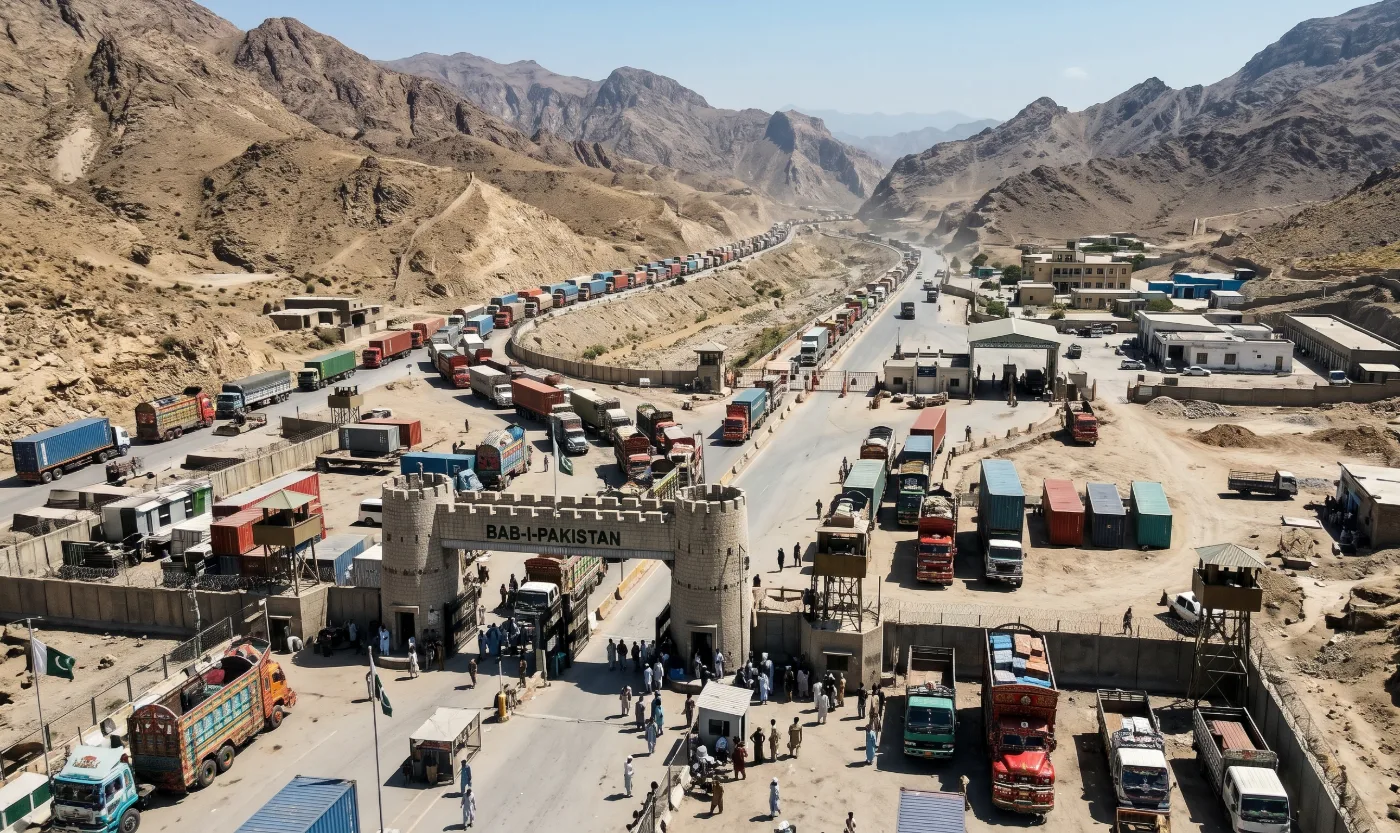
The proposal was discussed on November 8 in Islamabad at a meeting between Uzbekistan's Ambassador Alisher Tukhtaev and Sajid Amin, Director General of Pakistan's Special Investment Facilitation Council (SIFC), according to Uzbekistan's Dunyo news agency . Officials from Pakistan's Foreign Ministry and SIFC also participated in the talks, which focused on trade problems caused by the closure of the traditional transport route between the two countries .
Under the initiative, cargo would move along the Peshawar–Torkham–Afghanistan–Termez route under special monitoring and control arrangements . The Pakistani side explained that current transport restrictions were imposed because of the security situation and called Uzbekistan's proposal for a dedicated transit corridor "practically viable" . To examine the initiative in practical terms, the sides proposed online negotiations involving Uzbekistan's Ministry of Investments, Industry and Trade, its Transport Ministry, and relevant Pakistani agencies .
The background to the proposal is the prolonged closure of Pakistan's main border crossings with Afghanistan, including Torkham and Chaman, which followed cross-border clashes in October 2025 . These crossings have remained largely suspended, effectively severing the shortest and most commercially attractive overland route between Pakistan and Uzbekistan. The proposed Uzbekistan–Afghanistan–Pakistan corridor had also been envisioned as the foundation for a railway connecting Central Asia with the Arabian Sea .
The trade impact has been severe. Bilateral trade between Pakistan and Uzbekistan had once reached nearly $800 million, but declined significantly following disruptions in transit through Afghanistan and the closure of border routes . In 2025, bilateral trade stood at $445.9 million, with Pakistan exporting $120.9 million and importing $325 million . A Pakistani trade official noted that container movement through an alternative transit corridor had increased from nearly 4,000 to around 14,000 containers, while transit time had also been substantially reduced, though this was via different routes .
The meeting also covered broader bilateral cooperation beyond the transit corridor. The sides discussed bringing major Pakistani construction companies into the New Tashkent project, with SIFC leaders expressing readiness to help attract financially strong and reliable firms . They also discussed Pakistani business participation in a business forum planned for Tashkent in 2026, a delegation from Uzbekistan at the FoodAg-2026 exhibition in Karachi, and regular flights by Pakistani airlines to Tashkent, Samarkand, and Bukhara . Cooperation between the two countries' central banks and joint investment projects were also on the agenda .
The proposal represents a shift in Uzbekistan's approach to restoring trade with Pakistan. Earlier in 2026, the two countries had agreed in principle to route bilateral transit trade through China as an alternative to the closed Afghan corridor, with a protocol expected to be signed to formally add the China route through Sost Dry Port and western China . That route, however, is longer and more expensive than direct passage through Afghanistan, making it more of a strategic backup than a full commercial replacement. The new Afghan corridor proposal signals Tashkent's continued interest in restoring the shorter route if security arrangements can be made acceptable to Islamabad.
For Pakistan, the proposal offers a potential path to reviving trade with Central Asia's largest market accessible via Afghanistan, but the security concerns that prompted the border closures remain unresolved. Pakistan has been actively seeking alternative connectivity through Iran and China, but the Iran route has been complicated by renewed US-Iran hostilities, and the China route carries higher costs and transit times . The Afghan corridor, if implemented with credible monitoring mechanisms, would restore the most direct and economical option.
The initiative remains at an early stage. No timeline, cargo volume targets, or specific monitoring arrangements have been disclosed. The proposed online negotiations will determine whether the two countries can agree on practical mechanisms for securing and monitoring cargo movements through Afghan territory. For now, the proposal represents a diplomatic opening rather than an operational corridor, and its viability will depend on whether Pakistan's security establishment judges the proposed control arrangements sufficient to justify reopening a route it deliberately closed.