
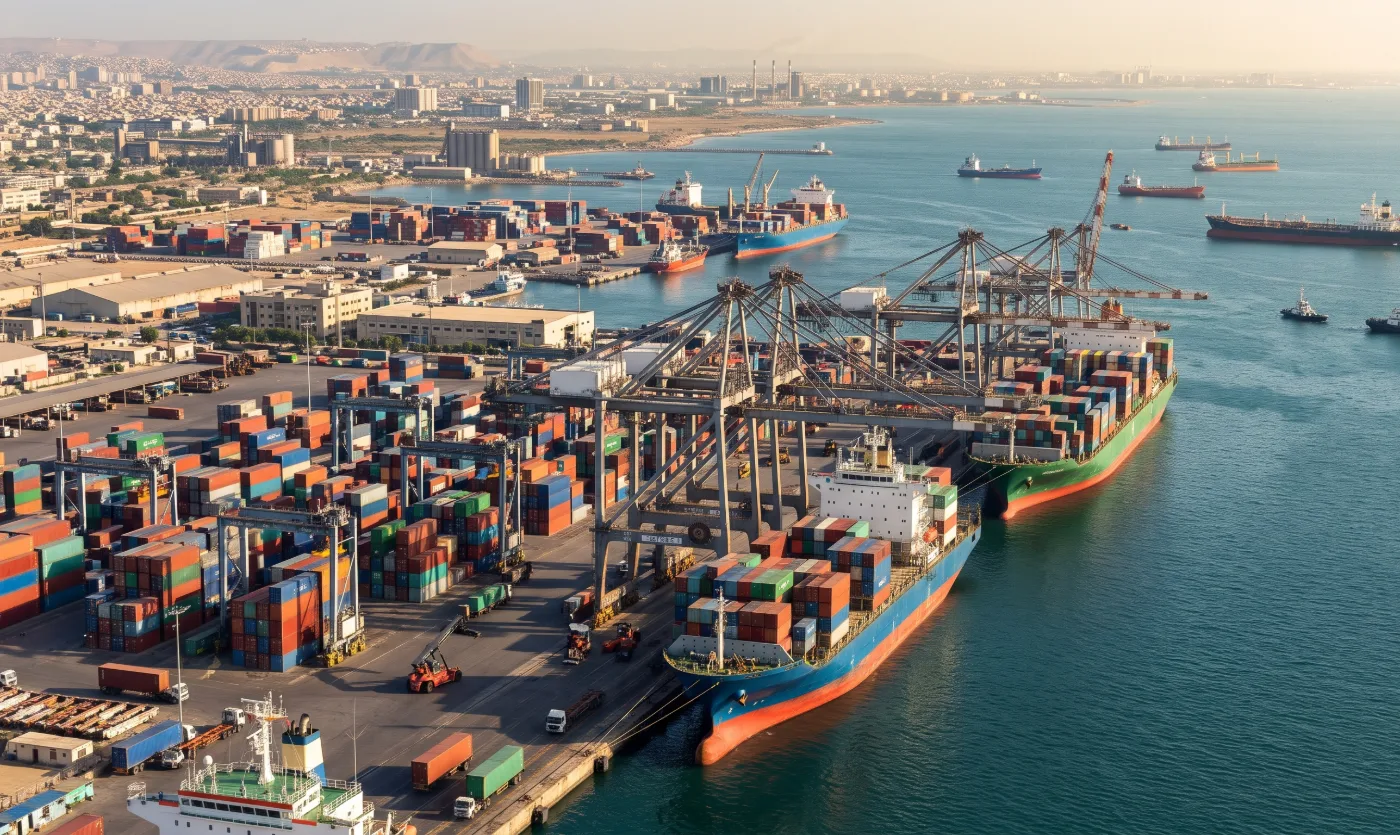
Pakistan's ports have emerged as one of the most significant beneficiaries of the geopolitical turmoil that has disrupted traditional Gulf shipping corridors. Since the escalation of tensions that led to the effective closure of the Strait of Hormuz in March 2026, global carriers have been forced to seek alternative transshipment hubs, and Karachi Port and Port Qasim have absorbed a substantial share of the redirected traffic. According to data from the Karachi Port Trust, the port sustained a record fiscal year 2025-26 with cargo handling reaching an all-time high of 55.438 million tonnes and container throughput hitting 2.749 million TEUs with over 2,100 vessel calls . Growth continued into the current fiscal year, with cargo throughput rising 3.8% to 19.286 million tonnes in July-October 2026 compared to the same period a year earlier, while vessel calls increased by 13.7% to 764 from 672 .
The surge in transshipment activity was particularly dramatic in the immediate aftermath of the Hormuz closure. In the first 24 days of March alone, Karachi Port processed 8,313 transshipment containers, surpassing the total volume handled in all of 2025 . Port Qasim also recorded exceptional activity, handling approximately 450,000 metric tonnes of petroleum products and LPG across 17 vessel calls in March, far exceeding its typical monthly averages . The combined momentum has positioned Pakistan as a viable alternative to traditional Gulf hubs such as Jebel Ali and Salalah, which became inaccessible to commercial traffic during the disruption.
To convert this short-term windfall into lasting competitive advantage, the Pakistani government introduced a unified transshipment incentive package in August 2026 that replaced multiple concession notifications with a single, performance-linked framework for both Karachi Port and Port Qasim. The package includes slab-based concessions on port wet charges ranging from 20% for vessels carrying 5-10% transshipment cargo to 80% for those carrying 90-100% . Karachi Port offers wharfage concessions of 20% to 80%, 14 days of free terminal storage, and up to 30 days of free storage at its TPX cargo area, while Port Qasim grants a 100% wharfage waiver and 7 to 21 days of free storage . The four major container terminals—KICT, SAPTL, KGTL, and QICT—have also introduced terminal handling charge reductions of 10% to 25% based on transshipment cargo share .
International shipping lines have responded to these incentives and the improved connectivity. In October 2026, Mediterranean Shipping Company launched its PREMIUM IPAK service, providing a dedicated weekly direct connection from Karachi to major European markets including Felixstowe, Rotterdam, Hamburg, Bremerhaven, Antwerp, Le Havre, and London Gateway . Federal Minister for Maritime Affairs Muhammad Junaid Anwar Chaudhry described the restoration of direct Europe connectivity as an important development for Pakistan's export-oriented industries, particularly textiles, which had faced increased transit times and logistics costs due to disruptions on international shipping routes . A new weekly feeder service connecting Karachi with Khor Fakkan in the UAE has further strengthened Gulf connectivity and prospects for additional transshipment business .
Despite the impressive gains, significant infrastructure bottlenecks threaten Pakistan's ability to sustain its newfound hub status. Karachi Port Trust Chairman Rear Admiral (retd) Shahid Ahmed has publicly lamented that dilapidated roads linking Karachi's ports to industrial zones and national highways continue to delay cargo movement and inflate logistics costs . He proposed earmarking 50% of the Sindh Infrastructure Development Cess revenue—which amounts to approximately Rs160 billion annually—for upgrading and maintaining port access roads through coordinated federal and provincial efforts . The contrast between the port's operational performance and the quality of its landside connections underscores a persistent challenge: Pakistan can attract vessels, but moving cargo efficiently to and from the hinterland remains constrained by infrastructure deficits.
Dredging of Karachi Port's navigation channel, scheduled for completion by December 2026, is expected to partially address these constraints by accommodating larger vessels and reducing trade logistics costs . The port has also climbed 30 places to 69th in the Container Port Performance Index 2025, and its Port Liner Shipping Connectivity Index score has improved, reflecting growing recognition among international carriers . The Karachi Port Trust has stepped up engagement with major international shipping lines to attract more vessel calls, direct services, and transshipment cargo, backed by competitive incentives, regulatory facilitation, and coordination with private terminal operators.
The sustainability of Pakistan's port boom ultimately depends on whether the government can translate the temporary diversion of trade flows into permanent structural advantages. A senior official, speaking on condition of anonymity, articulated the stakes: "We cannot afford to squander this opportunity to step out of the shadows. Our goal is not to capitalise on temporary regional disruptions but to translate this opening into sustained maritime trade and investment, positioning Pakistan as a leading reliable and competitive shipping hub" . With the Strait of Hormuz disruption showing signs of easing and global carriers potentially resuming usual routes, Pakistan's window to cement its position is finite. The coming months will test whether the incentive packages, regulatory reforms, and connectivity improvements are sufficient to retain shipping lines that came for the crisis but may stay only if the economics and infrastructure justify it.