
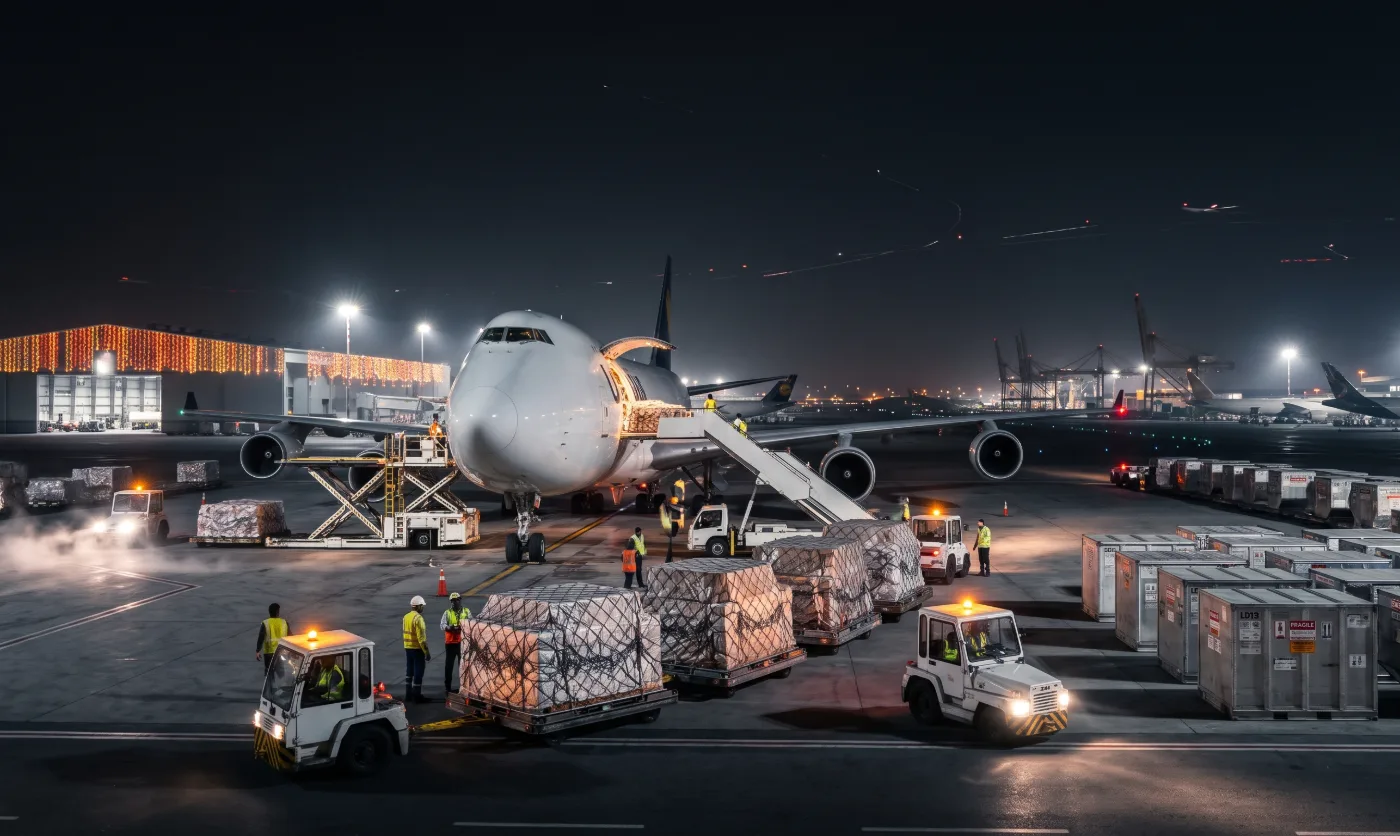
According to the latest data from WorldACD Market Data, global air cargo tonnage grew 6% year-on-year in October, with MESA origins achieving 10% growth alongside Africa, making it one of the fastest-growing regions globally. This growth occurred despite the Arabian Gulf market continuing to face severe capacity and volume challenges due to the US-Iran conflict, with the primary driving force being continued strong demand for Indian air exports.
Diwali timing shift amplified October data. This year's Diwali holiday falls from November 6 to 11, compared to October 18 to 23 last year, pushing some seasonal demand that would have occurred in late October last year into this year's October statistical period. This seasonal displacement effect, combined with genuine export demand, jointly drove MESA's volume growth.
Capacity data reveals structural divergence. In week 44 (October 26 to November 1), overall MESA capacity increased only 2% week-on-week, with South Asia capacity rising 4%, while Arabian Gulf capacity grew merely 2%. More critically, compared to pre-conflict levels, overall MESA capacity in week 44 remained down nearly 13%, with South Asia relatively least affected (down 3%), while Arabian Gulf capacity remained down 18%. Riyadh airport was almost completely closed to international flights during the statistical period.
The ongoing effects of the US-Iran conflict remain the core variable. Since the outbreak of hostilities in late February, MESA capacity has experienced a cliff-edge decline, with Gulf routes particularly affected. Although capacity has recovered somewhat from the war's outbreak lows, the Gulf region remains a global air cargo network's "weak link." The International Transport Journal reported in March that MESA capacity was down 37% year-on-year, with Gulf capacity still 20% below pre-attack levels.
Spot rates reflect the supply-demand imbalance. MESA-origin spot rates surged 59% year-on-year in October, the highest increase among all regions globally, followed by North America at 53%. This means shippers exporting from India and neighboring regions face significantly higher air freight costs than a year ago, despite relatively stable global oil prices and weak demand in some trade lanes.
Outlook remains constrained. As winter schedules take effect, passenger aircraft belly capacity on transatlantic and intra-European routes is seasonally reduced, while freighter capacity cannot fully fill the gap. For South Asian exporters, particularly India's electronics, pharmaceuticals, and high-value perishables, capacity scarcity on Gulf routes means they must book space further in advance or turn to Southeast Asian transit hubs at higher costs.