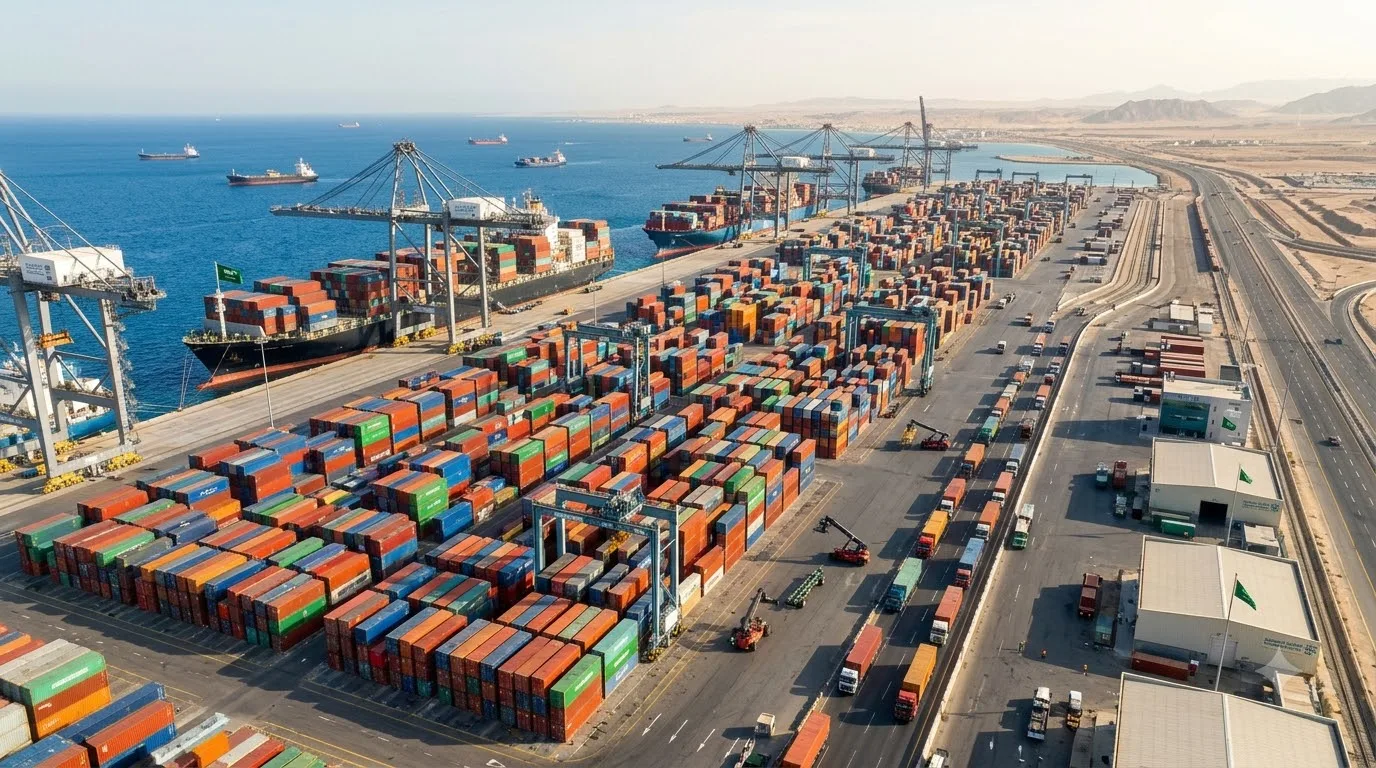
<p class="ds-markdown-paragraph" style="margin: 16px 0px; color: rgb(15, 17, 21); font-family: quote-cjk-patch, Inter, system-ui, -apple-system, BlinkMacSystemFont, "Segoe UI", Roboto, Oxygen, Ubuntu, Cantarell, "Open Sans", "Helvetica Neue", sans-serif; font-size: 16px;"><span class="">Saudi Arabia's ports recorded a 14% year-on-year increase in container handling during October 2026, reaching approximately 866,000 standard containers, as the kingdom's Red Sea gateways absorbed cargo diverted from routes disrupted by the Hormuz crisis . The data, published by the Saudi Ports Authority (Mawani) on 9 November 2026, shows inbound containers rising 8.53% and outbound containers increasing 4.83%, with transshipment containers accounting for approximately 186,000 units </span><span class="">.</span><span class="_5f9bba8" data-citation-group="1" style="margin-left: 2px; margin-right: 2px;"><a href="https://alborsaanews.com/2026/11/09/2005008" target="_blank" rel="noreferrer" aria-label="5" style="color: rgb(57, 100, 254); transition: box-shadow 0.2s cubic-bezier(0.4, 0, 0.2, 1); border-color: rgba(255, 255, 255, 0); border-width: 2px 3px; margin-left: -3px; margin-right: -3px; text-decoration: none; position: relative;"></a></span></p><p class="ds-markdown-paragraph" style="margin: 16px 0px; color: rgb(15, 17, 21); font-family: quote-cjk-patch, Inter, system-ui, -apple-system, BlinkMacSystemFont, "Segoe UI", Roboto, Oxygen, Ubuntu, Cantarell, "Open Sans", "Helvetica Neue", sans-serif; font-size: 16px;"><span class="">The growth is directly linked to the reconfiguration of Gulf shipping routes. Since the Iran war disrupted navigation through the Strait of Hormuz, global carriers have been forced to seek alternative paths to Gulf markets. MSC, the world's largest container shipping line, launched a service in May connecting Europe to Gulf ports via Jeddah Islamic Port and King Abdullah Port on the Red Sea, before trucking goods to Dammam and re-shipping them by sea to the UAE, Bahrain, Kuwait, and Iraq </span><span class="">. This multimodal arrangement allows cargo to bypass Hormuz entirely, using Saudi Arabia's overland infrastructure as a bridge between the Red Sea and the Gulf.</span><span class="_5f9bba8" data-citation-group="3" style="margin-left: 2px; margin-right: 2px;"><a href="https://alborsaanews.com/2026/11/09/2005008" target="_blank" rel="noreferrer" aria-label="5" style="color: rgb(57, 100, 254); transition: box-shadow 0.2s cubic-bezier(0.4, 0, 0.2, 1); border-color: rgba(255, 255, 255, 0); border-width: 2px 3px; margin-left: -3px; margin-right: -3px; text-decoration: none; position: relative;"></a><a href="https://www.banker.news/159721" target="_blank" rel="noreferrer" aria-label="22" style="color: rgb(57, 100, 254); transition: box-shadow 0.2s cubic-bezier(0.4, 0, 0.2, 1); border-color: rgba(255, 255, 255, 0); border-width: 2px 3px; margin-left: -3px; margin-right: -3px; text-decoration: none; position: relative;"></a></span></p><p class="ds-markdown-paragraph" style="margin: 16px 0px; color: rgb(15, 17, 21); font-family: quote-cjk-patch, Inter, system-ui, -apple-system, BlinkMacSystemFont, "Segoe UI", Roboto, Oxygen, Ubuntu, Cantarell, "Open Sans", "Helvetica Neue", sans-serif; font-size: 16px;"><span class="">Saudi Arabia has actively developed the infrastructure to support this shift. The kingdom launched a "Logistics Corridors Program" to receive goods transferred from eastern and Gulf ports to Red Sea ports, which have a combined annual capacity exceeding 18 million standard containers </span><span class="">. The Saudi Ports Authority added more than 27 new shipping services in the western region, providing additional capacity of over 200,000 containers per month </span><span class="">. These investments reflect a deliberate strategy to position Saudi Arabia as a logistics hub for the region at a time when traditional routes are compromised.</span><span class="_5f9bba8" data-citation-group="5" style="margin-left: 2px; margin-right: 2px;"><a href="https://alborsaanews.com/2026/11/09/2005008" target="_blank" rel="noreferrer" aria-label="19" style="color: rgb(57, 100, 254); transition: box-shadow 0.2s cubic-bezier(0.4, 0, 0.2, 1); border-color: rgba(255, 255, 255, 0); border-width: 2px 3px; margin-left: -3px; margin-right: -3px; text-decoration: none; position: relative;"></a></span></p><p class="ds-markdown-paragraph" style="margin: 16px 0px; color: rgb(15, 17, 21); font-family: quote-cjk-patch, Inter, system-ui, -apple-system, BlinkMacSystemFont, "Segoe UI", Roboto, Oxygen, Ubuntu, Cantarell, "Open Sans", "Helvetica Neue", sans-serif; font-size: 16px;"><span class="">The investment programme extends beyond shipping services. Mawani injected approximately 641 million riyals into developing Jeddah Islamic Port over three months, including expanding container terminals and adding new handling equipment </span><span class="">. A truck marshalling area in Jeddah with capacity for 40,000 trucks per day was inaugurated, and agreements were signed for logistics centres with investments exceeding one billion riyals </span><span class="">. These measures are intended to ensure that the infrastructure can handle the increased demand for transport and storage services that the route shift has generated.</span><span class="_5f9bba8" data-citation-group="7" style="margin-left: 2px; margin-right: 2px;"><a href="https://alborsaanews.com/2026/11/09/2005008" target="_blank" rel="noreferrer" aria-label="19" style="color: rgb(57, 100, 254); transition: box-shadow 0.2s cubic-bezier(0.4, 0, 0.2, 1); border-color: rgba(255, 255, 255, 0); border-width: 2px 3px; margin-left: -3px; margin-right: -3px; text-decoration: none; position: relative;"></a><a href="https://www.banker.news/159721" target="_blank" rel="noreferrer" aria-label="22" style="color: rgb(57, 100, 254); transition: box-shadow 0.2s cubic-bezier(0.4, 0, 0.2, 1); border-color: rgba(255, 255, 255, 0); border-width: 2px 3px; margin-left: -3px; margin-right: -3px; text-decoration: none; position: relative;"></a></span></p><p class="ds-markdown-paragraph" style="margin: 16px 0px; color: rgb(15, 17, 21); font-family: quote-cjk-patch, Inter, system-ui, -apple-system, BlinkMacSystemFont, "Segoe UI", Roboto, Oxygen, Ubuntu, Cantarell, "Open Sans", "Helvetica Neue", sans-serif; font-size: 16px;"><span class="">For India, the Saudi port growth has indirect but relevant implications. Indian exporters and importers using Gulf markets now face a logistics landscape in which Saudi Red Sea ports are becoming more prominent as entry points. Cargo destined for Saudi Arabia's eastern province or for onward movement to other Gulf states may increasingly move through Jeddah or King Abdullah Port rather than through Gulf ports that require Hormuz transit. This shift could affect routing decisions, transit times, and costs for Indian trade with the region.</span></p><p class="ds-markdown-paragraph" style="margin: 16px 0px; color: rgb(15, 17, 21); font-family: quote-cjk-patch, Inter, system-ui, -apple-system, BlinkMacSystemFont, "Segoe UI", Roboto, Oxygen, Ubuntu, Cantarell, "Open Sans", "Helvetica Neue", sans-serif; font-size: 16px;"><span class="">The growth trajectory is expected to continue. Ehsan Khoman, an economist at BlackRock Investment Institute, said in comments reported by Asharq Bloomberg that Saudi Arabia and the UAE are expected to increase their focus on port and transport infrastructure projects during 2027, with the aim of providing alternative routes and enhancing supply chain resilience against navigation disruptions </span><span class="">. This suggests that the Red Sea landbridge model is being viewed not as a temporary workaround but as a durable component of the region's logistics architecture.</span><span class="_5f9bba8" data-citation-group="9" style="margin-left: 2px; margin-right: 2px;"><a href="https://alborsaanews.com/2026/11/09/2005008" target="_blank" rel="noreferrer" aria-label="5" style="color: rgb(57, 100, 254); transition: box-shadow 0.2s cubic-bezier(0.4, 0, 0.2, 1); border-color: rgba(255, 255, 255, 0); border-width: 2px 3px; margin-left: -3px; margin-right: -3px; text-decoration: none; position: relative;"></a><a href="https://www.banker.news/159721" target="_blank" rel="noreferrer" aria-label="22" style="color: rgb(57, 100, 254); transition: box-shadow 0.2s cubic-bezier(0.4, 0, 0.2, 1); border-color: rgba(255, 255, 255, 0); border-width: 2px 3px; margin-left: -3px; margin-right: -3px; text-decoration: none; position: relative;"></a></span></p><p class="ds-markdown-paragraph" style="margin: 16px 0px; color: rgb(15, 17, 21); font-family: quote-cjk-patch, Inter, system-ui, -apple-system, BlinkMacSystemFont, "Segoe UI", Roboto, Oxygen, Ubuntu, Cantarell, "Open Sans", "Helvetica Neue", sans-serif; font-size: 16px;"><span class="">Looking ahead, the sustainability of Saudi Arabia's port growth will depend on whether the Red Sea security environment remains stable and whether the overland connections to Gulf markets can handle sustained volumes. The congestion at Saudi western ports that we covered earlier—including Jeddah, Yanbu, and King Abdullah Port—indicates that the infrastructure is already under strain. If volumes continue to rise, further investment in port capacity and road connectivity will be necessary to prevent the landbridge from becoming a bottleneck rather than a solution.</span></p>
Saudi Ports Post 14% Container Growth in October as Red Sea Landbridge Absorbs Hormuz-Diverted Cargo
Saudi ports handled approximately 866,000 standard containers in October 2026, a 14% year-on-year increase, according to data from the Saudi Ports Authority (Mawani). Inbound containers rose 8.53% and outbound containers increased 4.83%, while transshipment containers reached approximately 186,000. The growth reflects the redirection of global shipping routes toward Saudi Red Sea ports, with MSC and other carriers using Jeddah and King Abdullah Port as entry points before trucking cargo to Gulf markets.