
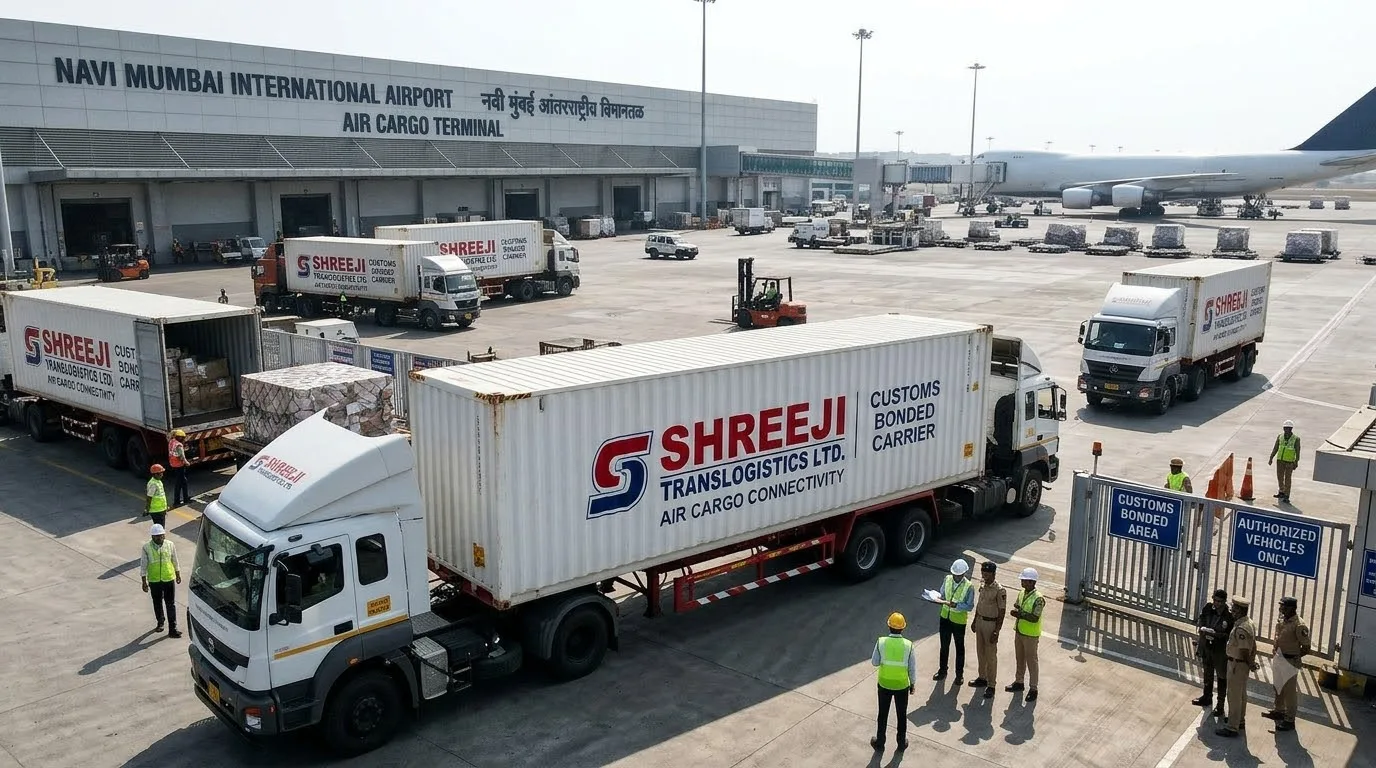
Shreeji Translogistics has secured permission to transport import and export transhipment cargo under bond from the Air Cargo Complex at Navi Mumbai International Airport to other gateways across India, expanding its access to the airport's developing freight network . The Vashi-headquartered logistics company announced the approval in a stock exchange filing on 3 November 2026, extending a customs-bonded trucking business that it has operated since 2002 .
The permission covers bonded trucking of both import and export transhipment cargo from Navi Mumbai's Air Cargo Complex to other Indian gateways . Bonded trucking provides the road transport connection between customs-controlled cargo facilities, allowing air cargo to move between gateways as part of its international journey, subject to applicable customs procedures. For Shreeji, the approval adds another airport location to an established service offering rather than representing entry into a new business segment, according to its management .
The operational significance of bonded trucking lies in its role within airline networks. Shreeji's published service information explains that bonded trucking enables airlines to serve cargo destinations without operating flights to every location, with road movements connecting those destinations to airports served by the airline's flight network . The company uses containerised trucks for these movements and offers arrangements for non-standard cargo dimensions, serving customs-notified air cargo complexes across India.
Shreeji's existing operations at Mumbai's airport provide context for the expansion. Mumbai Customs Public Notice 49/2025 recorded the company's earlier authorisation to transport specified airlines' import cargo from the Mumbai Air Cargo Complex to customs-notified air cargo complexes, inland container depots, container freight stations and air freight stations. The same notice approved export bonded trucking between Mumbai's Air Cargo Complex and other notified facilities, subject to airline authorisation and customs approval . These earlier permissions concern the existing Mumbai airport and provide the foundation for the company's expansion to Navi Mumbai.
The cargo infrastructure being developed at Navi Mumbai International Airport explains why the permission is strategically significant. The airport's published plans provide for an initial annual handling capacity of approximately 500,000 tonnes, increasing in phases to 2.6 million tonnes . Facilities are planned for pharmaceuticals, perishables, express shipments, oversized cargo, dangerous goods and other specialised consignments, along with temperature-controlled areas, separate cargo storage zones, customs offices and parking for trucks, trailers and refrigerated vehicles.
The airport's digital and automation plans add a further dimension. A planned airport cargo community system is intended to connect stakeholders through a shared digital platform, while automated truck-slot management is designed to organise terminal access . The wider cargo development programme also includes a proposed 300,000-square-foot automated FedEx hub, with groundbreaking having taken place on 18 February 2026 and FedEx announcing a long-term investment of approximately ₹2,500 crore. That facility is planned as a regional consolidation and redistribution centre supporting trade with Southeast Asia, the Middle East, Europe and the United States.
Shreeji's announcement did not disclose committed cargo volumes, contract values, deployment requirements or a date for the first movement . The absence of these details means that the commercial significance of the permission cannot be assessed from the filing alone, and the actual impact will depend on whether the airport's cargo operations develop at the pace its plans envisage and whether airlines and freight forwarders use Shreeji's bonded trucking services.
Looking ahead, the key milestone will be the commencement of cargo operations at Navi Mumbai International Airport and the volume of transhipment cargo that flows through its Air Cargo Complex. Shreeji's permission positions it as one of the logistics providers authorised to connect the new airport with other gateways, but the value of that permission depends on whether the airport becomes a significant cargo hub as planned. For India's air cargo sector, the development adds a road transport capability to a new airport's expanding cargo ecosystem, and it signals that the supporting logistics infrastructure for Navi Mumbai's freight ambitions is beginning to take shape.