
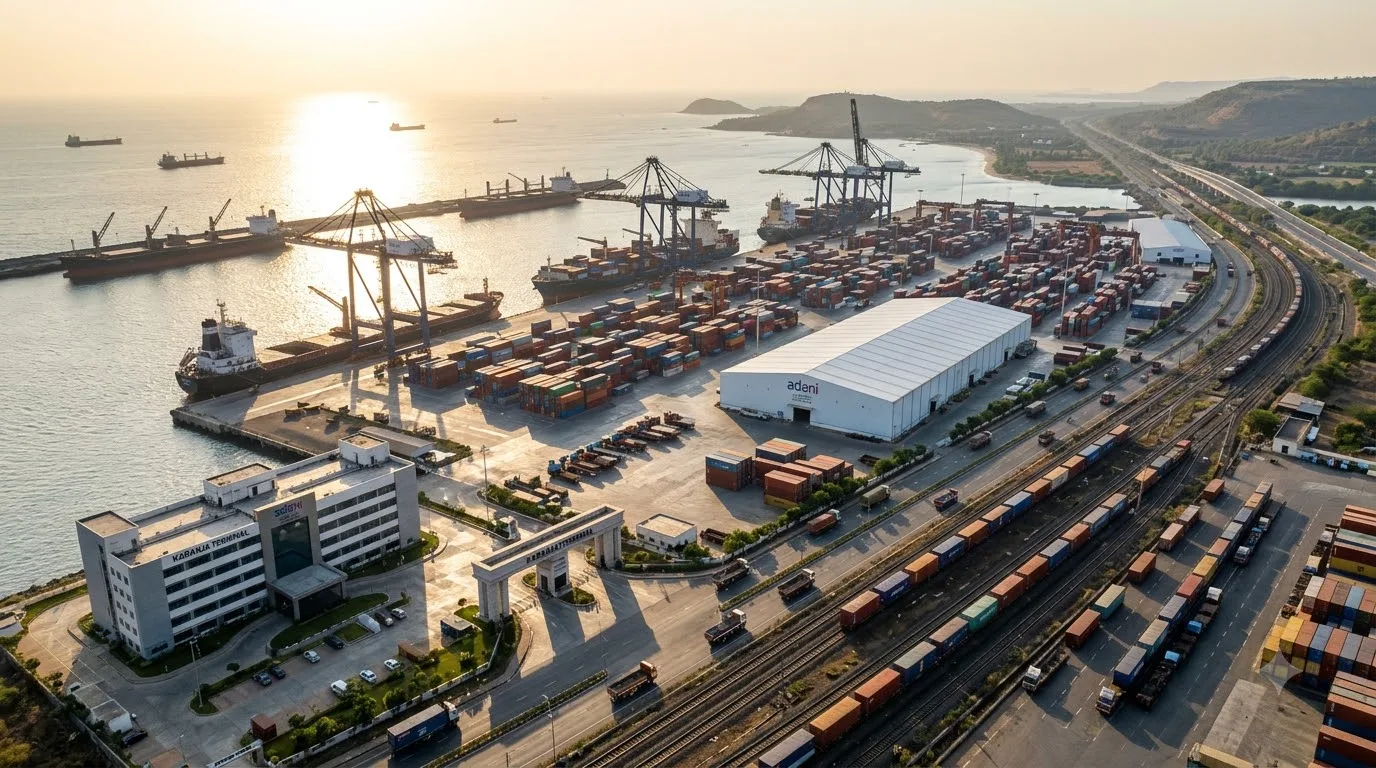
In a significant consolidation of
port infrastructure along India’s West Coast, Adani Ports and Special Economic
Zone (APSEZ) has reportedly secured crucial backing from financial creditors to
acquire the Karanja Terminal. The facility, located in the Raigad district of
Maharashtra, is currently undergoing a resolution process under the insolvency
framework, and the support from lenders marks a definitive step toward its
integration into the APSEZ portfolio.
This acquisition is strategically
positioned to enhance the cargo handling capacity near the high-traffic Mumbai
and Navi Mumbai industrial clusters, providing a vital alternative for bulk and
break-bulk logistics.
Unlocking Value in the Karanja
Terminal
The Karanja facility offers
unique geographic and operational advantages that align with a
"hub-and-spoke" maritime model:
- Proximity to Key Gateways: Situated across
the harbor from JNPA, the terminal provides a strategic location to
decongest major container hubs by handling specialized cargo segments.
- Deep-Draft Potential: The terminal is
designed to accommodate mid-sized vessels, making it an ideal site for
coastal shipping and the movement of industrial raw materials.
- Brownfield Efficiency: By acquiring an
existing terminal, APSEZ can rapidly scale operations and integrate the
facility into its unified digital logistics platform with minimal lead
time.
Impact on Regional Trade and
Logistics
The successful takeover and
revitalization of the Karanja Terminal are expected to drive several commercial
benefits:
- Operational Synergy: Integrating Karanja
into the wider network will allow for smoother transshipment and
lighterage operations, lowering the overall cost of cargo movement for
regional industries.
- Infrastructure Revival: The infusion of
capital and management expertise is expected to modernize the terminal’s
gantry systems and yard management, bringing it up to international
standards.
- Job Creation and Industrial Growth: The
resumption of full-scale operations will stimulate economic activity in
the Raigad belt, supporting auxiliary logistics services like warehousing
and trucking.
The acquisition of the Karanja
Terminal is a prime example of the ongoing consolidation in the Indian maritime
sector under the Amrit Kaal Vision 2047. By rescuing and optimizing
distressed maritime assets, leading operators are ensuring that no part of
India’s coastline remains underutilized. For our readers, this development
signals increased competition and improved service availability on the West
Coast, ultimately contributing to a more resilient and efficient supply chain.